The city of Las Cruces, New Mexico, dates back to 1849, when it was founded after being surveyed by the U.S. Army. The land on which the town sits was ceded to the United States as a result of 1848’s Treaty of Guadalupe Hidalgo, which ended the Mexican-American War (1846-1848). The city was named after three crosses that used to be located north of town.
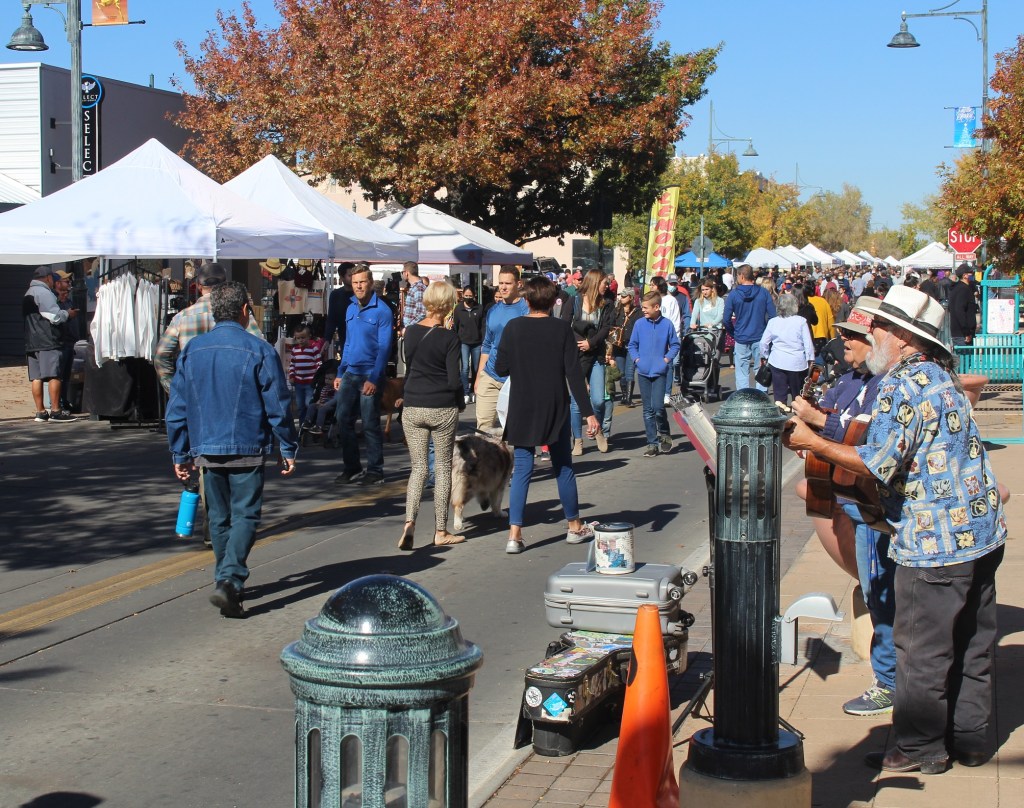
The year 2021 marks the fiftieth anniversary of a farmers market in downtown Las Cruces. The Farmers & Crafts Market of Las Cruces, a nonprofit organization, conducts a market along seven blocks of Main Street each Wednesday and Saturday morning throughout the year. Nancy and I enjoyed visiting the vendors on Saturday, Nov. 27. There are more than a hundred vendors selling everything from fresh tomatoes (we bought some) to pistachios (we bought some) to bread (we bought some) to handcrafted pottery and glassware (we didn’t buy any; we live in a home that moves down the road at 65 MPH every couple of weeks).
There are many permanent vendors at the market, as well as a long list of temporary ones, in addition to entertainers along Main Street.
To be honest there weren’t a lot of people selling actual farm goods, but the growing season, even in southern New Mexico, is nearing its end. I was impressed with all of the good smells (mostly from breakfast burritos) and incredibly vibrant colors of the clothes that some of the people were wearing.
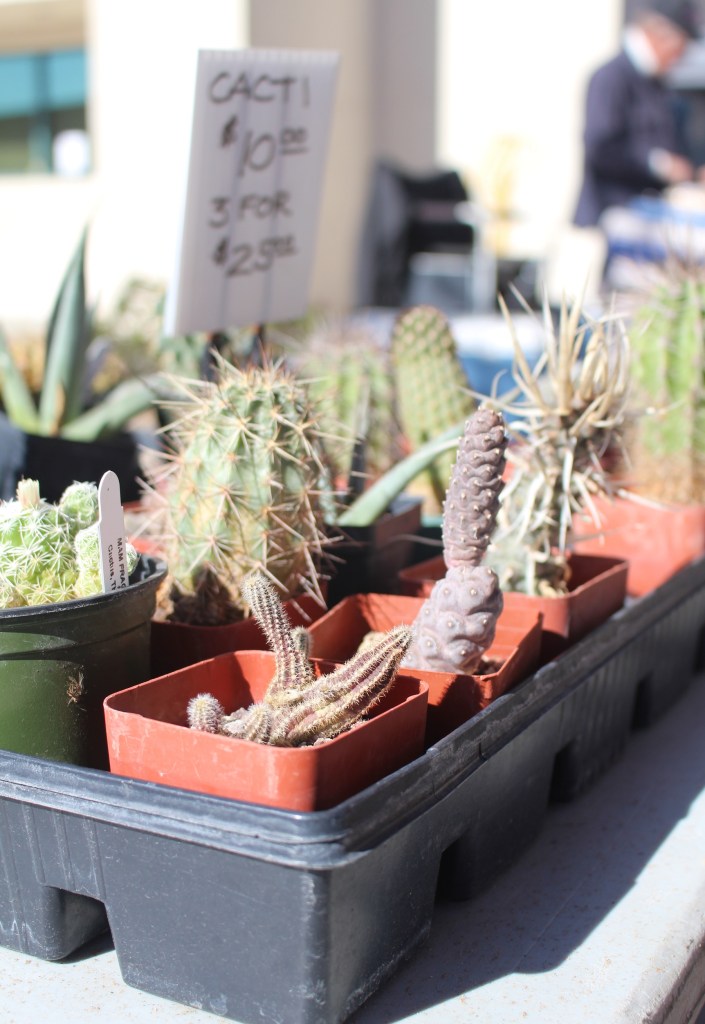
They’re doing amazing things with cacti nowadays. Nancy was buying a pound of pistachios from the out-of-focus man in the upper right when I took this photo. We returned to the market a week later, and Nancy bought another pound of pistachios! From the same man!Chile ristras are not hard to find in New Mexico, especially at farmers markets, but they’re always fun to see. Those are the Organ Mountains in the background.It’s always fun to see old movie theaters in downtown locations: they’re usually very ornate buildings. The Rio Grande Theatre dates to 1926 and is on the National Register of Historic Buildings. The theater (“theatre” if you’re feeling fancy) survived an urban renewal project from the late 1960s and early 1970s that destroyed many of the older buildings in downtown Las Cruces. The Rio Grande still shows movies, and had a slate of holiday-themed films on its schedule when we were there. I don’t know when this Woolworth’s on Main Street was opened, but it’s been closed for many years and now the building serves as a church. The door handle is really, really cool, and I wonder how many ring-bedecked fingers it took to give it that wonderful wear. Nancy and I have noticed many references on billboards and business signs in Las Cruces to something called “refrigerated air.” As far as we can tell, it’s the same as air conditioning.
On the day after Thanksgiving, we visited the New Mexico Farm & Ranch Heritage Museum on the east side of Las Cruces. It’s an impressive museum, with a 24,000-square foot building with permanent and traveling exhibits, and almost 50 acres of outside space devoted to livestock, crop, and farm equipment exhibits. I managed to forget to bring my DSLR camera for our visit, so all of the photos were taken with the camera on my iPhone.
Nancy and I always pronounce the breed of this cow as “HAIR-uh-fehd,” because of the way Lynn Redgrave’s character, from England, pronounced “Hereford” in the TV miniseries “Centennial.” Most Herefords today are polled; the hornless strain was first developed in 1901 from cattle that naturally never developed horns.
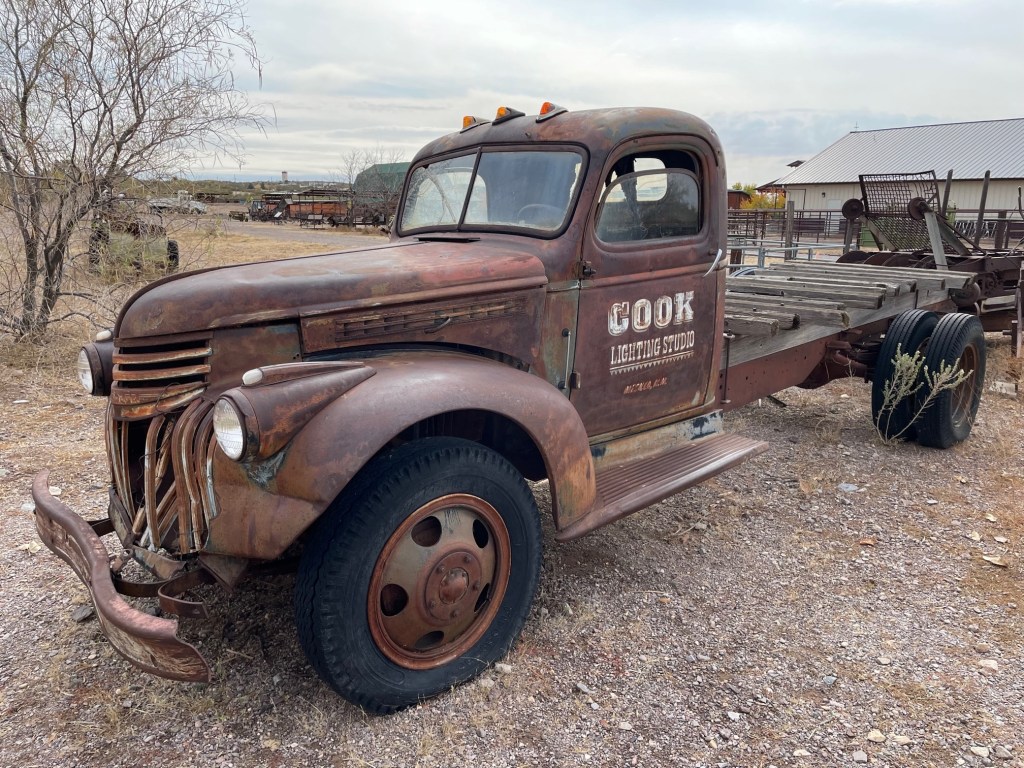
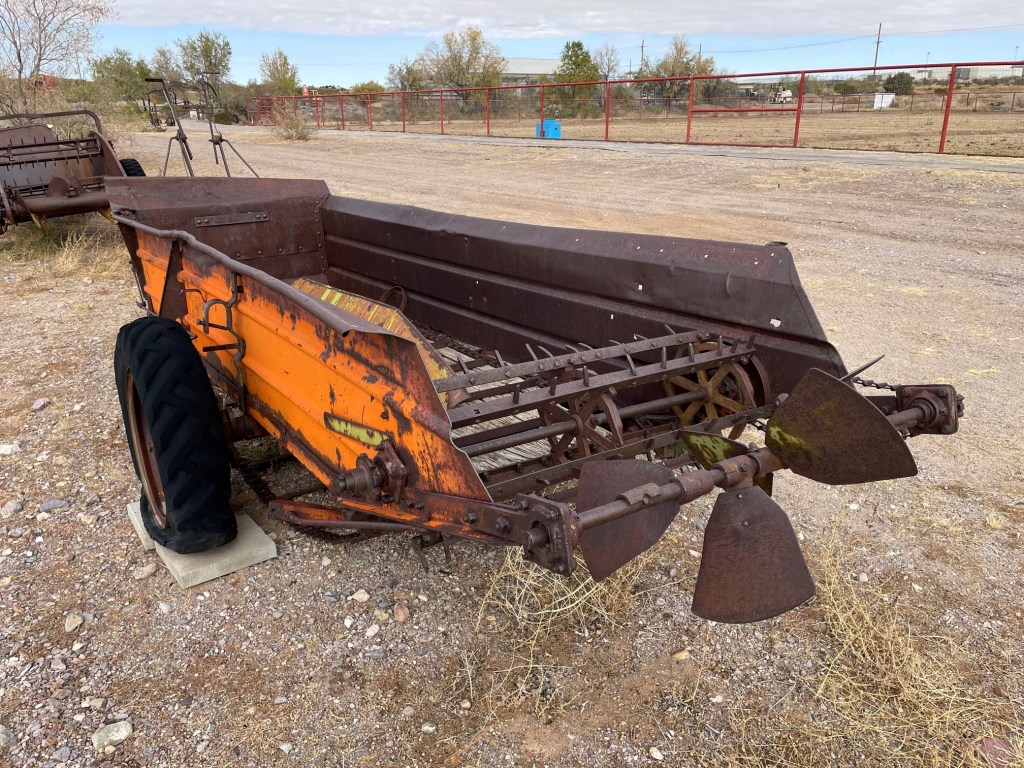
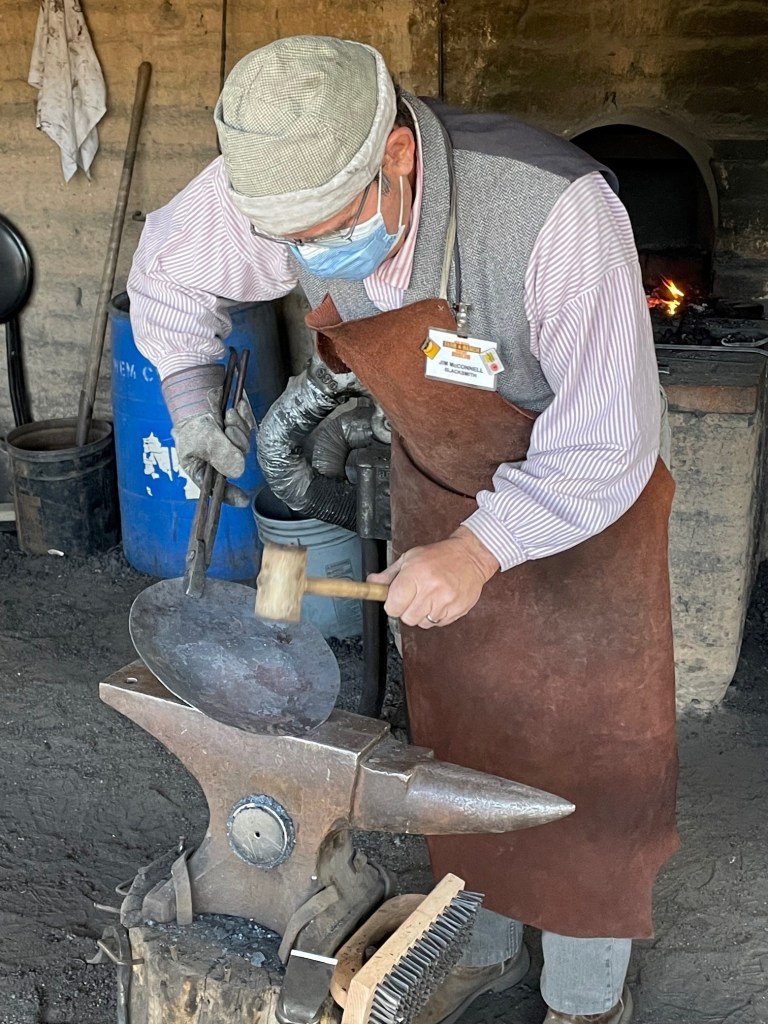
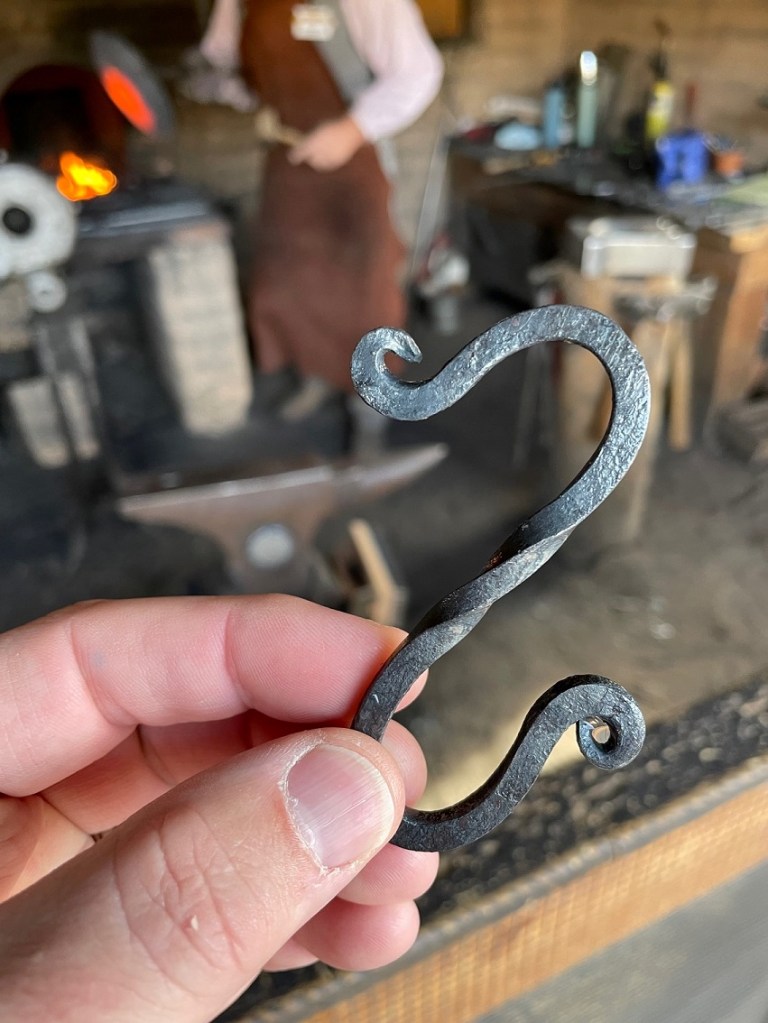
The museum’s pens had a good variety of cattle breeds: joining the Hereford from Great Britain were a couple of Angus, and they also had a Brahman bull, Texas Longhorns, and an important breed that I’d never heard of called Corriente.The Spanish brought the Corriente breed to North America from the Old World in the 1490s and the cattle arrived in the American Southwest in 1598. “Corriente,” which translates to “common” or “cheap,” was one of the foundation breeds for Texas Longhorns, which were brought north into the American West on the great cattle drives beginning in the 1830s. Today the breed is mostly used as rodeo stock.This is a Corriente calf that was just a few days old when we visited. It was laying right next to its mother (not the white Corriente cow pictured above). The museum also has several horses, in addition to sheep and goats.The museum has a huge collection of vehicles, including tractors and trucks, that saw work on New Mexican farms and ranches in the past decades. This is a 1946 1 1/2-ton Chevrolet pickup. It’s an example of Chevrolet’s product line from 1941-1947 that has been called “art deco” by enthusiasts because of the design of the grille and hood.This is a small grove of pistachio trees at the museum. Pistachios are grown in New Mexico, Arizona, and California; the latter state has 99% of the production, but pistachios are very popular as a snack in New Mexico. There are now more than 25,000 farms in New Mexico, producing a value of $3.4 billion in value (30% crops, 70% livestock) each year and making agriculture the #3 industry in the state. New Mexico produced 63,000 tons of chile peppers in 2019, making it the nation’s number-one state for that invaluable resource. Guess which state ranks #5 in onion production in all the land! It’s New Mexico!This is an agave plant, situated outside the museum’s greenhouse, with a flower stalk that I think is about 30 feet tall. Some of the stalks can grow to 40 feet. The stalks are produced at the end of the agave plant’s life; the stalk falls down and spreads its seeds to begin the cycle anew. Agave is used for food and fiber, and I am given to understand that it’s also used in the production of tequila and other mezcals.Of course, one of the highlights of a visit to any agricultural museum is checking out the collection of manure spreaders, and on this opportunity the New Mexico Farm & Ranch Heritage Museum does not disappoint. First developed in 1875, manure spreaders did the work of five people attempting to spread manure by hand. Early manure spreaders, like most implements, were originally pulled by horses until tractors became more available. This magnificent example was made by the J.I. Case company, which was founded in 1842 by Jerome Increase Case as the J.I. Case Threshing Machine Company. The museum has a really impressive collection of vintage equipment, including threshers, hay stackers and balers, harrows and plows, and much more.We enjoyed visiting with Jim McConnell, who was busy in the museum’s blacksmith shop. Here he’s creating the rounded side of a skillet using a rawhide mallet. The smell of the leather mallet, when it struck the red-hot metal, reminded me of being around cattle being branded – which I guess makes sense. Jim was a lot of fun to talk with. He said that blacksmiths were often the most educated people in a rural community, because they had to be knowledgeable about chemistry, physics, and all kinds of math like geometry and algebra.Here’s an “S” hook, used for hanging tools or kitchen pans and utensils, that Jim made that day; Jim is busy heating his skillet (note the color of the metal) for more shaping over the fire in the background. Blacksmiths usually have several projects going at the same time because of the need to wait for the metal to cool down to the correct temperature before continuing. Also note the fancy twist in this hook – great work, Jim!
The Farm & Ranch Heritage Museum is really a lot of fun: there’s plenty to see and learn without even going inside a building, and one can get really close to a wide variety of farm and ranch animals.
Most U.S. states have official state mammals (Colorado’s is the Rocky Mountain bighorn sheep, for instance, and New Mexico’s is the black bear) and official state birds (the lark bunting and greater roadrunner for Colorado and New Mexico, respectively), as well as other official state designations (fish, butterflies, fossils, etc.) Did you know/care that New Mexico is the only state with an official question: “Red or green?” It refers to the what kind of chile you prefer to accompany a meal, red chile or green chile. Red chile, which is commonly made from green chiles that ripen to red and are then dried, is usually hotter than green but that’s not always the case.
Nancy and I went to the Downtown Growers’ Market in Albuquerque on Saturday, Nov. 6. She got a bag of dried pinto beans (Nancy’s big on beans) and a small bag of chicos, which are dried and lightly smoked kernels of corn that can be added to stews along with the aforementioned frijoles. And when we sit down to a bowl of it, we can also ask each other: red or green?
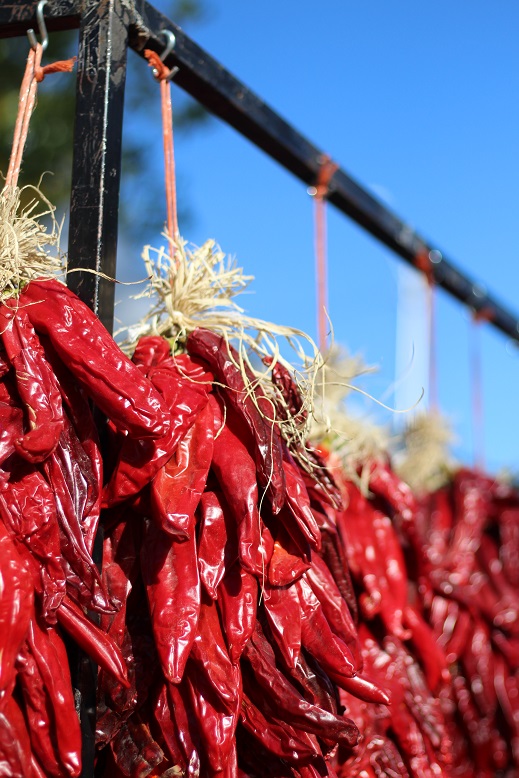
This ristra, which is basically a bouquet of dried red chiles, and many more like it were on display at the Downtown Growers’ Market in Albuquerque. When southwestern cooks need to add a bit of heat to what they’re making, they break a chile or two off of the ristra and grind it into la comida.






 Tales of The Goddard