The history museum in Deming has a large room devoted to military artifacts, reflecting the U.S. military’s impact in this part of southwestern New Mexico dating back to the U.S. Civil War period – and those from the Deming area who later served their country around the world.
Fort Cummings
There’s an extensive exhibit covering, and scale diorama depicting, Fort Cummings, which was established about 20 miles north of Deming in 1863. Its primary purpose as a U.S. Army outpost was to protect people moving to California on the Southern Emigrant Trail and travelers on the Butterfield Overland Stage line. The fort, established on Oct. 2, 1863, was near Cooke’s Spring, the only source of fresh water between this area and Mesilla, about 70 miles to the east. The spring, along with many other natural features in the area, was named for Philip St. George Cooke, a U.S. Army general who served in the Civil War and is referred to as the “father of the U.S. Cavalry.” His contributions to the war were overshadowed by those of his son-in-law, J.E.B. Stuart, an officer in the army of the Confederate States of America.
The fort north of present-day Deming was named for Major Joseph Cummings, who was killed by Native Americans. It was made of adobe bricks and was in service for 10 years until being abandoned in 1873.
Camp Cody
Camp Cody, active from 1916 to 1919, was established in northwest Deming to provide basic training to National Guard units from the Dakotas, Nebraska, Minnesota, and Iowa prior to their deployment to service in France. The camp was first established as Camp Brooks during the Mexican Border War (1910-1919), in which the United States sent troops into Mexico (more on that in a later posting), then the name was changed to Camp Deming at the outset of World War I. Upon the death of William F. “Buffalo Bill” Cody in 1917, the name was changed for the final time. At its highest level of activity, Camp Cody accommodated 30,000 troops.
The camp was also intended to minimize the threat of Mexico, 30 miles to the south, from becoming active in World War I.
Deming Army Air Corps Field
The clear skies and mild weather of southwest New Mexico allowed the U.S. Army Air Corps, which later became the U.S. Air Force, to develop a bomber training base two miles southeast of Deming in 1942. By the end of the war in 1945, about 12,000 cadets graduated from the training program. The airfield was deactivated in 1945 and today serves as the city’s municipal airport, averaging about 80 flight operations a day.
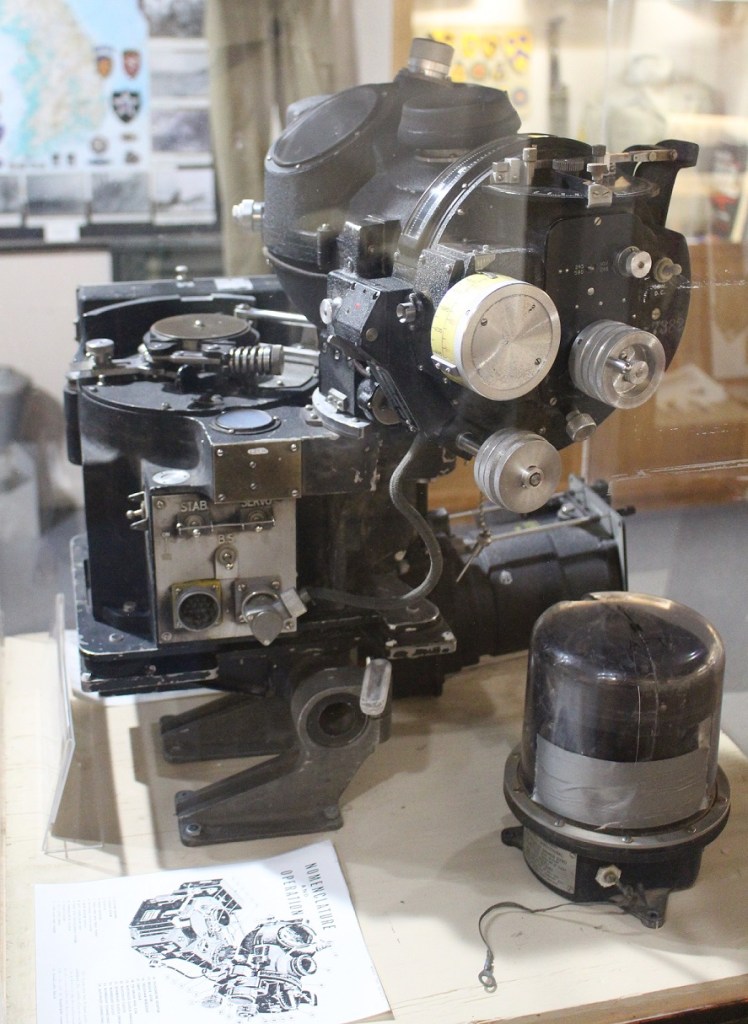
This is a Norden bombsight, used extensively in operations over Western Europe by Allied bombers in World War II, on display at the Deming museum. Deming Army Air Corps cadets trained with bombsights like this by dropping bags of flour.
There is also a significant amount of memorabilia from other wars and conflicts in which people from Deming served, ranging from the U.S. Civil War on through the 21st-century wars in the Middle East. There are uniforms, banners, military equipment, journals and diaries and letters to home – all of which tell a continuing story of individuals from southwest New Mexico who served their country.
Outside Exhibits in Veterans’ Park
Veterans’ Park in Deming is adjacent to the history museum (that’s a brick wall of the museum in the background). This is a 90mm M2 antiaircraft artillery (AAA) gun in the park (I didn’t notice that the barrel is pointing at the chimney of the museum when I took the photo). I’d never been up close to an AAA gun; they’re plenty big. These guns had a 3.5-inch bore, with a barrel length of 15 feet. It could fire a 3.5-inch shell 62,000 horizontal feet or 43,500 vertical feet. M2s like this complemented the much larger and heavier 120mm M1 gun, and, after seeing heavy usage in World War II and into the Cold War, both guns were eventually phased out with the development of surface-to-air missiles.Here’s a closeup of the workings of the gun. In 1940, each of these weapons cost $50,000 to make. I was reminded here, as well as while viewing the aircraft and bombs at the National Museum of Nuclear Science & History in Albuquerque, that there’s an incredible amount of engineering, work, and money that goes into making war machines.
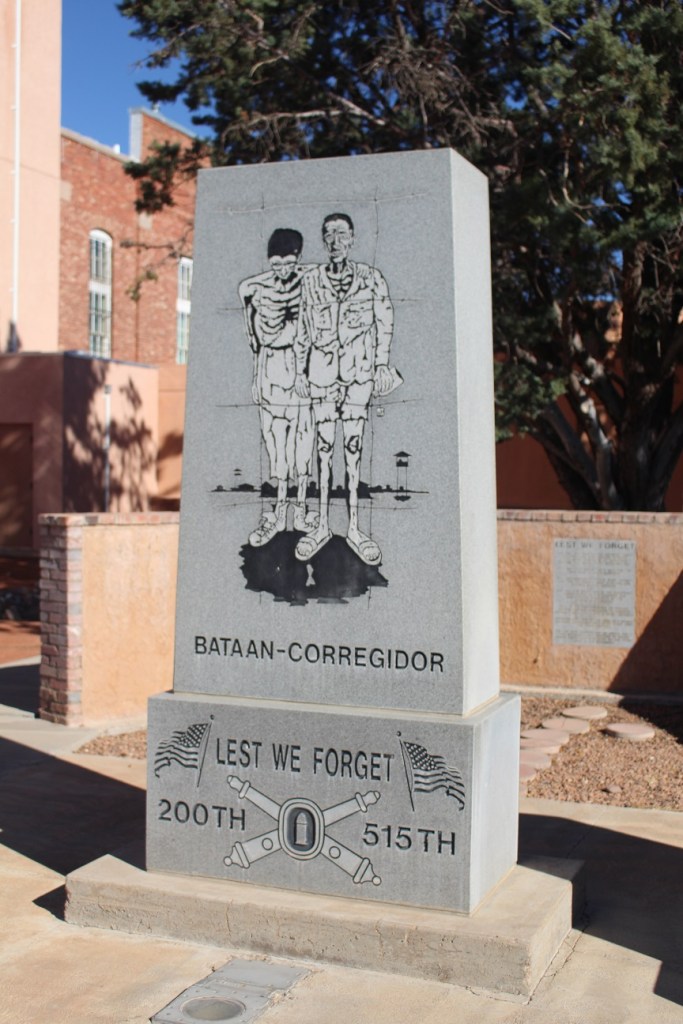
Fitting its name, Veterans Park has several memorials to soldiers who served in World War II and other conflicts. Following the surrender of U.S. forces after the three-month-long Battle of Bataan in April 1942, between 60,000 and 80,000 U.S. and Filipino prisoners of war were transferred over land to camps. Many of the prisoners marched until they died; estimates of the deaths range from 5,000 to 18,000 Filipinos and 500 to 800 Americans. An outsized number of the troops involved with the operations in Bataan were from the 200th/515th Coast Artillery Anti-Aircraft Regiments comprised mainly of New Mexican men. In fact, many of the soldiers initially signed up for service in World War II just a few steps away from the location of this monument, in the former National Guard armory that now serves as the Deming museum.
This striking monument to the Bataan Death March is in Veterans’ Park. A nearby block of stone lists the names of every soldier from New Mexico who was a soldier on Bataan. Eighty-three of the men were from Deming. The 200th and 515th Coast Artillery units included 1,816 men. Of that number, 829 – more than 45 percent – died in battle, while a POW, or immediately after liberation.These memorials honor the men and women from Luna County (of which Deming is the county seat) who served in the U.S. Armed Forces during the Vietnam War.
Southwestern New Mexico, and Deming in particular, has a very rich history of U.S. military contributions, beginning with the U.S. Civil War era and continuing to today. Exhibits like these helps us remember their service.
Nancy and I are big into museums. We absolutely love them, and it doesn’t really make much difference what the museum’s about; we’re interested in taking a look. Well, except maybe for museums devoted to dolls. Or clowns. Or clown dolls.
There were definitely dolls on display at the Deming Luna Mimbres Museum in Deming, New Mexico, when we visited, and some of them may well have been clown dolls. We didn’t stop at the exhibit to investigate. However, there was much more of interest to take a look at in this 20,000-square-foot museum skillfully managed by the Luna County Historical Society, and there’s something for everyone there.
About the name of the museum: it’s in the city of Deming (more about that later), in Luna County (and Deming is the county seat), and the Mimbres are a branch of the Mogollon culture, Native American peoples who lived in present-day southern Arizona and New Mexico from around 200 CE to when the Spanish arrived in the 1400s and 1500s. There are many cultural references to the Mimbres in this area.
The museum is mostly contained within the walls of this 1916 brick building. It’s a former National Guard Armory. Image credit: Deming Luna Mimbres Museum, because I somehow forgot to take an exterior photo of this impressive structure.
Nancy and I agreed that, other than Harold Warp’s Pioneer Village in Minden, Nebraska, the Deming museum is one of the largest and widest-ranging local museums we’ve visited. If you’ve got an interest in Native American pottery, it’s got you covered. Want to see a lot – a lot – of geodes? You won’t be disappointed. Curious about early public schools in Deming? You’ll leave wiser for the experience. Fancy yourself a railroad aficionado? Hang on to your engineer’s cap. The museum’s website suggests arriving no later than 11 AM to ensure that visitors have plenty of time to see everything, and that’s sound advice.
Let’s start with the railroads. The city of Deming lies within the Gadsden Purchase, a nearly 30,000-square-mile area in present-day southern Arizona and southern New Mexico that was acquired from Mexico in 1854 solely so that a southern U.S. transcontinental railway could be built. The city has historical ties to four different railroads:
Southern Pacific Company, which began building a railroad from California to the Gulf of Mexico in the 1870s. The railroad reached Deming on Dec. 15, 1880.
Atchison, Topeka & Santa Fe Railroad, which wanted to expand its line from Kansas City to the Pacific Ocean. The Santa Fe reached Deming on March 8, 1881, and by an agreement with Southern Pacific, established a new transcontinental railroad with the driving of a silver stake. Despite that ceremony, competition between the two lines for trade along the route remained fierce through the 1980s.
Silver City, Deming & Pacific Railroad, which was incorporated in 1882 to transport copper ore from huge deposits in the hills about 50 miles north of Deming. A 48-mile narrow-gauge line between Silver City (silver was originally found in the area but that played out and was replaced by copper, which is still being very actively mined to this day) and Deming was completed on May 12, 1883. The Santa Fe bought the line in 1899.
El Paso & Southwestern, incorporated in 1901, started a line intended to connect Deming with Douglas, Arizona, to move copper ore from the Bisbee, Arizona, area to eastern markets. Executives with EP & SW wanted the Southern Pacific and Santa Fe lines to compete for their business at the Deming connection.
Deming is named for Mary Ann Deming Crocker, the wife of Southern Pacific executive Charles Crocker. The city was originally 10 miles east of its current location; there wasn’t sufficient water at that first location, so the townsite was moved to the west to take advantage of the Mimbres River location.
The number of railroads, in addition to being a port of entry from Mexico into the United States, gave promoters at the time the fanciful idea that Deming would grow to be a huge metropolis. It was even given the nickname of “New Chicago.” That idea did not pan out (although Deming is really a lovely city, its current population is around 14,000).
Because of Deming’s long association with railroads, the museum has an extensive exhibit devoted to railways, including uniforms of railway staff, timetables, equipment, and other memorabilia. Looks like I chose to take a somewhat disorienting picture of this Underwood typewriter, dating to the early 1900s, which was used in the Southern Pacific freight office.
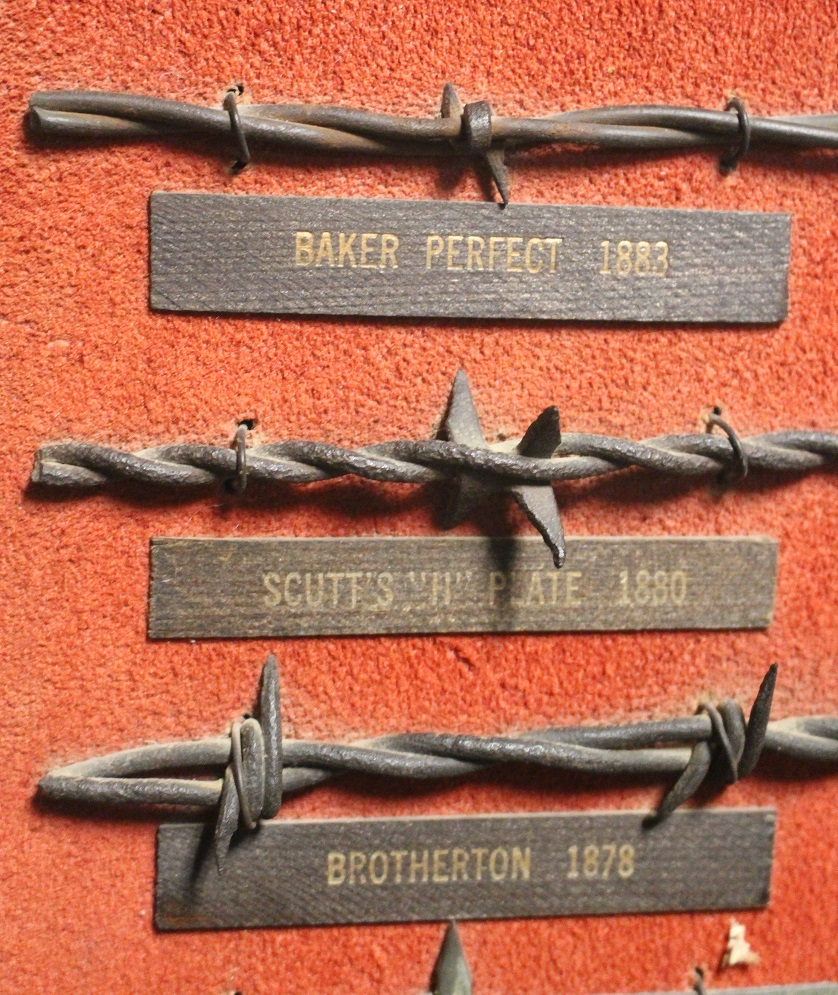
Much of the popular culture around the “Old West” is centered on cattle drives and open range ranching. It’s said that two occurrences ended the open range period: horrific blizzards in the winters of 1887 and 1888, and the development of barbed wire. Although it had been initially developed a couple of decades prior, barbed wire wasn’t widely used until 1874, when Joseph Glidden, an Illinois farmer, developed a machine to make the fencing material efficiently. More than 500 U.S. patents were issued on different barbed wire patterns between 1868 and 1874. The introduction of barbed wire in the West allowed ranchers to keep their cattle in one area, but it also meant that migratory herds of buffalo weren’t able to move around. Barbed wire also, of course, had huge a impact on the Native American tribes that lived on the plains. There’s still a good deal of cattle ranching in the Deming area, at least in the areas that can be irrigated for pasture, and the museum has a nice little exhibit on barbed wire.
Barbed-wire buffs will recognize, from top, the following patents: Two Around Two, R.E. Sunderland (patented 1884), Crandal’s Champion (1879), D.C. Stover Clamp on Barb, and Kelly’s Diamond Point with Crimped Barb (1868).Like many of the exhibits at the Deming museum, I suspect that this display was a gift from an area benefactor who had a strong interest in a very particular field (in this case, historic barbed wire). All of those barbs remind me of hiking on trails in New Mexico and trying to avoid cacti and other spiky hazards.
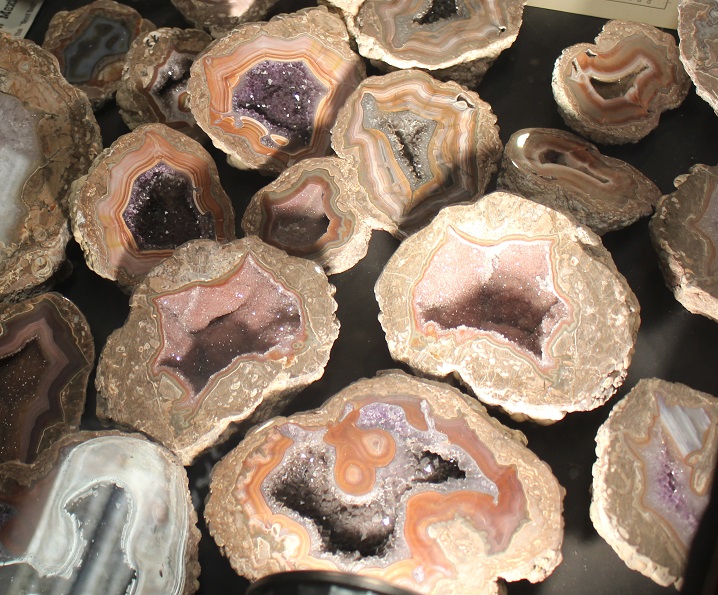
Writing of strong interests in very particular fields, the Deming museum has many display cases that contain thousands (I’m not exaggerating, and I may even be underestimating) of geodes. These rocks, which formed as bubbles in volcanic rock, contain a cavity that is filled with crystals, usually quartz. Rockhound State Park, a few miles south of Deming, is a great place to find lots of geodes. The ones that aren’t there are probably at the Deming museum.
So. Many. Geodes.Geodes are really pretty, though. But there were so many.
Writing of rocks, there were a number of other different kinds of rocks besides geodes, including dinosaur fossils, petrified wood, and samples of other minerals from all around the world.
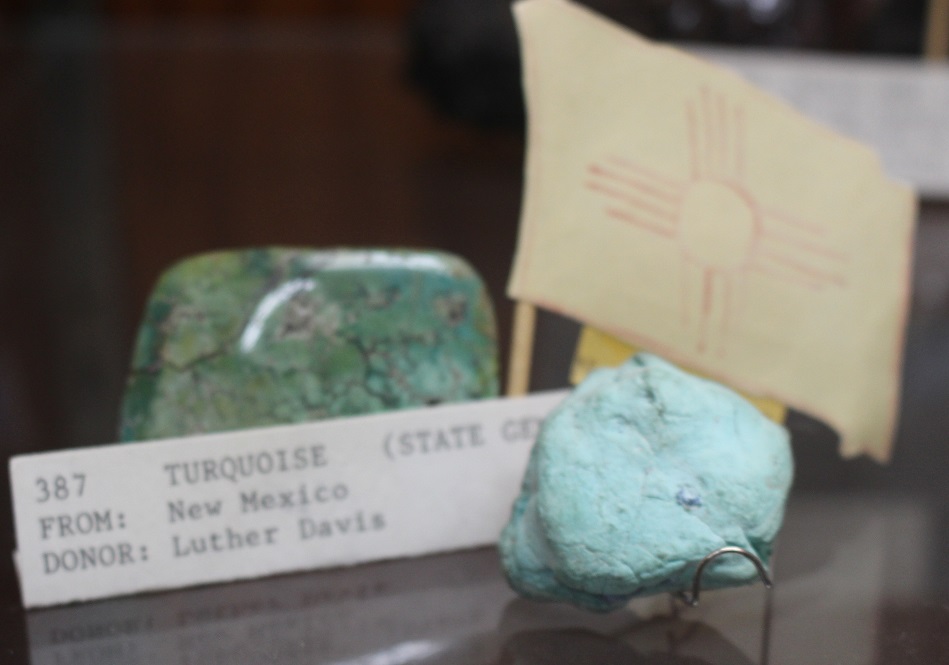
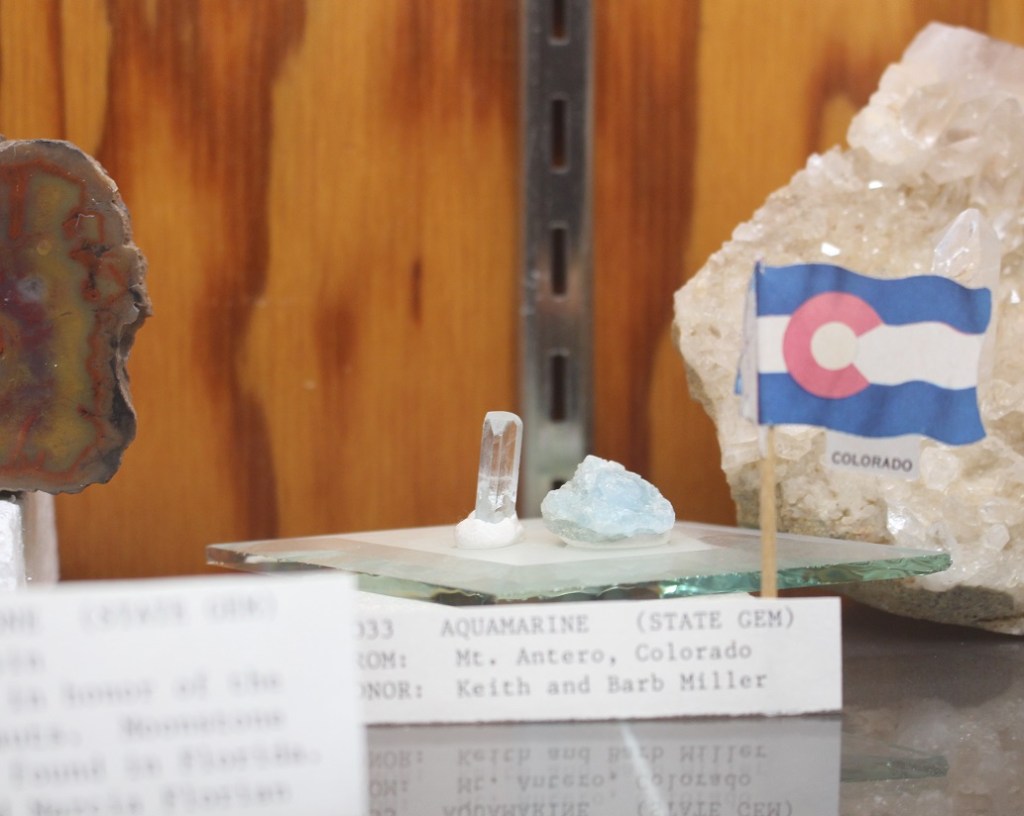
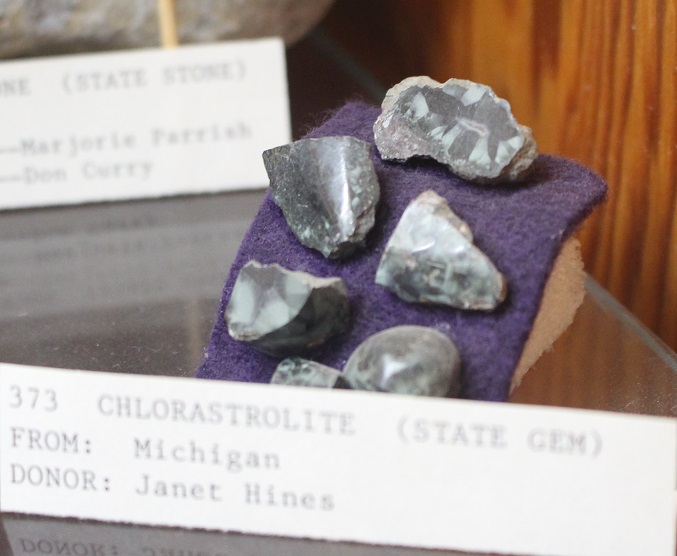
One display case had shelves of all of the states’ official gemstones and minerals. The state gemstone of New Mexico is turquoise. It’s easy to remember the name of this rock, because it’s turquoise-colored.Nancy often reminds me that Colorado’s state gemstone is aquamarine, even when I don’t ask. It’s a lovely shade of light blue – almost, but not quite, turquoise-colored.Finally here’s one for the Michiganders, who will of course recognize chlorastrolite (Ca2(Mg,Fe)Al2(SiO4)(Si2O7)•(OH)2H2O). It’s found in the Keweenaw Peninsula in the Upper Peninsula of Michigan and Lake Superior’s Isle Royale, but it’s not even close to being turquoise-colored.
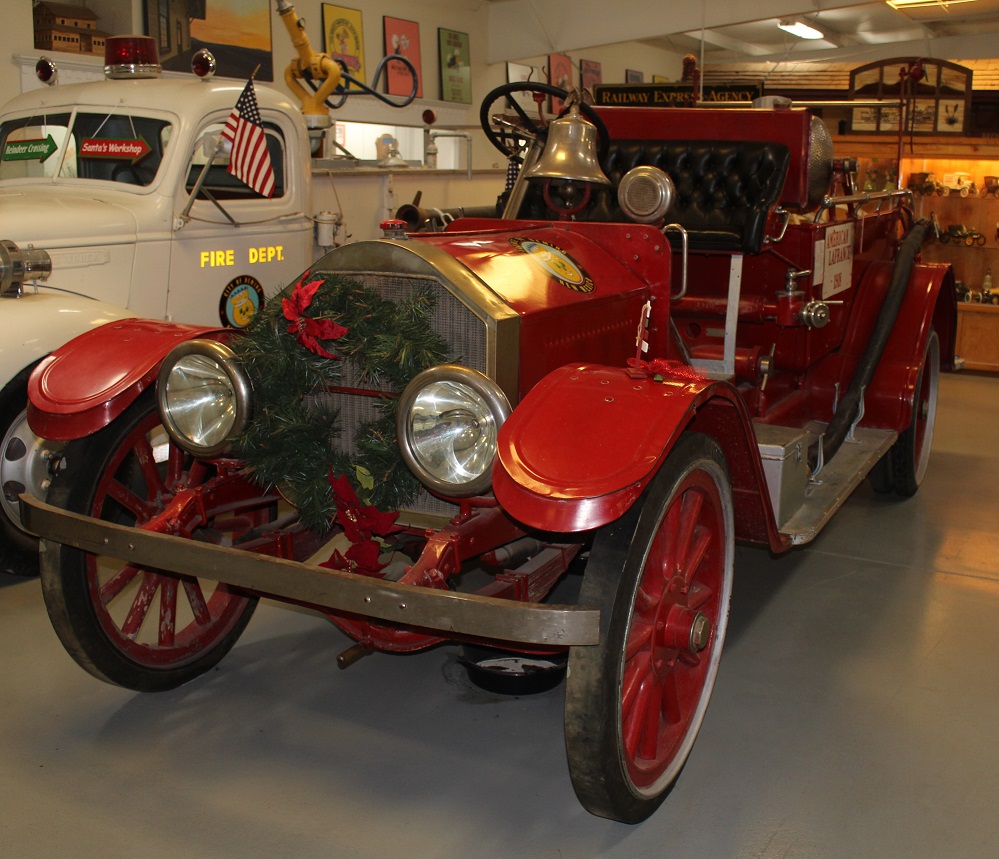
Enough with the rocks. The museum has on display a couple of firetrucks from Deming’s earlier days, along with a display of other firefighting equipment.
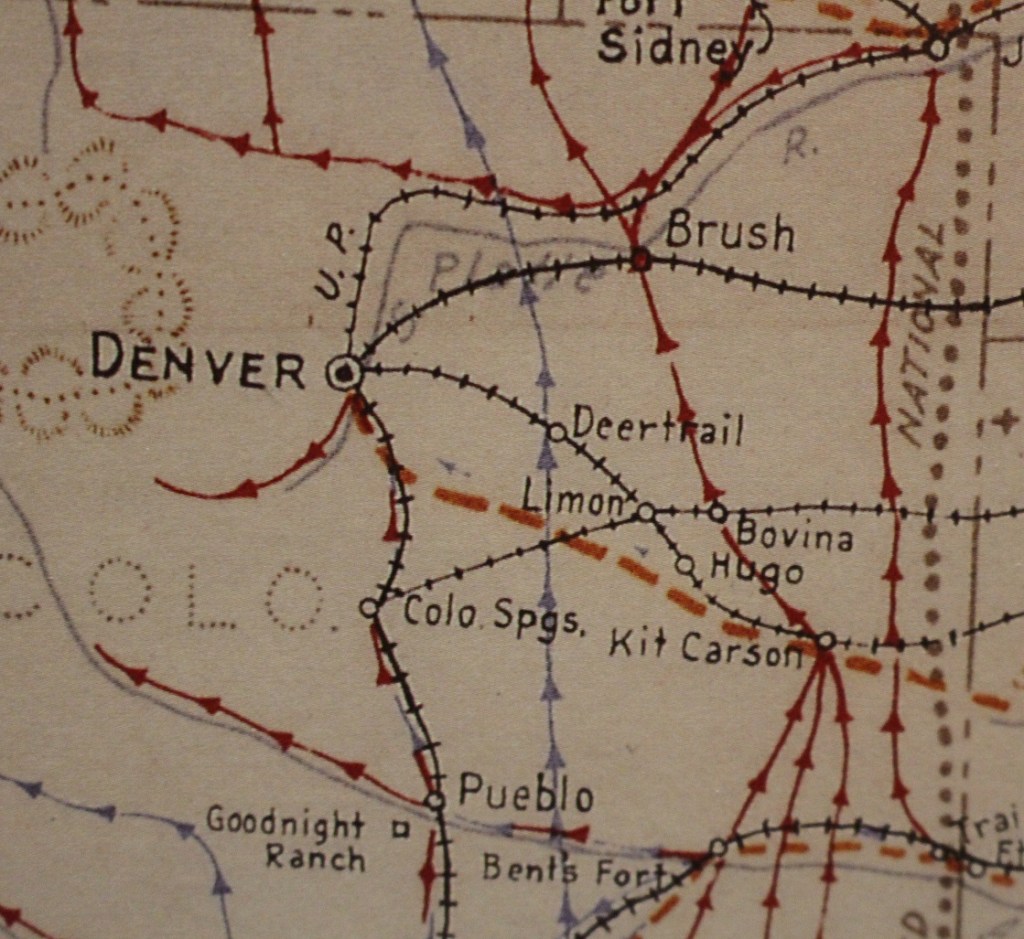
This 1918 American LaFrance fire engine was acquired by the city of Deming around 1919. It delivers 300 gallons of water per minute. LaFrance started making hand-pumped fire engines in 1832. The company was purchased by Freightliner, a Daimler-Chrysler company, in 1995. The descriptive placard on the engine asked observers to please note the hard rubber tires, and I must ask you to do the same. The Deming fire station at that time was staffed by at least one driver and four firemen at all hours. (The wreath on the grill is not standard-issue firefighting finery; the museum had a very nice holiday theme while we were there.)I thought this map of cattle drives was really interesting. Most of us have heard of the Goodnight-Loving and Chisholm trails, but there were quite a few more that date back to Spanish and Mexican colonial times. The major trails had their heyday for about two decades after the end of the U.S. Civil War. Tens of thousands of longhorns were driven north from Texas to the railheads in Kansas, or further north and west into ranches in the surrounding territories.Here’s a closeup of that cattle drive map showing eastern Colorado. You’ve got the cities of Denver, Colorado Springs, and Pueblo, as well as towns around my hometown of Flagler (not indicated on map) like Hugo and Limon. It’s interesting that Bovina, which has an exit off of I-70 but otherwise doesn’t exist anymore, is shown. “Bovina” is the Spanish word for “cattle” – there used to be a number of ranches there. The map was compiled in 1992 from a variety of sources.
I didn’t take any pictures of it, but there’s a very nice display of some saddles, boots, chaps, and other equipment belonging to a locally famous rodeo cowboy from Deming who won a few bronco riding world championships in the 1950s and 1960s. He was asked in the 1980s, well after his retirement, what the difference between rodeo cowboys of the 1950s and the 1980s was and he replied, “Well, no one robs banks anymore.” I thought that was just hilarious.
The second floor of the museum, which we gradually discovered had previously been a full-size basketball court, had many more exhibits from Deming’s past, including a room devoted to some really beautiful formal Mexican clothing, an area with historic medical equipment (including an iron lung), and displays of memorabilia from Deming’s public schools through the years.
This cart was owned by Leonardo Reyes, who sold hot tamales in downtown Deming from the late 1930s to the early 1950s. The tamales were kept warm in the cart’s crock with heated bricks in the crock’s bottom. Note the hard rubber tires. I would normally have cropped out the display cases of German nutcrackers in the background, but this perspective, I think, gives one a better appreciation for the diversity and scope of the Deming museum.
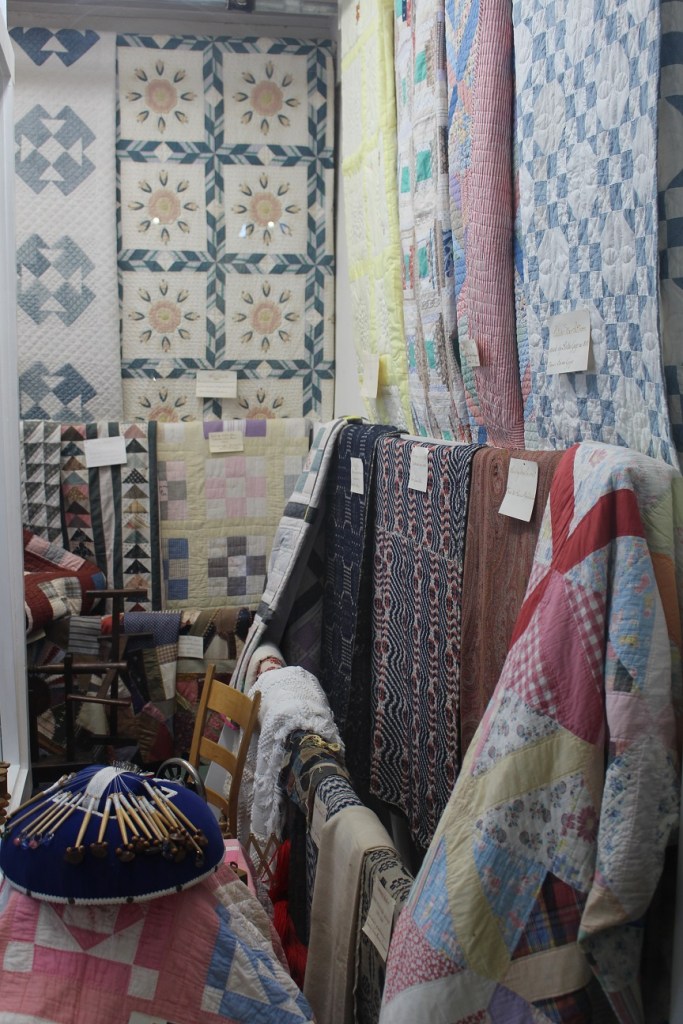
There’s a very nice display of quilts dating from the late 19th century (the blue one at upper right, for example, was made around 1885).Here was a nasty shock for me: I used a Macintosh SE identical to this one (on the right) to write for my college’s weekly newspaper, and lay out the pages for printing, when I was a student in the late 1980s, and here’s one on display in a historical museum. I held out my hand to measure the screen; its diagonal length was almost exactly the distance between the tips of my thumb and pinky. And I used to lay out newspaper pages on it. Unbelievable. This dusty old artifact is shown next to an even older typewriter, and they are both part of an exhibit of office equipment used in Deming through the decades. [I just looked up the specifications of a Macintosh SE: the screen (monochromatic, naturally) measured 9 inches on the diagonal, it had 1 MB of RAM (expandable to 4 MB for a price well outside the budget of a collegiate newspaper), and it weighed 17 pounds. The laptop on which I’m writing has a 17-inch color display, 8 GB of RAM (8,000 times the RAM of the SE), and it cost less than what expanding an SE’s RAM to 4 MB would have been.]
The museum also has an extensive collection, both inside and outside, of military equipment dating back to before the U.S. Civil War. I’ll write about that collection in another posting.
The Deming Luna Mimbres Museum was a great visit for us, although, to be honest, it was a little overwhelming in some areas. I thought I had taken pictures of a display of dozens upon dozens of buttonhooks (again, I’m not kidding and I could definitely be undercounting), and that’s what I was going to end with, but I guess I didn’t get any photos. It’s unfortunate. While I was there, I wondered – a lot – about who would find some of these displays of any interest. But I realized that’s exactly why museums like these are so important: you’re pretty much guaranteed to find something of interest to you, and particularly you, whether that’s fire engines or commemorative Jim Beam whiskey decanters or geodes or ancient Macintosh computers or a copy of the Braille edition of Playboy magazine (again, not kidding) or German nutcrackers or horsedrawn hearses or iron lungs (the iron lung was stationary, not horsedrawn) or barbed wire (I actually do have an interest in barbed wire) or buttonhooks or Native American pottery. Everyone has their particular interest(s) that are absolutely appropriate for curating exhibits (except for dolls – there should never be dolls on display). I recently read of the existence of an International Jim Beam Bottle & Speciality Club (IJBBSC). It has more than 150 affiliated clubs and more than 5,000 members. I hope some of those IJBBSC members make it to the Deming Luna Mimbres Museum, because let me tell you: there’s an impressive collection of whiskey decanters to be enjoyed.









 Tales of The Goddard