As I related in a previous posting, we spent two weeks of March 2023 in McDowell Mountain Regional Park, a huge protected expanse of land east of the Phoenix, Arizona, metropolitan region. While that posting approached the avian aspects of the park, this one will focus on the floral features of the McDowell Mountain area. Keep in mind that all of these photos were taken in the last two weeks of March, when much of the rest of the western United States was just beginning to emerge from winter. Since Nancy and I are both from Colorado, about the only flowers we’re used to seeing that early in the year are those of crocus, narcissus, tulips and other bulb-born blossoms. The blooms of these flowering plants of the Sonoran Desert provided plenty of color in a landscape that otherwise seemed to be generally green and brown, as seen in the saguaro landscape above. (By the way, if you’re a beer aficionado, in the background you will recognize the four mountain peaks used on the labels of the Tempe, Arizona-based Four Peaks Brewing Company. I’m suddenly in the mood for a Kilt Lifter.)
Like most of the western United States, the Phoenix area received an above-average amount of precipitation during the 2022-2023 winter. That, along with occasional rain showers while we were at McDowell Mountain in March, resulted in some spectacular wildflower displays.
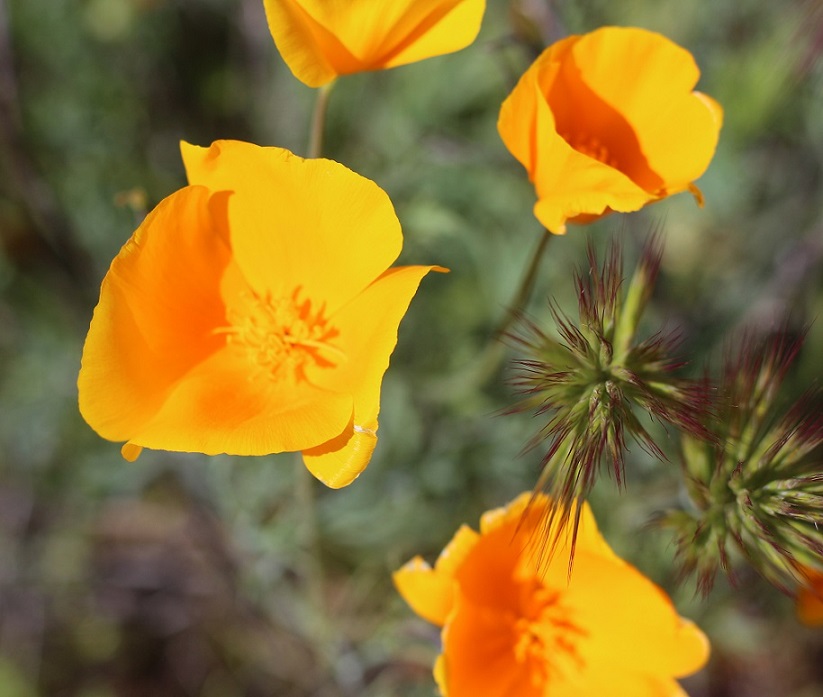
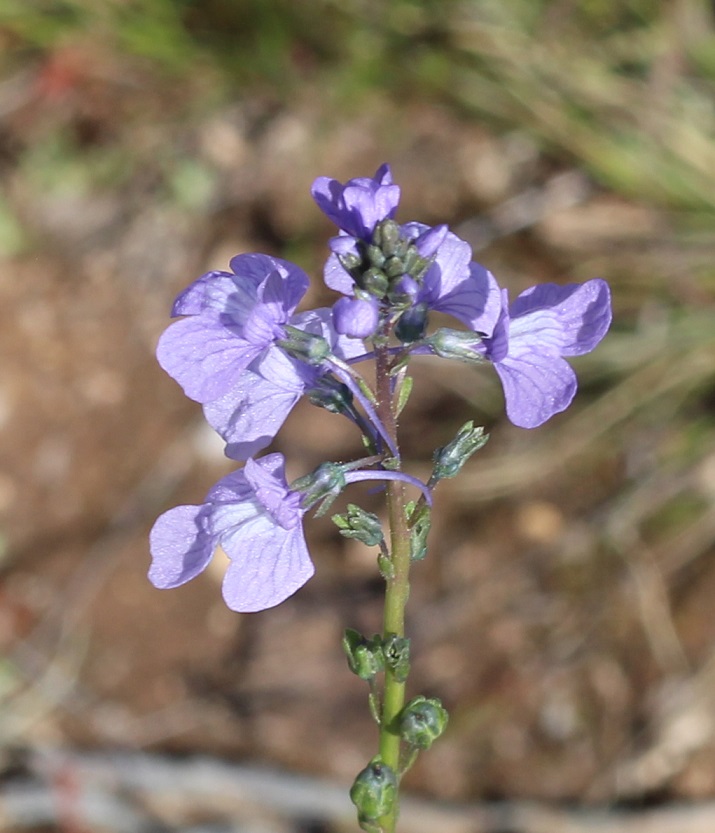
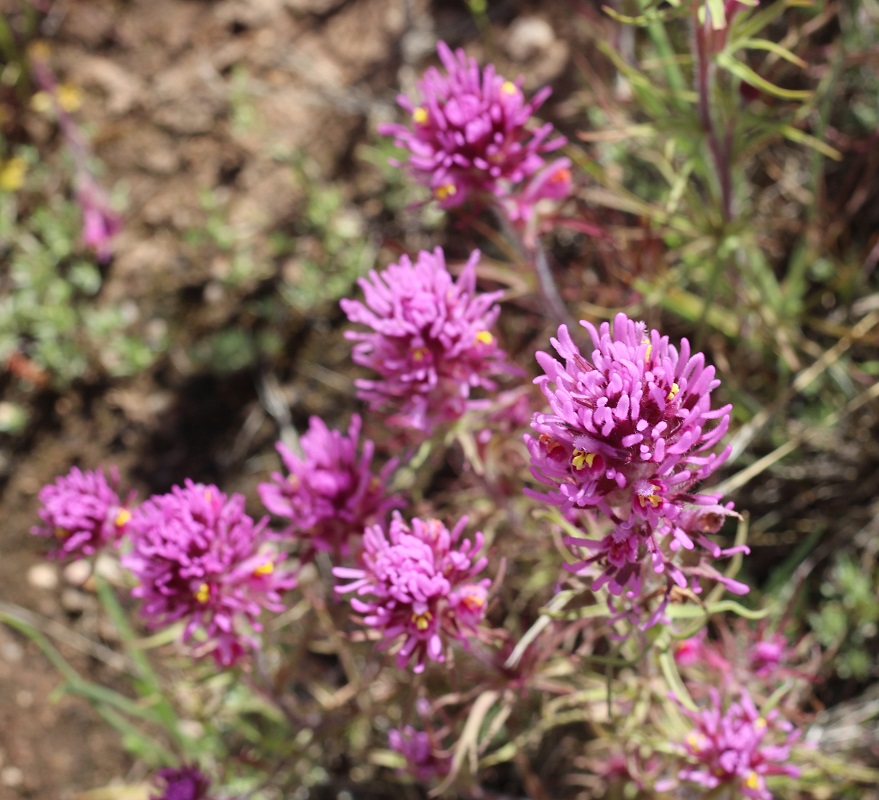
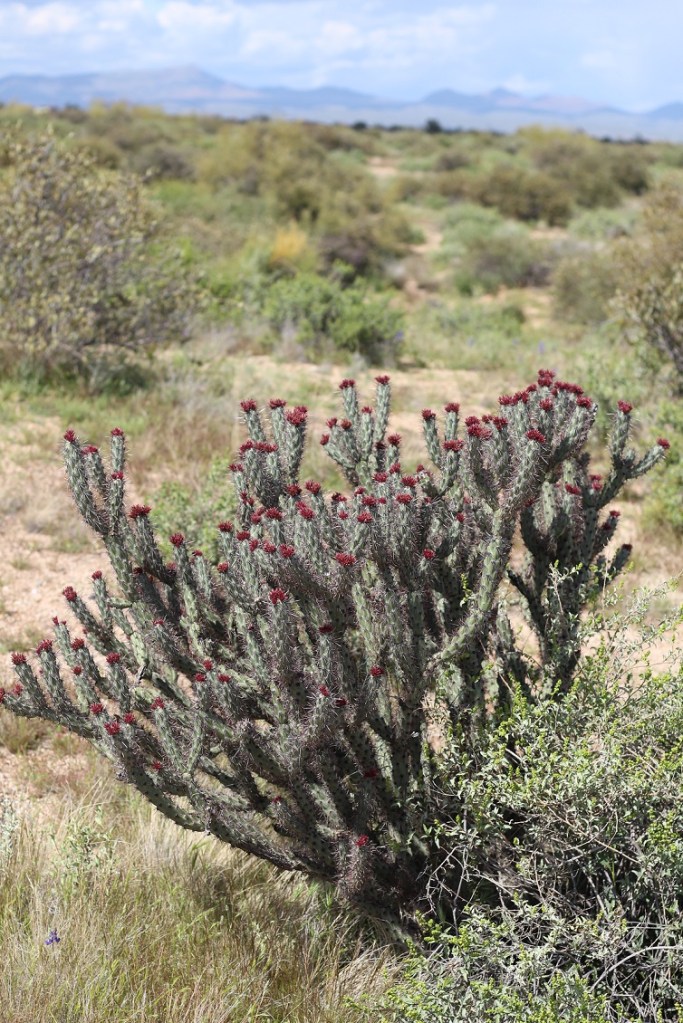
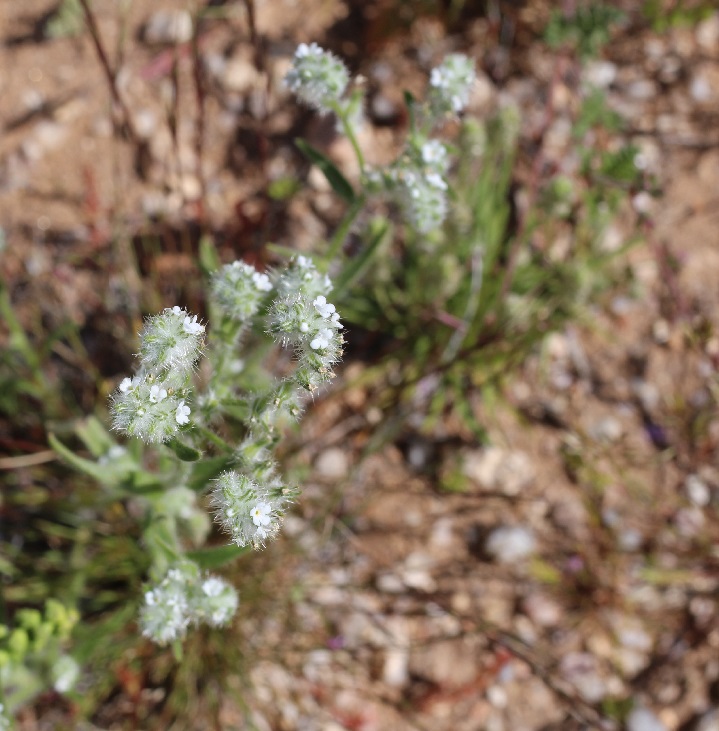
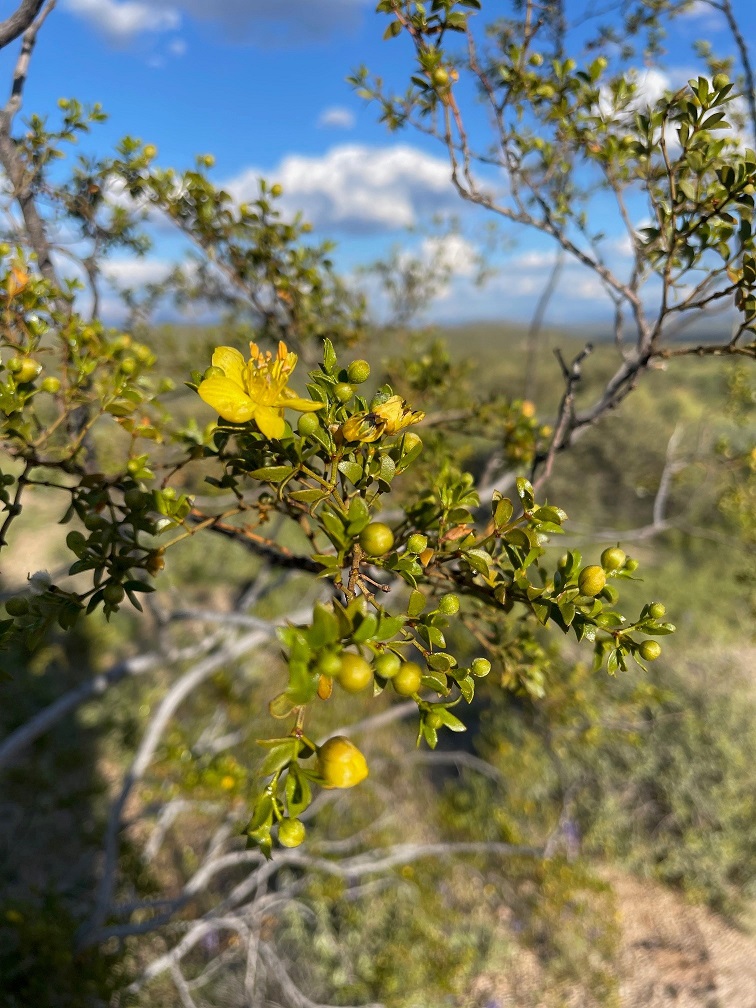
First up is the very common but colorful California poppy (Eschscholtzia californica), of which we saw plenty while in the park. It’s possible that this is another species called Mexican gold poppy, but I do think that, based on the flower coloration, this is the California species. The petals of these flowers close as evening approaches, and then begin to open again when the sun rises.California poppy plants grow to a height of 8 to 24 inches, and their blossoms can be 1 or 2 inches wide. I inadvertently planted a lot of this species in the xeriscaped part of our yard in Denver – the seeds were included in wildflower packets, and after a couple of years the poppies began to take over the area. Still, these plants produce some pretty eye-catching color. The California poppy is the state flower of … California.Texas toadflax (Nuttallanthus texanus), a member of the figwort family of flowers, grows to a height of about 28 inches. It’s a very spindly plant topped with some spectacular flowers that, because of their size, need some closer examination to appreciate; if you just walked by these flowers, it’d be easy to miss their delicate beauty.The bluish-violet color of this toadflax’s flowers is really pretty, I think, as is the complex structure of the blossom. The flowers grow on a structure called a raceme, a stalk in which the youngest flowers grow on smaller stalks at the top and the lower, older blossoms begin to develop into seeds.Castilleja exserta is one of about 200 species of Indian paintbrush found in western North America down through South America. Native to the southwestern part of the country, the plant grows to a height of 4-18 inches. Like all other Indian paintbrush species, exserta Indian paintbrush (also commonly called purple owl’s clover) is parasitic: it gets nearly all of its nutrition by using a specialized organ called a haustorium to attach itself to another plant species. Indian paintbrushes are some of my favorite plants; I tried to grow them at our Denver house next to some buffalograss for sustenance, but to no avail.Ocotillo (Fouquieria splendens) is a common plant seen from west Texas to southern California. They grow to an impressive height of up to 30 feet, and in the spring produce bright red flowers at the top of their many stalks. We were just a tad too early (or maybe too late; I’ve never seen ocotillo in bloom) to see these buds blossom. The flowers, which flower to coincide with hummingbird migrations for their pollination, give the plant its name: ocotillo means “little torch” in Spanish. Ocotillo are really interesting plants: they grow those tiny leaves seen in the above photo after a rainfall, and then drop the leaves when dry conditions return. It’s a cycle that can happen four or five times during the growing season.I think we were also at McDowell Mountain Regional Park too early in the season to see the saguaro cactus (Cereus gigantea) bloom, too. However, we did see some of these mighty cacti beginning to grow new arms, as seen on the left of this photo. Saguaros, which grow to a height of 50 feet, are very long-lived cacti: the oldest are estimated to be 200 years old. They don’t start forming arms like this until the plants are 70 to 100 years old, depending on the amount of precipitation they receive. Saguaro flowers, which grow at the top of the cactus, are white and grow to a width of 3 inches. The blossoms open at night and are pollinated by a variety of insects as well as bats. Saguaro blossoms are the state flower of Arizona.You wouldn’t guess it by looking at Esteve’s pincushion (Chaenactis stevioides), but this pretty plant is a member of the sunflower family. Reaching a height of 4 to 10 inches, it grows across the western United States, from southern Oregon and Idaho, down to New Mexico, and east to Wyoming and Colorado.The park had a lot of buckhorn cholla (Cylindropuntia acanthocarpa) in bloom; these large cacti seemed to be popular perches for birds. Buckhorn cholla cacti, of which there are six varieties, are found in the Sonoran, Mojave, and Colorado deserts of North America.I’d think a bird would find a more comfortable place to perch than on the top of a buckhorn cholla (pr. CHOY-ah), but I suppose they know what they’re doing. We had a different species of cholla along a south-facing exterior wall of our house in Denver; I’ve no idea what species it was (it wasn’t as branching as a buckhorn), but it had pretty flowers in the spring as well.I think of all of the flowers in bloom while we were at the park, desert globemallow (Sphaeralcea ambigua) was probably the most prevalent. It’s the orange-colored flower on the left, and the plant is still used by members of the Shoshoni and other Native Americans as a food and medicine source. It’s very common in Arizona; at another camping spot in the extreme northern part of the state later in the year, we’d drive by fields of it in which the blooms probably numbered in the millions. It is a popular cultivar for home xeriscaped gardens. The yellow flower on the right is brittlebrush (Encelia farinosa), which we first encountered at southeastern Arizona’s Gila Box Riparian National Conservation Area in January 2022. Its growth habit varies widely; it can be a foot tall or grow to a height of 5 feet.Here’s a closer view of the brittlebush flowers. It derives its name from the delicate nature of its flower stems. The plant’s sticky sap lent itself to a wide variety of uses among Native Americans and early pioneers in the southwestern United States, including as a glue, a sealant, and a waterproofing agent. It, along with the desert globemallow, was everywhere in the park. The plant is commonly found in the southwestern United States and northern Mexico.While its flowers are attractive enough, I really liked the foliage of redstem stork’s bill (Erodium cicutarium). This is not a native of the southwestern United States; it was brought to this country in the 1700s from the Mediterranean region of Eurasia and northern Africa. This plant has an interesting seed distribution system; in a process known as explosive dispersal, part of the flower changes its shape into something of a coil and stores up elastic energy. When enough energy has been created, that part of the flower, including the seed, bursts away from the plant. Once on the ground, the part of the flower containing the seed waits until soil conditions become wet enough for it to bury itself into the ground and germinate.Here’s one more cactus, the teddybear cholla (Opuntia bigelovii) that, again, was not in bloom while we were at the park (the yellow-green flowers are a couple of inches wide). I took this photo after a brief late-afternoon rain shower and liked the lighting. Despite its name, this is not a plant you’d like to even get close to: its small joints will readily detach from the main plant at the slightest touch (it’s also known as jumping cholla), and the spines have backward-facing barbs to ensure that they stick. On walks around the park with Gunther, we’d see a lot of these cacti with little balls of spines at their bases. Teddybear cholla grow to heights of 3 feet up to a truly terrifying 9 feet.Let’s move on to something less threatening. Here’s panamint cryptantha (Johnstonella angustifolia), also known as panamint catseye. It’s native to the southwestern United States and northern Mexico. It grows to a height of 2 to 12 inches, and is an annual wildflower – the plant produces flowers which develop into seeds, and, although the original plant dies, those seeds produce new plants the following growing season. In a very harsh desert landscape filled with plants covered in thorns, spikes, barbs, needles, and other sharp things, it was nice to find a relatively soft-looking flower.To wit: even this Menzie’s fiddleneck (Amsinckia menziesii) has small barbs on it (to say nothing of the thorns of the neighboring fishhook cactus in the lower left). Its seeds are a favored food for goldfinches (who’d have to be pretty hungry to get past the cactus thorns). The flower head of a fiddleneck sometimes curls gracefully into the shape of the head of a violin, giving the plant its name.I’ve enjoyed seeing the creosote bush (Amsinckia menziesii) in our travels around New Mexico and Arizona, and it was neat to see one in bloom. The smell of a creosote bush, especially after a rain, is really wonderful. A creosote bush creates clones of itself as it grows older – typically around the age of 60 to 90 years. Eventually the interior original plant dies, but it is surrounded by a ring of its clones. A ring of creosote in California’s Mojave Desert, called “King Clone,” is estimated to be nearly 12,000 years old – it’s one of the oldest organisms on the planet.I’ll close with this image of a fairy duster (Calliandra eriophylla) that I took perhaps 20 yards from the Goddard’s campsite. Fairy dusters, which grow to a height of between 8 and 20 inches, are fairly ho-hum shrubs for most of the year, but they produce some spectacular flowers in the spring.
There are several more photos I could include, but I think this posting has shown the incredible variety – the color, the blossom structure, the life cycles – of flowering plants in the Sonoran Desert. As was the case with the birds of McDowell Mountain Regional Park, I was really struck by the tremendous depth and breadth of the flower species variation. To be sure, the desert doesn’t look like this year-round, and it had been an especially wet winter and early spring, but under the right conditions a walk around the Sonoran Desert can be incredibly rewarding – as long as you don’t walk into a teddybear cholla.
Much of the identification of these plants was made possible by referencing the National Audubon Society’s Field Guide to North American Wildflowers, Western Region (ISBN 0-394-50431-3). Additional information came from Wikipedia, which I lean on pretty heavily for a lot of what I write – if you use Wikipedia much at all, please consider supporting it. I recognize that it’s not the end-all, be-all of sourcing information, but it’s a great starting point as a resource and available to everyone with an Internet connection.









 Tales of The Goddard