Las Vegas, New Mexico, was the next stop on our journey southward. Las Vegas, established in 1835, was a significant stop on the Santa Fe Trail (Santa Fe itself is about 65 miles away).
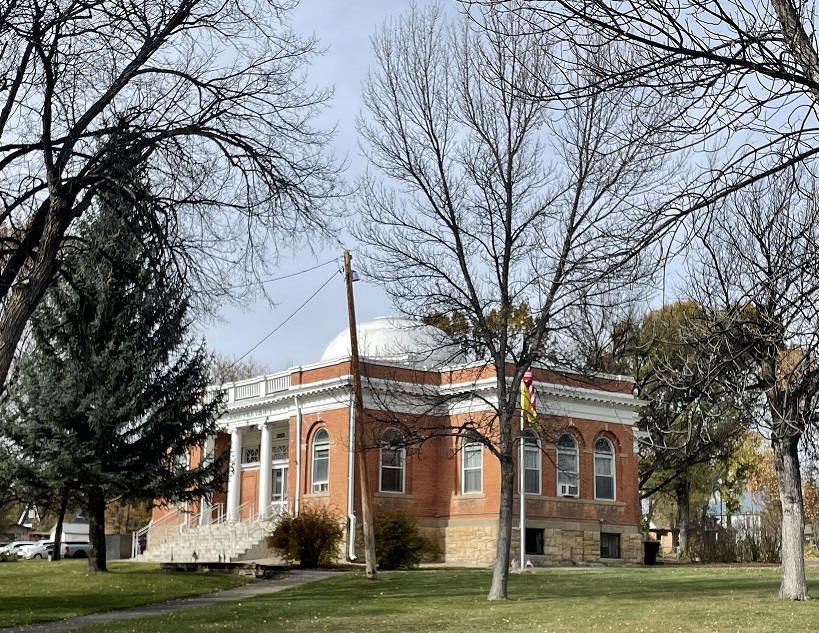
We stayed at the KOA Kampground a few miles south of Las Vegas. We’d camped there a few years ago when we had our small travel trailer and enjoyed it enough then; it was an enjoyable place once again, not the least because of a very tasty breakfast made by the campground hosts on Sunday morning (which happened to be Halloween). Later that very same day, Nancy and Gunther and Ken drove into Las Vegas proper for a bit of a self-guided tour. A Carnegie Library, built in either 1903 or 1904 (sources differ, but quietly so), occupies the center of a very pleasant grassy and tree-filled block in the middle of the city.
Carnegie Libraries were funded by the 19th century philanthropist Andrew Carnegie, who donated $40 million to build nearly 1,700 libraries between 1886 and 1917. Aspects of the library in Las Vegas, NM, recall Thomas Jefferson’s home, Monticello.
Many of the trees surrounding the library are identified by species with signage, but we visited too late in the year to see most of the trees leafed out. Still, it was a very pleasant day and we decided to walk around the block to see some of the historic houses near the library.
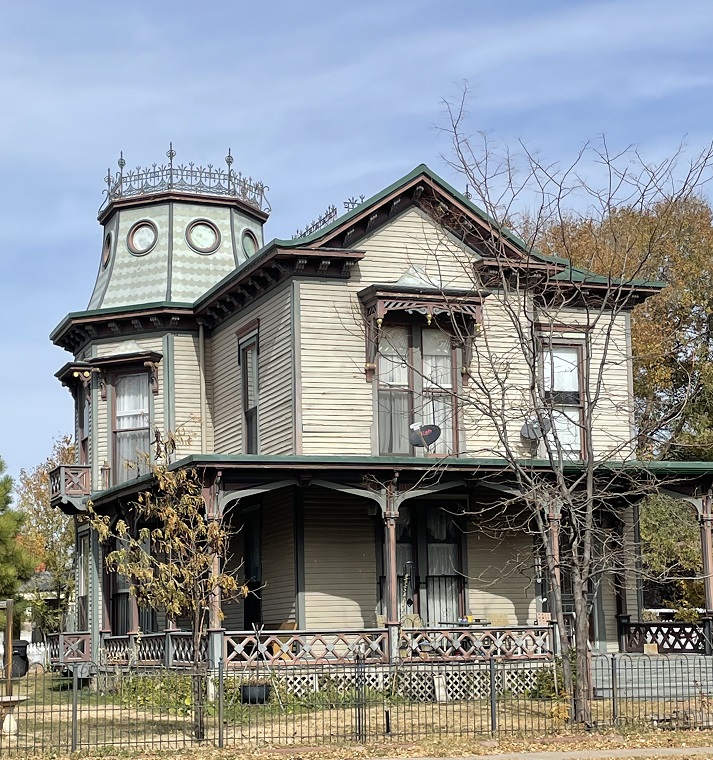
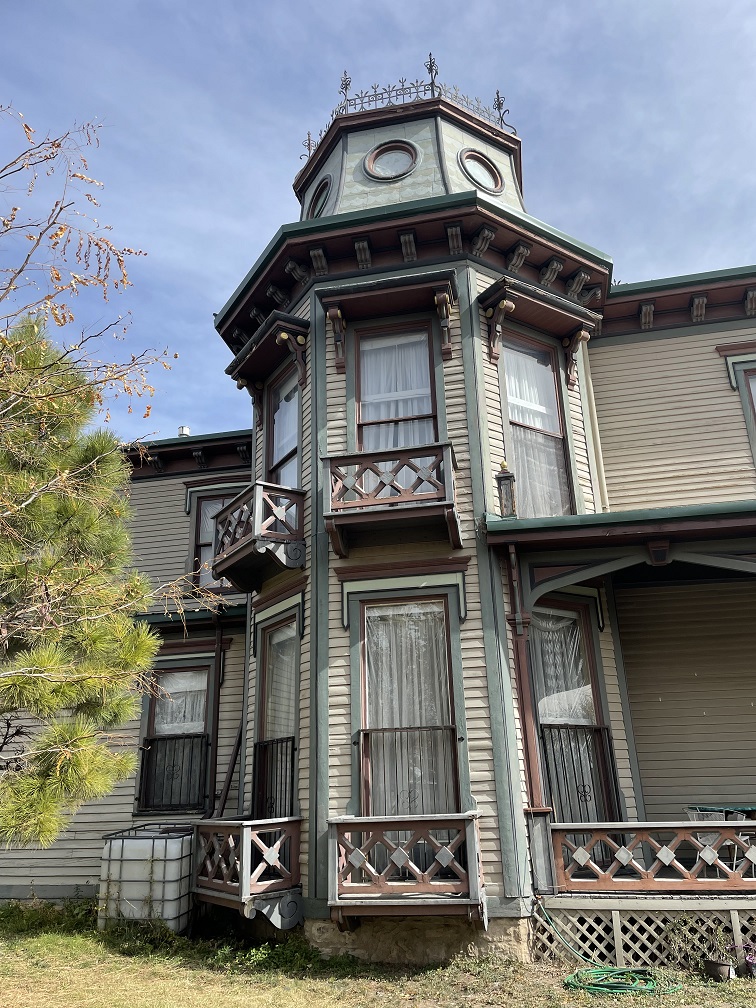
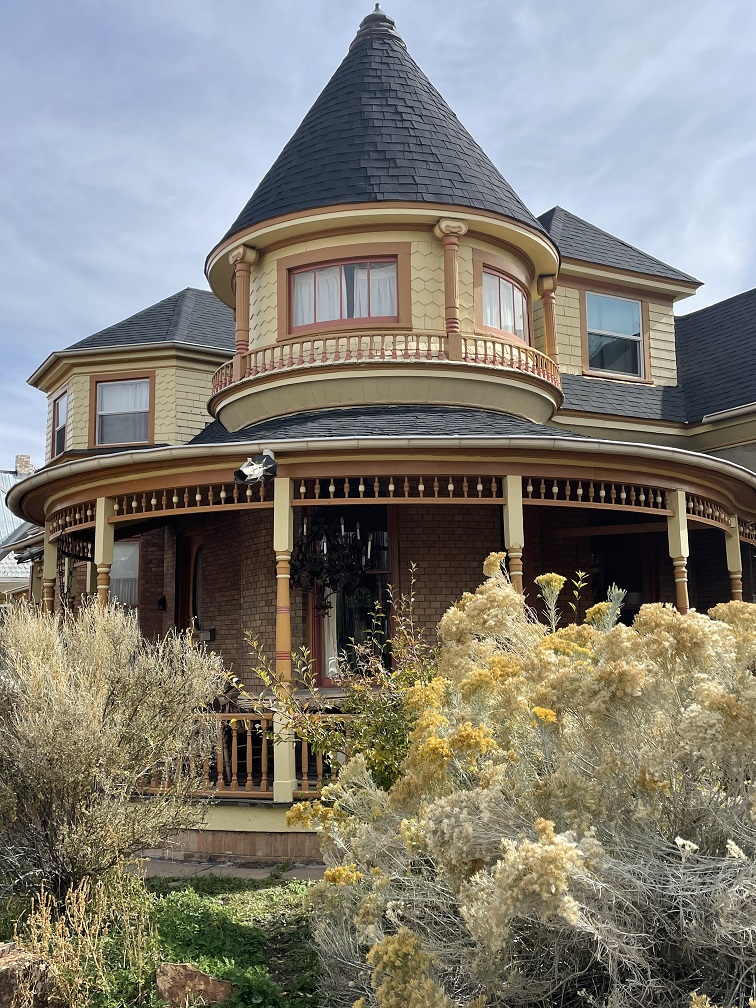
Don’t be fooled by the satellite dish and late-model Subaru Outback: this house at 512 Columbia St., just north of the library, in Las Vegas was built in 1882. According to a sign near the library, this is an example of a Picturesque Italianate Cottage. I’m inclined to agree.Perhaps it was because it was Oct. 31, but this magnificent house at 524 Columbia St., a few doors down from the Picturesque Italianate Cottage, looked especially creepy. It was built in 1881 by Charles W. Wiley, a railroad grading contractor who went on to become the mayor of East Las Vegas (as opposed to West Las Vegas, which was a separate municipality at the time). Wiley is also credited with bringing electric street lighting to the town.The building is now a bed and breakfast. It looks like a lot of work to maintain, but it’s really beautiful anyway.Many of the houses near the library had large, or even wraparound, porches. This house at 519 Washington St. has a very appealing front porch along with some other very interesting architectural features (in addition to a glorious specimen of rabbitbrush). It was built in 1898 and is 3,200 square feet.
There are a lot of really interesting historic homes in this neighborhood.
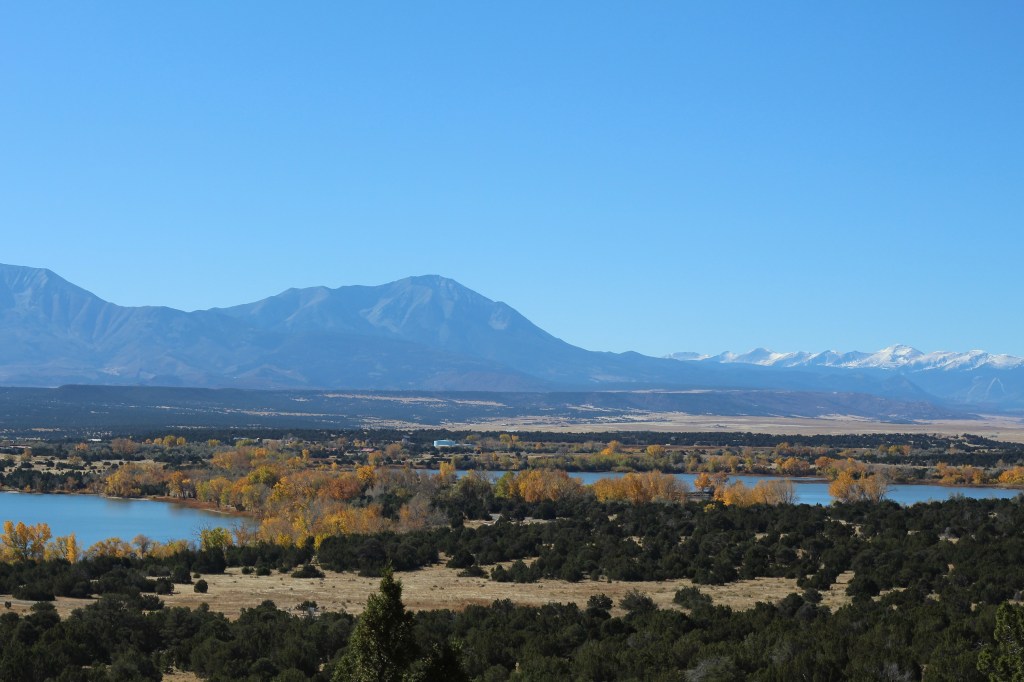
Nancy and I took a long lunch break to enjoy a hike above the Lathrop State Park campground. The Hogback Trail is a loop providing incredible views of the Spanish Peaks, the Sangre de Cristo mountain range, and the area to the north of the park including Pikes Peak (14,115 feet).
East Spanish Peak (on the left, 12,683 feet) and West Spanish Peak (13,326 feet) are a pair of mountains formed by igneous intrusions (lava flow) that overlook the two lakes of Lathrop State Park. West Spanish Peak is the easternmost mountain in the United States with an elevation greater than 13,000 feet. They were prominent landmarks on the Santa Fe Trail in the early 19th century. The Sangre de Cristo mountain range, topped with an early snowfall, is on the right.The same igneous intrusion process that formed the Spanish Peaks also formed a number of volcanic dikes in the area, including the hogback on which we were hiking.
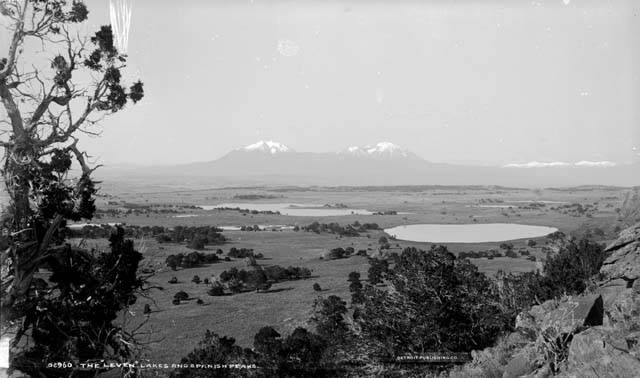
The famed photographer William Henry Jackson (1843-1942), whose images chronicled the American Civil War as well as the growth of the American West (his famous photograph of Colorado’s Mount of the Holy Cross, along with other images of the areas around present-day Yellowstone and Grand Teton national parks, convinced many people in the east that they needed to travel west), visited the area that is now Lathrop State Park in the 1880s. A short spur hike from the Hogback Trail takes one to the spot where Jackson took the photograph below; I took the one below that one about 120 years later (with the only lens and camera that I had on the hike, so it’s not a great match). Still, a pretty neat experience from a historical perspective.
We’re starting off in Colorado’s first state park, which opened in 1962. The state now has 42 parks across Colorado, and a new one, including the area around Sweetwater Lake in Gypsum, was just announced earlier this month.
Sunset at the entrance to the park. The Sangre de Cristo mountain range is on the western horizon.
Named after Harold Lathrop, the first director of Colorado’s Division of Parks and Outdoor Recreation (now Colorado Parks & Wildlife), the park has two large (for Colorado) lakes that attract a huge variety of migratory birds throughout the year. On a walk around one of the lakes, Ken saw two birds he’d never seen before: a western grebe (which had just happened to catch an early supper) and a juvenile snow goose.
In addition to the grebe and goose, Ken saw American coots, Canada geese, seagulls, American robins, and mallard ducks all enjoying a late afternoon at the lake.
Lathrop State Park is about an hour’s drive east of Great Sand Dunes National Park. On Sunday, Oct. 24, we took Gunther on a visit to the dunes, which are the tallest in North America – some are 750 feet tall.
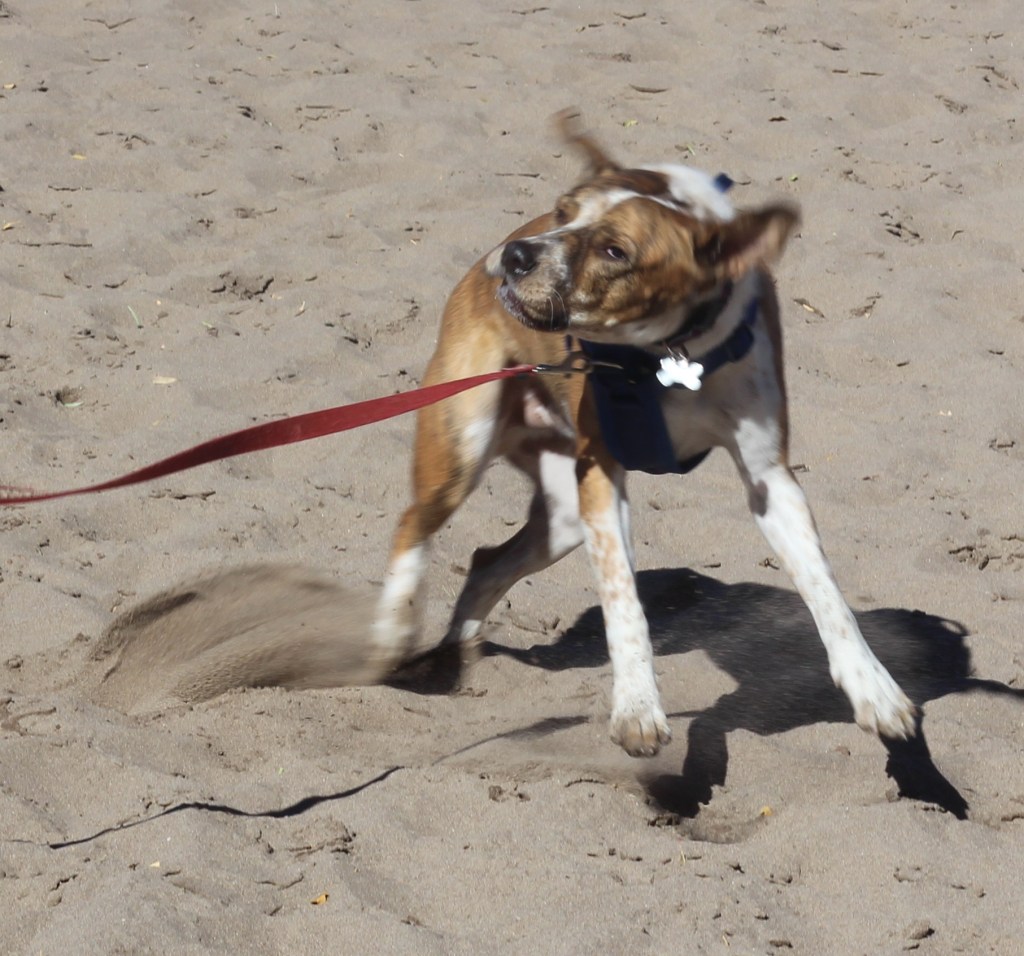
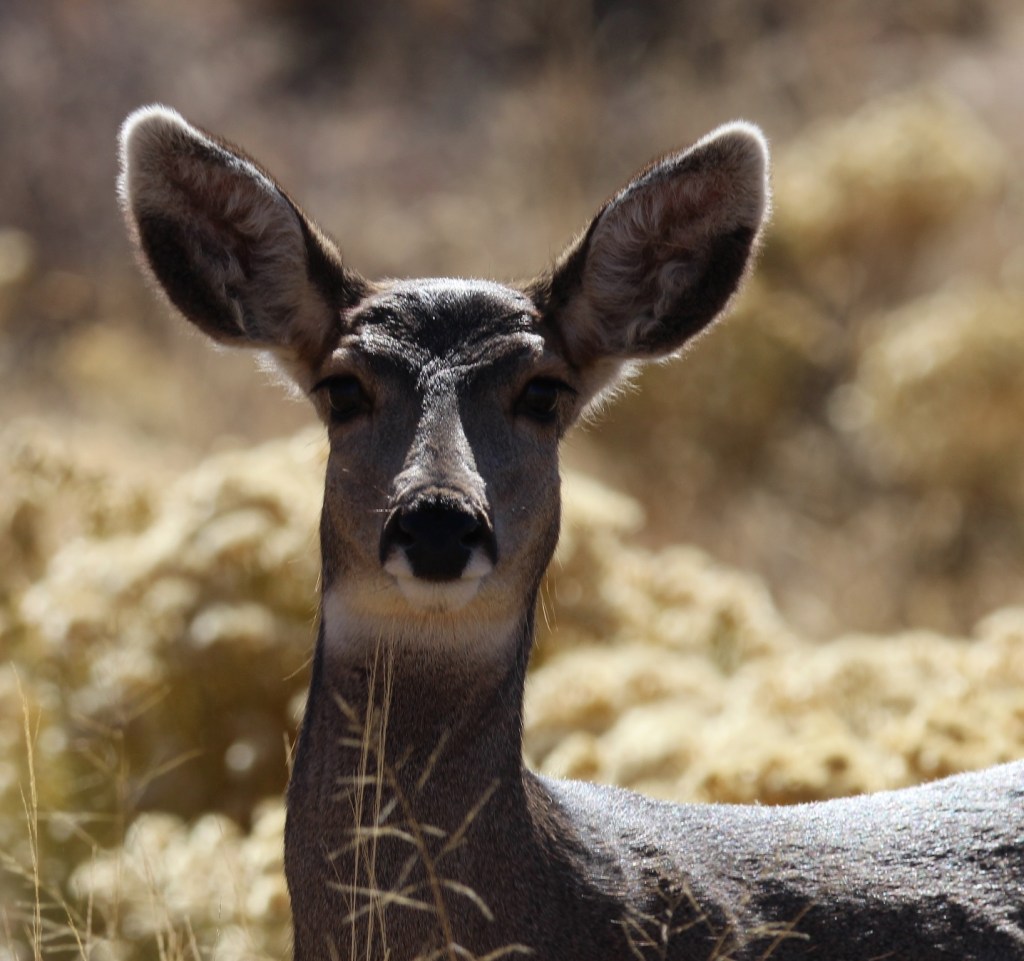
The eastern side of the Great Sand Dunes from the national park’s visitor center, about half a mile away. Mt. Herard (13,345 feet) is in the background. It’s estimated that the dunes contain 1.2 cubic miles of sand (imagine a cube with edges 1.2 miles long and then fill it with sand).We were both surprised at how many visitors the dunes received that day, given the time of year. Many were apparently from other countries, which is fairly common to experience during the off-season. The park attracts about half a million people each year.Gunther had a great time running and jumping around in the sand. We enjoyed ourselves as well, although we neither ran nor jumped.While we enjoyed a picnic lunch in the parking lot of the dunes, a small herd of mule deer paraded by. There were two bucks and probably eight or 10 does like this one.






 Tales of The Goddard