
Amarillo, Texas – October 16, 2026
I’m finishing up this blog posting on Oct. 23, 2026, the five-year anniversary of Nancy and I pulling away from our Denver home, then under a sales contract, in The Goddard and starting our lives as full-time RVers. We’ve been to 19 states and in dozens of small towns and big cities since then, and we’ve had the opportunity to see wonders both natural [Grand Canyon National Park in Arizona, Yellowstone National Park in (mostly) Wyoming, remarkable sunsets in Albuquerque and Texas] and manmade (Hoover Dam in Nevada and Arizona; the Ford Motor Company’s historic River Rouge plant in Dearborn, Michigan, that can produce a thousand F-150 pickups every day, and museums that exhibit everything from airplanes to the Dust Bowl to barbed wire).
One of our favorite types of museums to visit is a collection devoted to automobiles. Some focus on a specific model, like the Jeep museum in southern Utah that I still need to write about, and others that display vehicles from a wide variety of manufacturers.
Bill’s Backyard Classics, in Amarillo, Texas, is one of the latter, and it’s a good one. Bill Pratt was a successful entrepreneur – he held nearly 90 patents, mostly in the beef industry – and he and his wife, Linda, moved to Amarillo from Oklahoma after selling his business. His professional success left him with the resources to pursue one of his hobbies: acquiring classic cars. He pursued that hobby pretty hard; the collection over the years grew to more than 100 vehicles. In 2015 he and Linda built Bill’s Backyard Classics to house the collection so that the vehicles could be appreciated by the general public.
Bill bought all of the cars already refurbished and in their then-current states – some have new engines, for example, or CD players in the dashboard that didn’t exist until 20 years after the vehicle was first produced. Some don’t need any work at all: the collection includes a 1956 Cadillac Series 62 sedan that has 14,733 miles on the odometer. Many people drive their vehicles more than that many miles in a single year. Also, except for one that has a cracked engine block, all of them still run.
Although the collection includes dozens upon dozens of vehicles, it’s pretty apparent that Bill was a General Motors guy: the museum includes lots of Cadillacs and Chevrolets and Buicks (and there’s absolutely nothing wrong with that), but there are plenty of Fords, and Jeep and Hudson and Dodge and other makers are represented as well. Signage on each vehicle’s windshield gives information about the engine, transmission, standard and optional equipment, and the sequential number of the vehicle in Bill’s collection.
Bill (Nov. 5, 1942 — Oct. 21, 2020) and Linda (Sept. 19, 1943 — Jan. 1, 2023) may be gone, but their wonderful automotive legacy lives on at Bill’s Backyard Classics.
Thanks to the museum’s docent Kay, who took time out of her day to show Nancy and me around and offered so much background information on the vehicles we saw. She’s great.
1928 Ford Model A
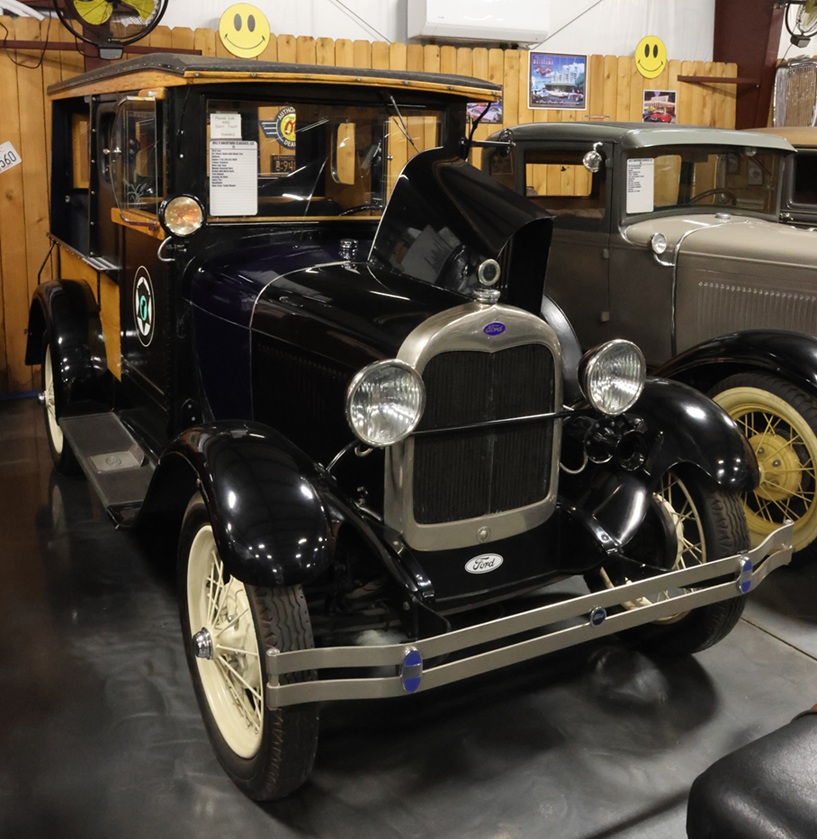
This Model A, the 72nd vehicle in Bill’s collection, is a truck that has been converted for use by a law-enforcement agency – the logo of the Mohave County (Arizona) Sheriff’s Department is on the doors, and the back compartment has a wooden bench with a ball and chain. Colloquially it’s a “paddy wagon,” although that term didn’t come into usage until the 1930s. Model As came with a 201 cubic-inch-displacement (CID) (3.3 L) engine that provided 40 horsepower (HP). The cars had a top speed of about 65 MPH (105 KPH).
Ford produced the Model A and all of its different styles – coupes, convertibles, phaetons, town cars, Victorias, station wagons, and more – from October 1927 through March 1932, building 4.8 million cars during that time.
Ford Motor Company’s cars have been popular with police and sheriff’s departments since the company’s beginnings, and Ford often sells cars directly to law-enforcement agencies. My dad was the sheriff of a rural county in eastern Colorado, and a specially equipped Explorer or a Ford Crown Victoria with the Kit Carson County Sheriff’s Department logo on their doors spent their nights in our garage (my 1971 Ford Mustang had to spend its nights outside). I don’t know what the top speed of those law-enforcement vehicles was, but I imagine they could go faster than 65 MPH. If I remember correctly, my Mustang was capable of occasionally exceeding 65 MPH.
1929 LaSalle Series 328
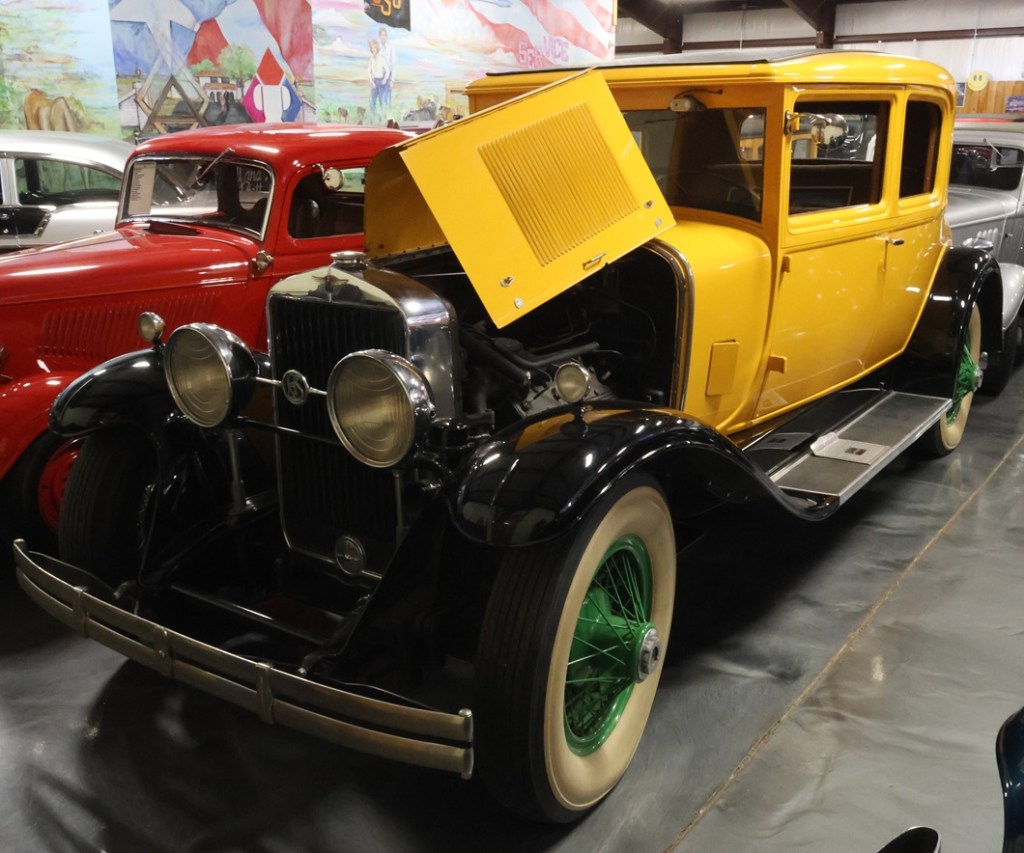
In the 1920s, Alfred P. Sloan (May 23, 1875 – February 17, 1966), president, chairman, and chief executive officer of General Motors, saw that a gap existed between luxury vehicles, like GM’s own Cadillac marque, and the lower-priced vehicles represented by the company’s Chevrolet line. The introductory LaSalle model, one of the vehicles intended to fill that gap, was designed by Harley Earl (November 22, 1893 – April 10, 1969), who would go on to become a GM vice president. Among his other work at GM, Earl started a project there that would result in the introduction of the Chevrolet Corvette; the idea of a “concept car” idea, showcasing new automotive technologies or styling that may or may not show up later in production vehicles, was his as well. Also, “Harley” is an excellent first name.
The LaSalle name is featured in one of the lines in “Those Were The Days,” the opening theme song of the television show “All In The Family,” in which Archie and Edith Bunker sang, “Gee, our old LaSalle ran great.” And gee, they did indeed run great: in 1927 at GM’s Milford Proving Ground, which is still extant in Milford, Michigan, a LaSalle with a 303 CID (5.0 L) engine ran for 952 miles (1,532 K) and averaged 95.2 MPH (153.2 KPH). For comparison, the winner of the Indianapolis 500 that year averaged 97.5 MPH (1,569 KPH) in the race. The Series 328, pictured here in resplendent yellow, represented a major engine upgrade to the LaSalle with a 328 CID (5.4 L) V8 powertrain, offering 85 HP.
The LaSalle was a very popular car – GM sold 22,691 of the 1929 models– and annual sales in later years sometimes exceeded the number of Cadillacs sold. However, The Packard Motor Company’s Twelfth Series One-Twenty, introduced in 1935, outsold LaSalles by an average of 72 percent in the years 1935-1940, and GM decided to discontinue the LaSalle brand and bring its legacy into the Cadillac marque.
You might recognize, as I did, Sloan’s name from the philanthropic organization he started in 1934: the Alfred P. Sloan Foundation, currently at an endowment of more than $2 billion. Among other science- and technology-related efforts, the foundation is a longtime supporter of programming like “American Experience” on the Public Broadcasting Service (PBS).
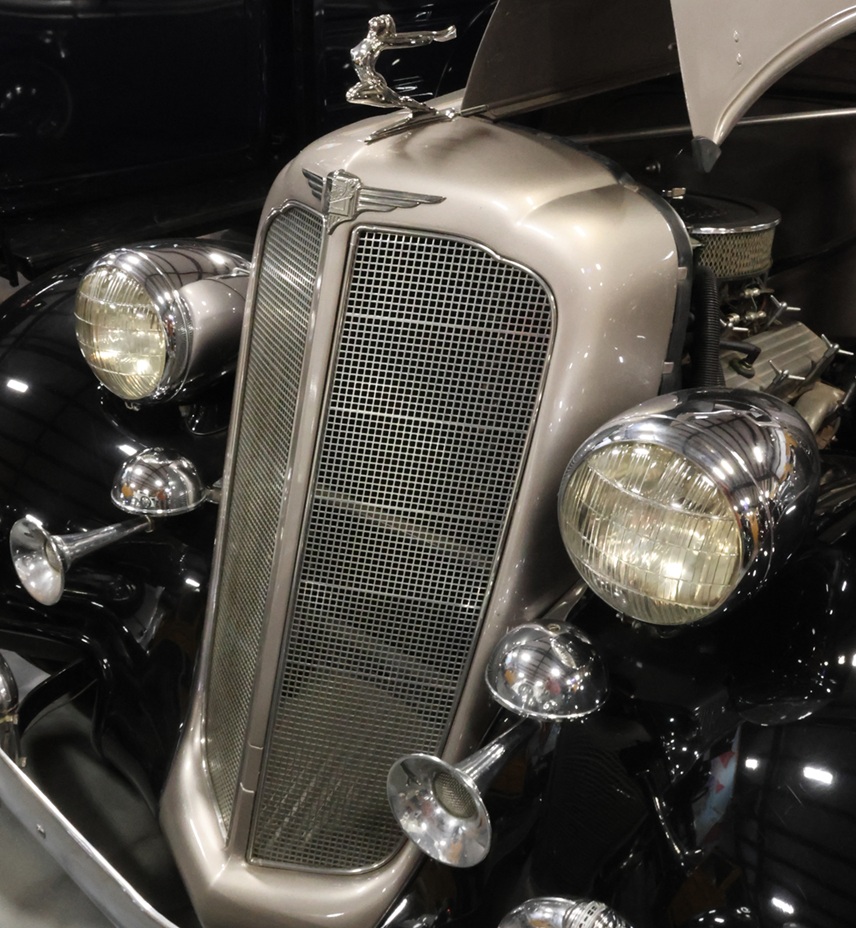
1934 Buick Sedan
1945 Jeep (Military)
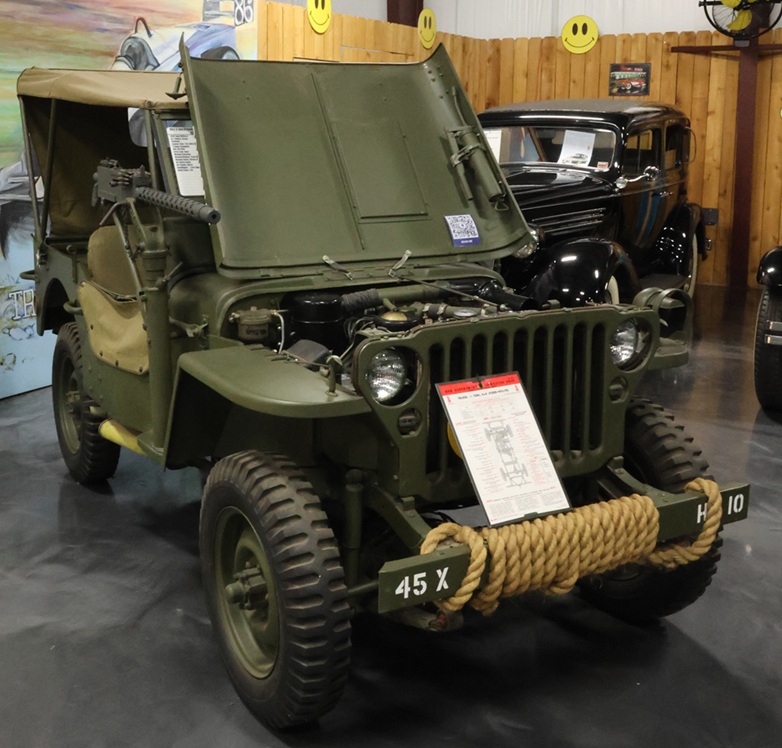
In the very early 1940s, realizing that the United States would likely be entering the European theater of World War II, the U.S. government requested prototypes of a four-wheel-drive reconnaissance vehicle from 135 companies; only two answered the call: The American Bantam Car Company and Willys-Overland. Bantam produced a prototype that met most of the U.S. Army’s specifications, but lacked production capacity to deliver the quantity needed by the U.S. government. The Army gave the Bantam design to Willys and Ford, both of which made design enhancements before each developed 1,500 prototypes (Bantam also made the same number) for testing. After Willys included the L134 “Go Devil,” a powerful-for-its-size 134.2 CID (2.199 L) engine that produced 60 HP (45 KW), the Army awarded the production contract to Willys.
Because a large number of vehicles were needed quickly, the United States Department of War requested that Willys grant the U.S. government a license to select another supplier to produce the Willy’s Jeep using the company’s specifications – that supplier was Ford, which had plenty of manufacturing capacity and expertise. Like all automotive manufacturers during the years of the country’s involvement in the war, Ford had ceased building cars and began building war materiel. The company famously converted its Willow Run production facility into a B-24 Liberator factory, producing one bomber every 63 minutes. The very familiar vertical-barred grill of a Jeep, by the way, was a design contribution from Ford – that design even became part of Jeep’s logo for many years. American Bantam, the original designer, also contributed about 2,700 Jeeps to the war effort, but later focused on the production of heavy-duty trailers for the U.S. Army.
The particular vehicle on display in the museum looks like it has been in a secure storage environment since 1945 – absolutely immaculate, with all of the period hardware as well. I’ve not seen a Jeep with a mounted machine gun, for instance, and there are other weapons, ropes, and tools stowed and stored all over the vehicle.
Willys-Overland was purchased by Kaiser Motors in 1953, and Kaiser-Jeep was sold to American Motors Corporation (AMC) in 1970.
The Jeep, born out of military needs, was highly influential as a forerunner of today’s incredibly popular sport utility vehicle market. Willys launched the Jeep CJ (for Civilian Jeep) following World War II, and the Jeep Wrangler took up the reins in 1986 and has been in production since then. Jeeps also led to modern military four-wheel-drive vehicles, such as the Humvee, and to civilian SUVs such as Land Rovers and Ford Expeditions and Chevrolet Suburbans and dozens of other domestic and foreign-made models including smaller SUVs such as the Ford Escape and Subaru Outback. Jeep, now owned by Chrysler (which is itself owned by a multinational company called Stellantis) which bought it from AMC in 1987, plans to sell eight different models, ranging from the Wrangler to the Grand Wagoneer, in North America by 2030.
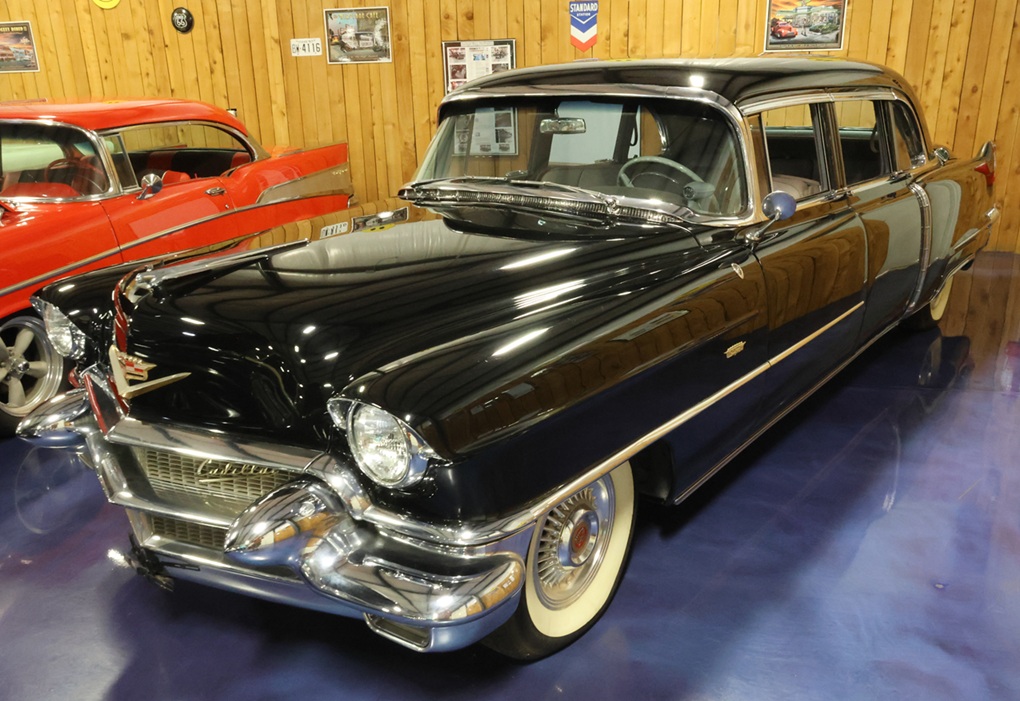
1956 Cadillac Fleetwood Series 75 Limousine
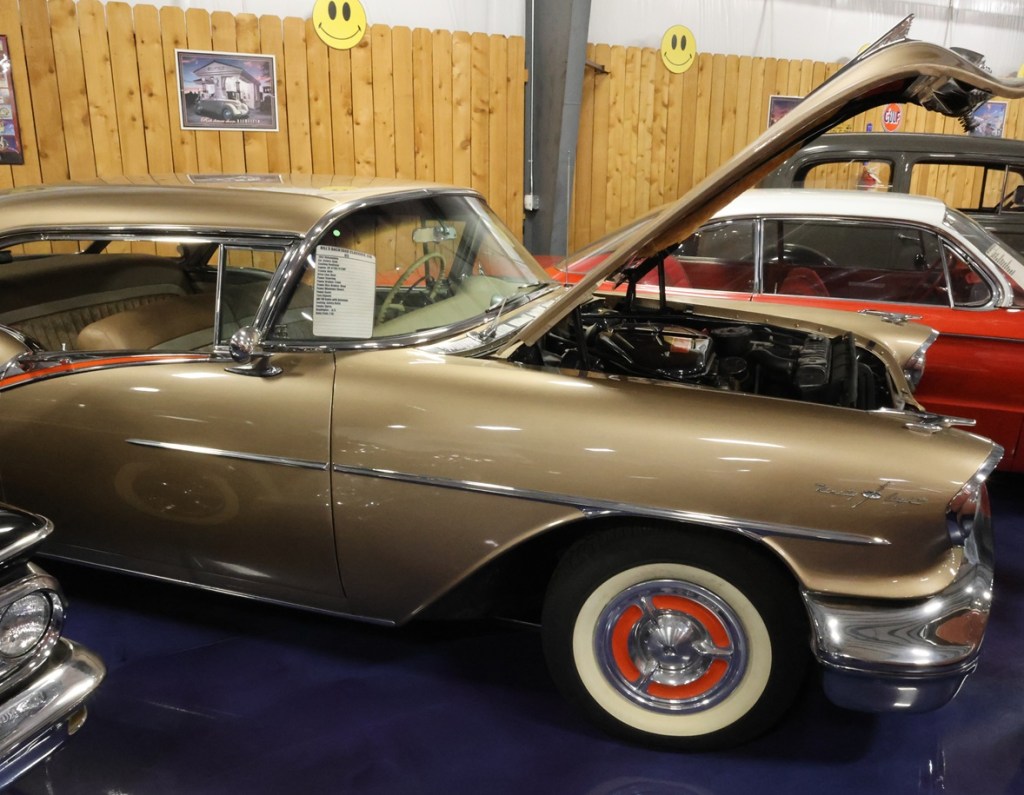
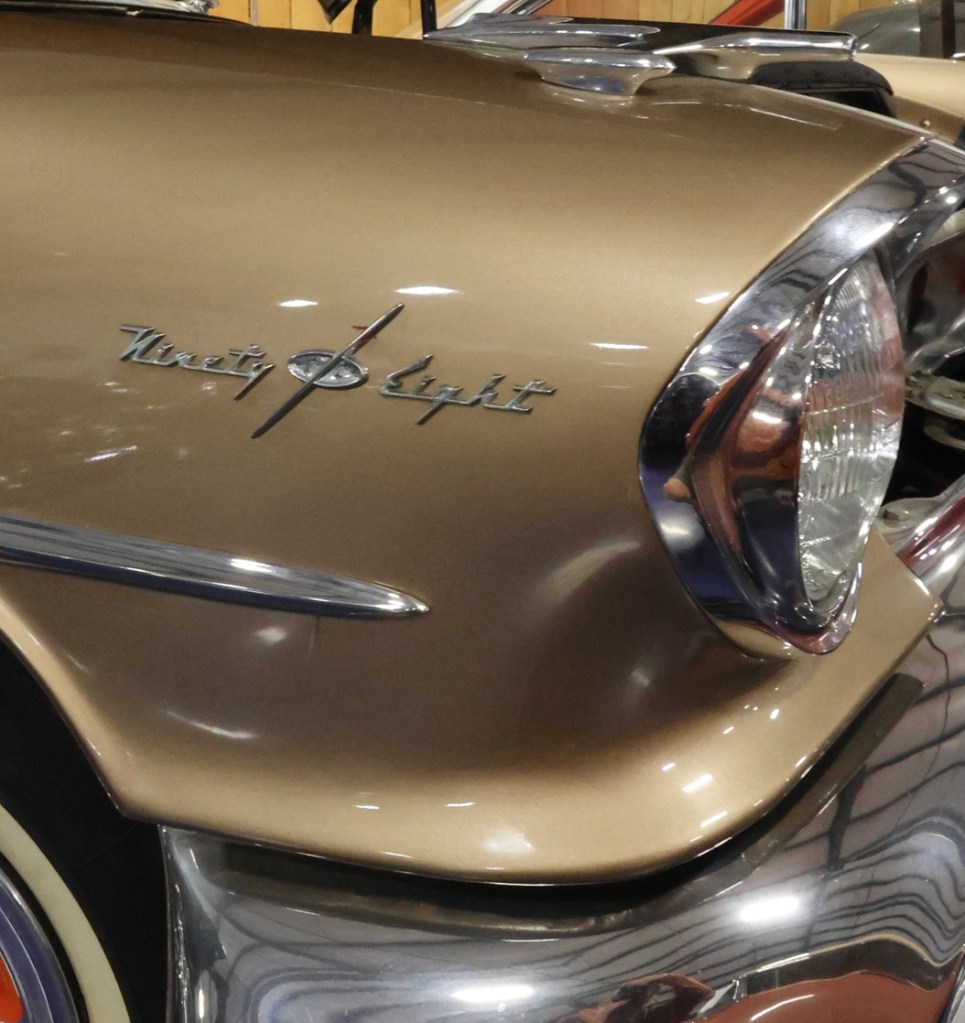
1957 Oldsmobile Ninety Eight
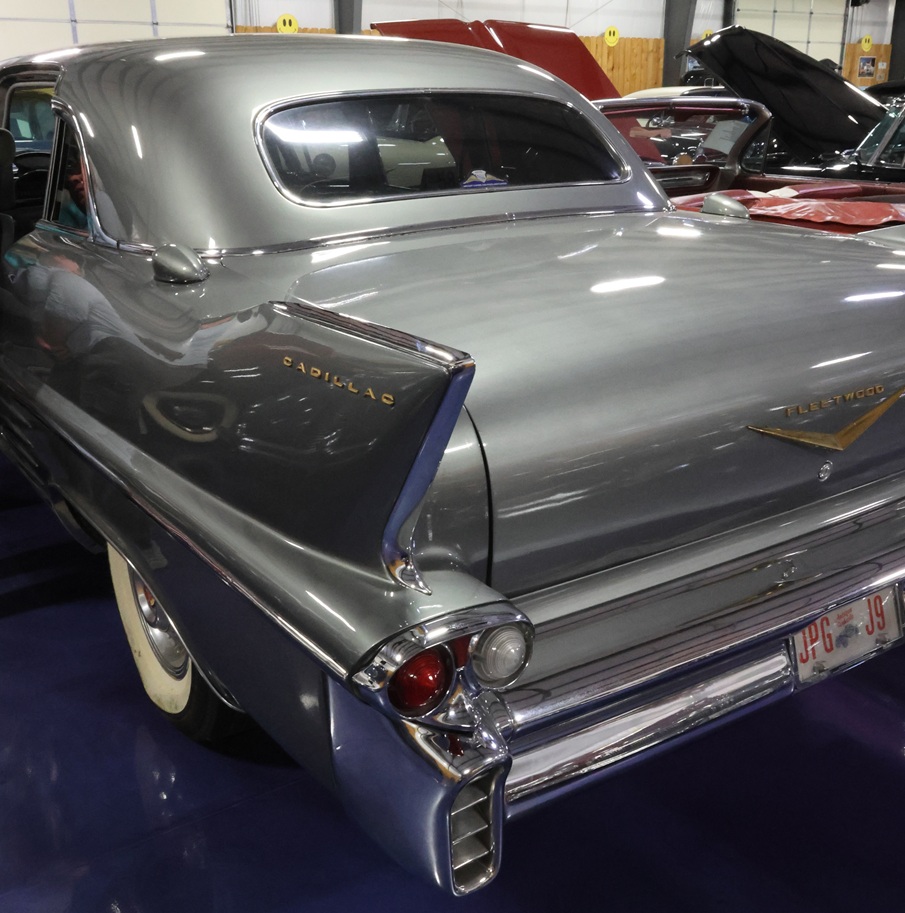
1958 Cadillac Limousine
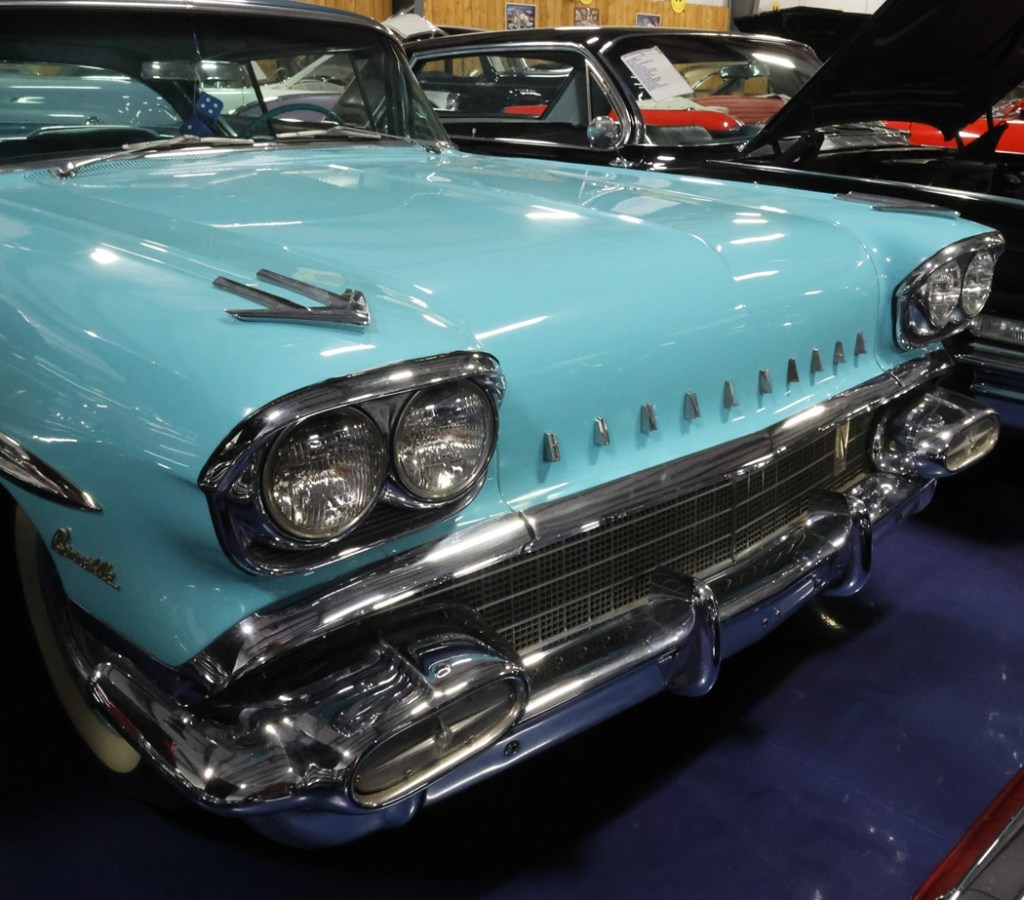
1958 Pontiac Bonneville
1965 Ford Thunderbird
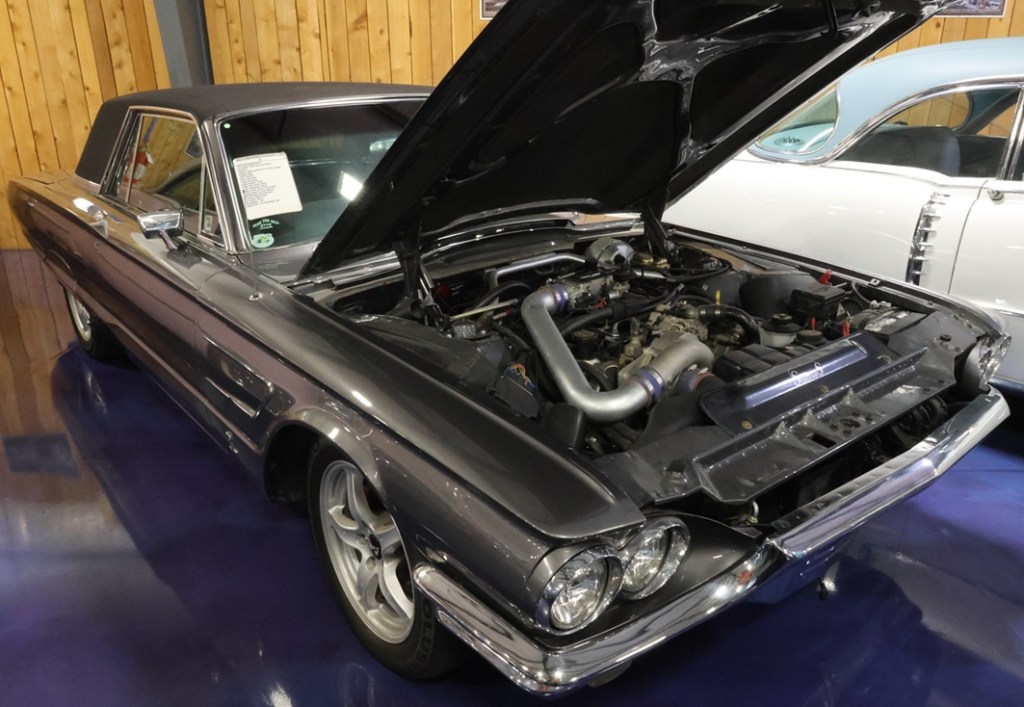
One of the things I liked about my 1971 Mustang coupe was that the engine compartment, even with a 302 CID V8 engine, had plenty of room to work inside it. This T-Bird does not have that room, but it’s likely because the original 390 CID V8 engine with 300 HP was replaced with a Cobra Jet 289 CID V8 that offers 390 HP – a thirty-percent increase. Ford produced the Thunderbird until 1997, and then reintroduced the model as a two-door passenger convertible in 2002. After initial strong sales, those numbers dropped again and Ford stopped building Thunderbirds in 2005.
1968 Chevrolet Camaro SS
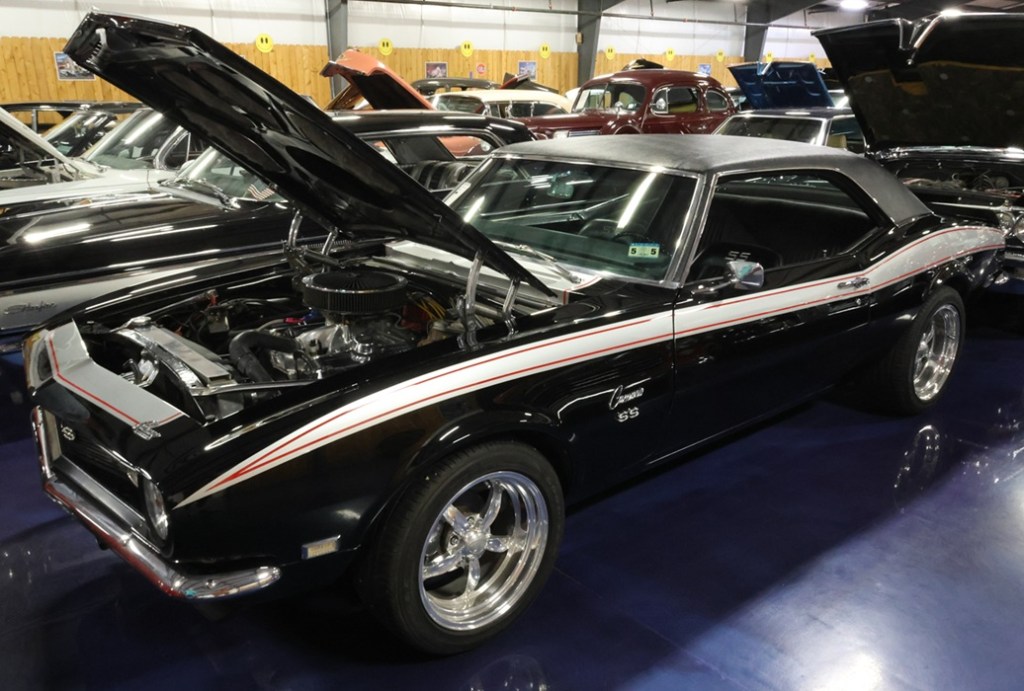
I’m a fan of the late-1960s musical group The Turtles (“Happy Together,” “You Baby,” “She’d Rather Be With Me”), which also recorded a fantastic commercial jingle for the Chevy Camaro (YouTube link). Do yourself a favor: listen to that song while imagining yourself behind the wheel of this car – it’ll drive you absolutely mod!
As shown directly behind the front driver-side wheel, this particular Camaro came with the Super Sport (SS) performance package, which included an upgrade to a 350 CID (cubic inch displacement) engine, an improved chassis to manage the additional engine power and offer improved handling, and aesthetic additions like non-functional air inlets on the hood, special paint striping, and the “SS” badging on the car. Of 235,147 Camaros built by Chevrolet in 1968, this is one of only 27,884 Super Sport models.
The 1968 Camaro SS had an additional option for a 396 CID engine that produced 350 horsepower at 5,200 RPM and 415 lb-ft of torque, which is a measurement of how quickly a vehicle’s engine allows it to start off the line from zero MPH, and how easily the vehicle can begin moving a load. The engine in the photo of this car is neither a 350 CID nor a 396 CID: at some time, a previous owner dropped a Chevrolet 454 CID engine into this car (the horsepower provided by the original 350 CID or 396 CID engine was apparently not sufficient). The 454 CID engine was introduced by Chevrolet in 1970 and was originally used in early 1970s Chevy muscle cars, including the Corvette, Chevelle, El Camino, and Caprice. The 454 CID engine’s maximum horsepower is 450 HP at 5,600 RPM, with maximum torque of 500 lb-ft at 3,400 RPM. The 454 CID engine remains popular in cars whose owners want them to go really, really fast.
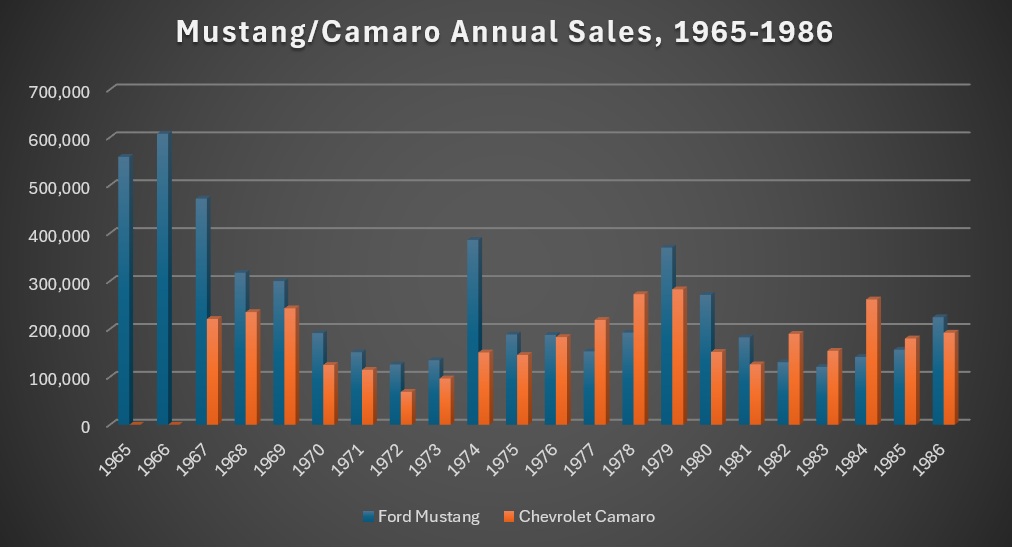
As for the race for market share, the Ford Mustang is still in production while the Chevrolet Camaro stopped production between 2003 and 2009, and then resumed until ceasing again in 2024. The Camaro’s biggest model year was 1979, in which nearly 283,000 cars were produced (almost 370,000 Mustangs were built that year).
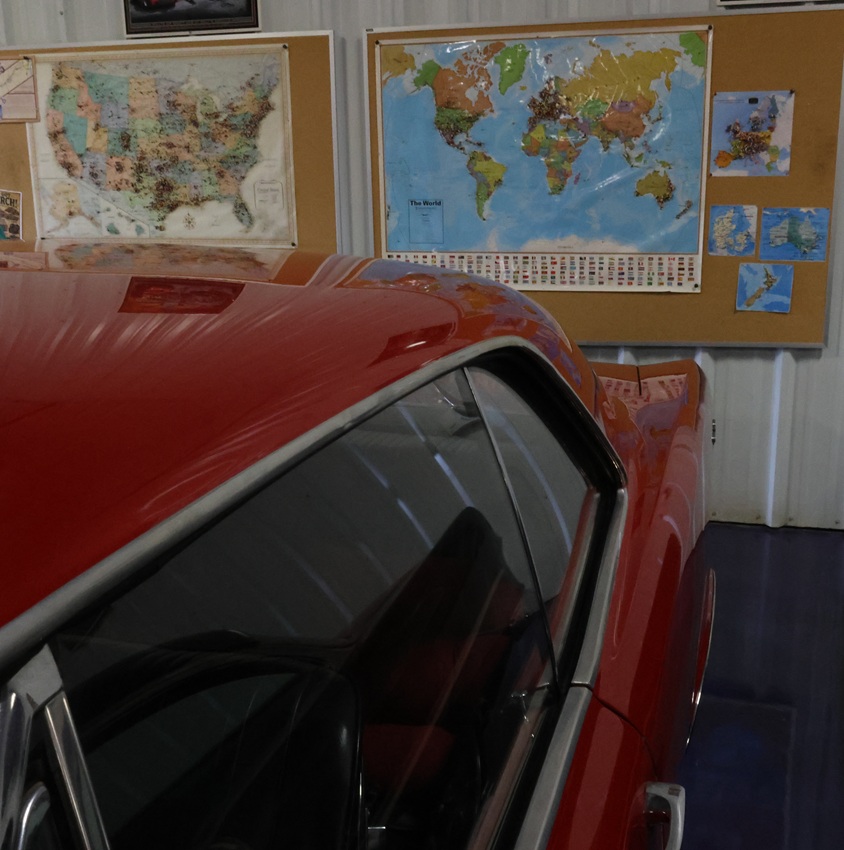
Given that the Model A engine produced 40 HP and the Camaro’s produces 450 HP, it’s pretty remarkable that only 40 years separate the first and last vehicles on this page. In those decades, the automobile industry saw incredible innovations and advancements in technology, safety, fuel efficiency, comfort, and style. Bill’s Backyard Classics provides a great opportunity to see those changes – vehicles didn’t used to come with seat belts, for instance, or turn signals, or storage trunks – gradually take place. It’s one of many car museums Nancy and I have visited, and it’s one of our favorites.


Leave a Reply