While traveling around the country, Nancy and I try to visit botanic gardens whenever possible. In addition to the great opportunity to see all kinds of different plants, botanic gardens’ trees and flowering plants also attract a great variety of birds, butterflies, and other wildlife that we enjoy seeing and photographing.
Until October 2021 when we sold our Denver home and became full-time RVers, we made regular visits to Denver Botanic Gardens’ two sites. We’d most often go to the gardens in central Denver, but we also went to the gardens near Chatfield Reservoir in the southwestern metro area.
I was very fortunate to make a return visit to Denver Botanic Gardens’ central Denver site in early August, bringing along a camera and lens that I didn’t have five years earlier. I was planning to get a lot of photos of birds, but instead found a lot of other wildlife to enjoy.
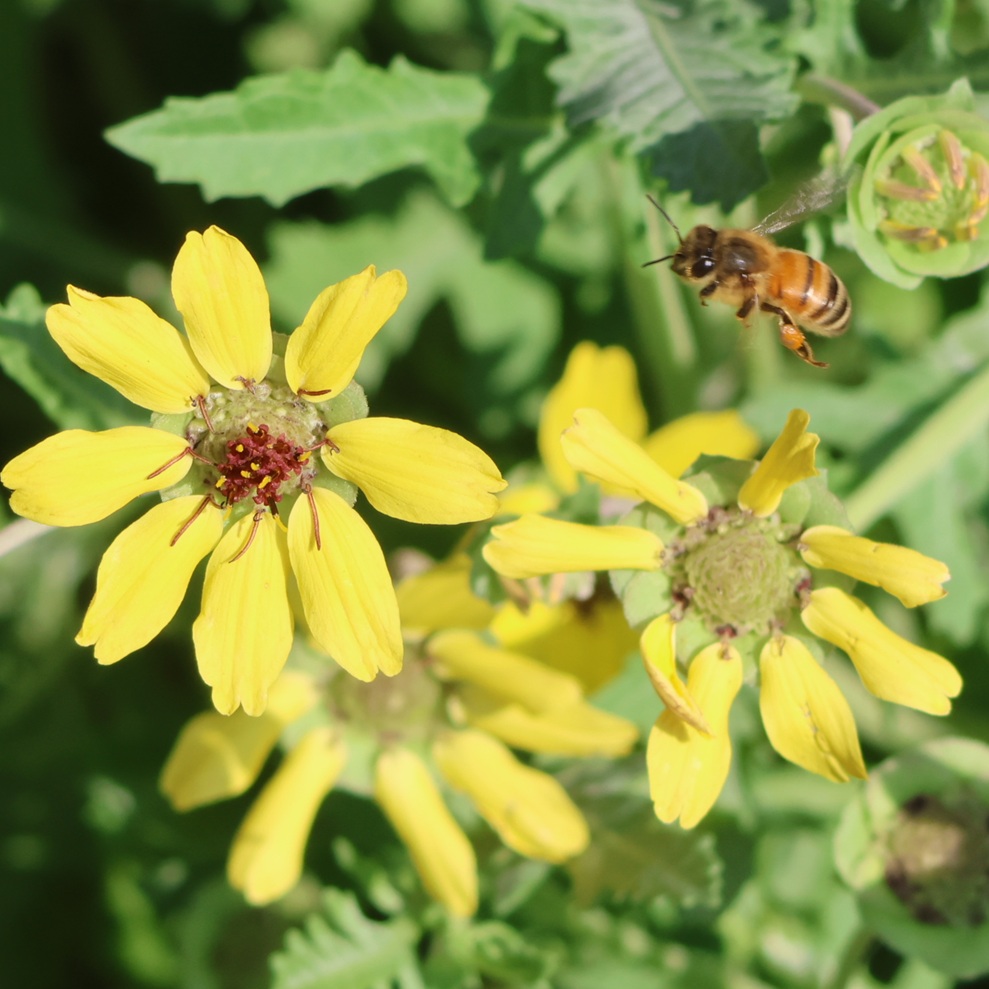
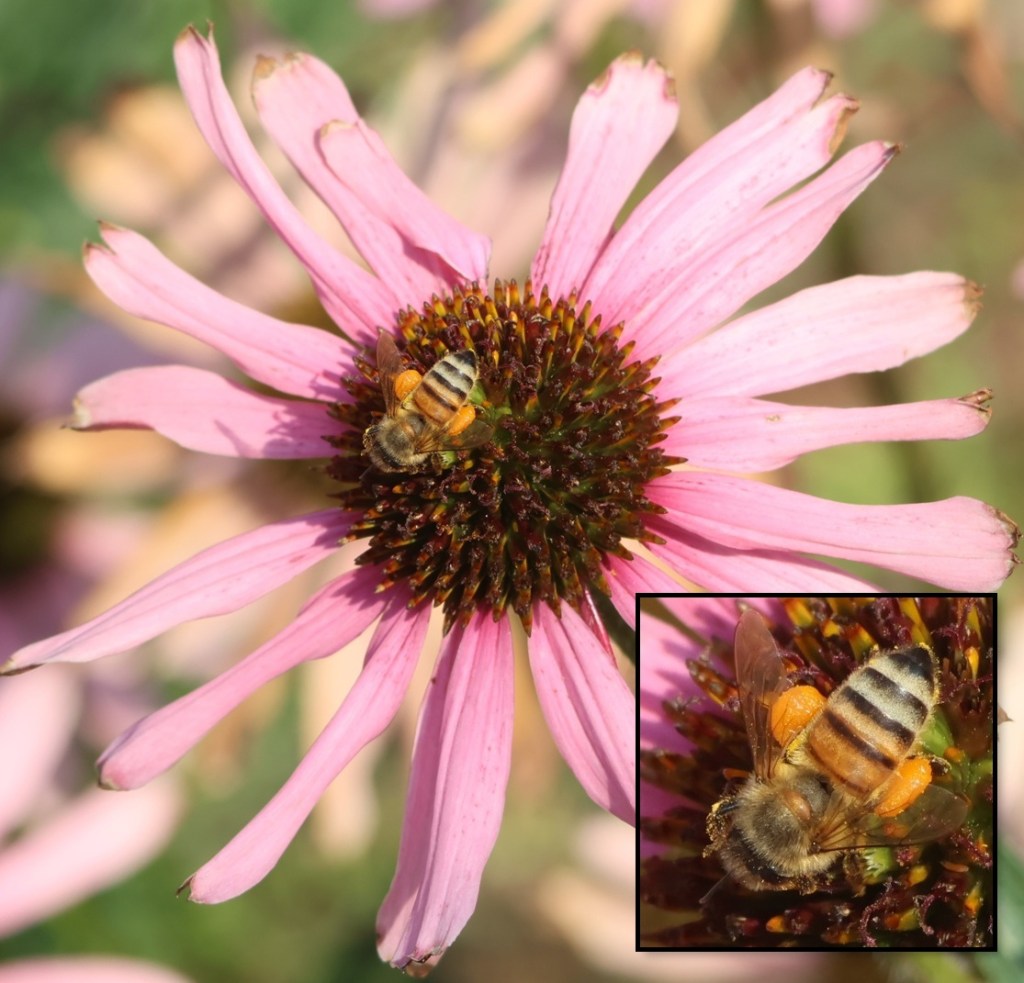
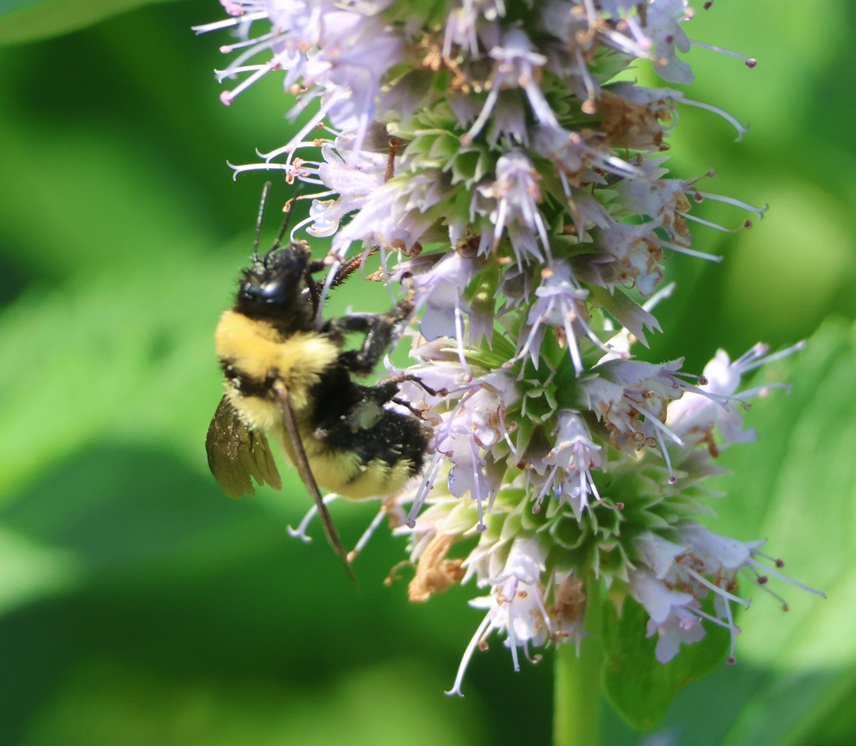
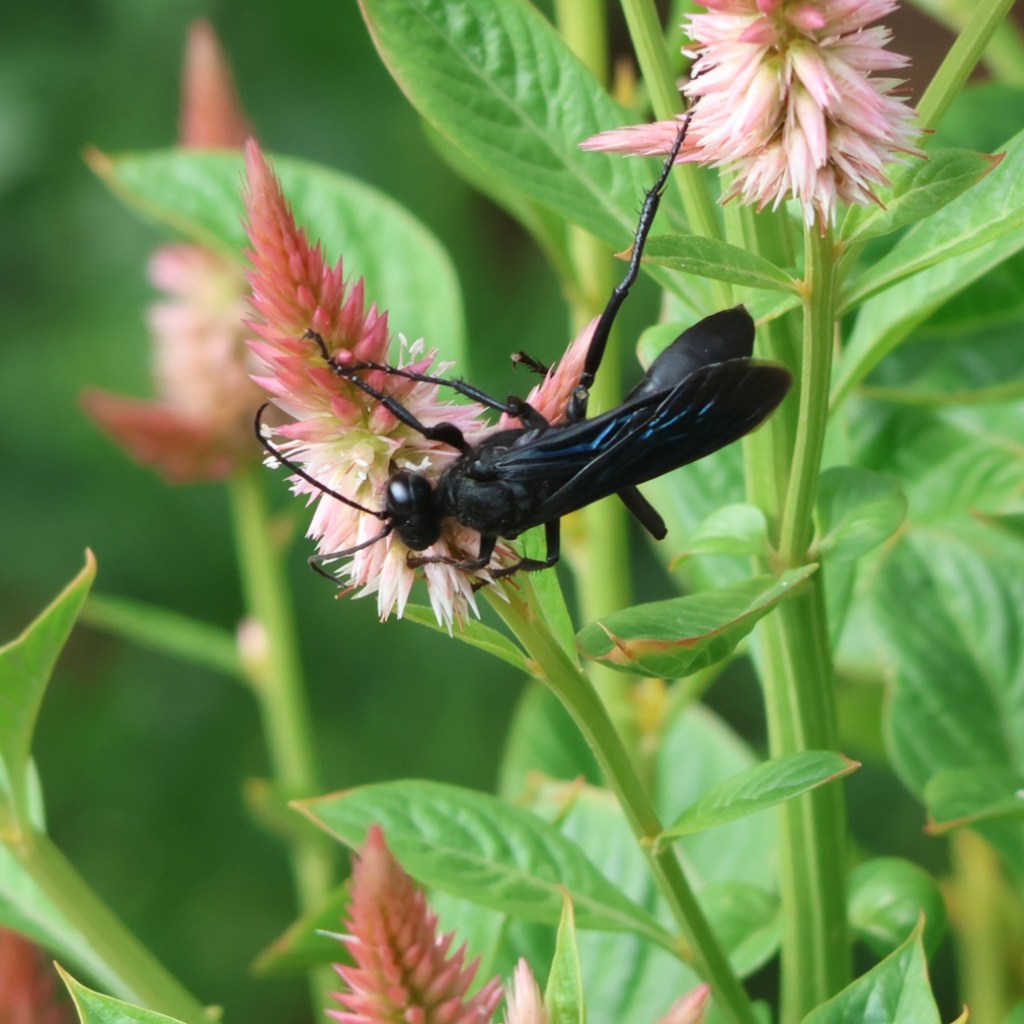
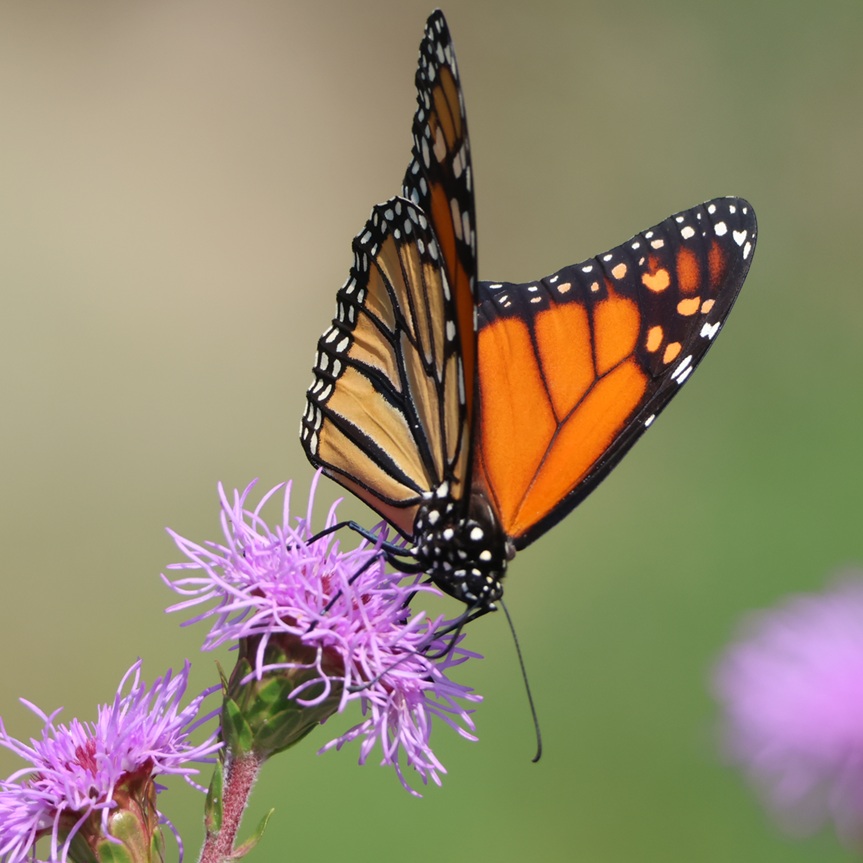
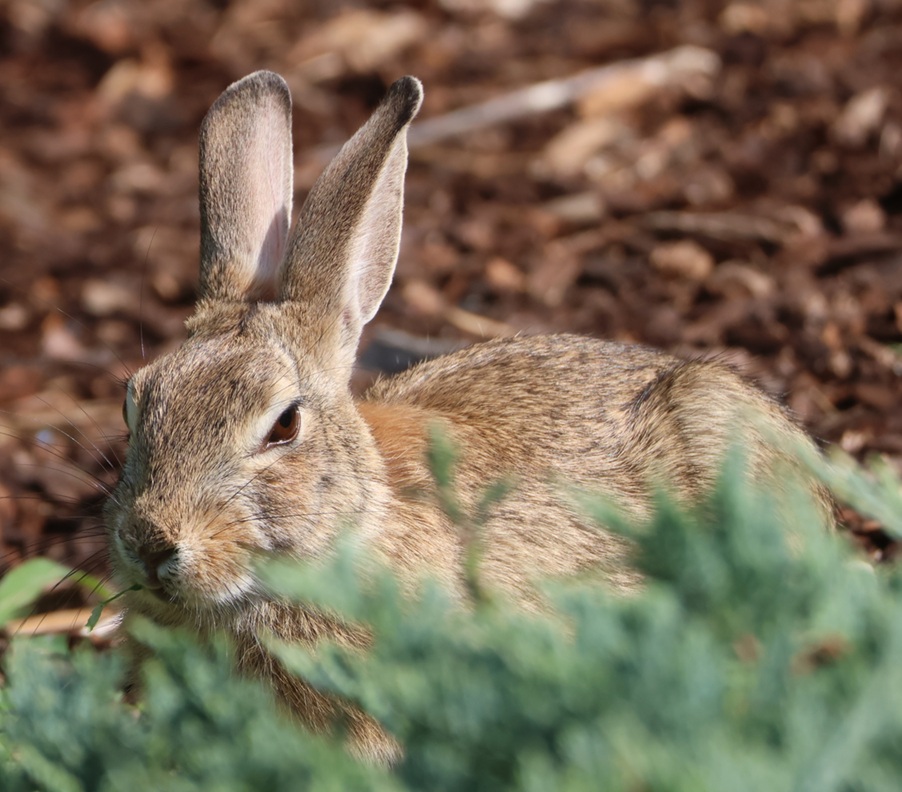
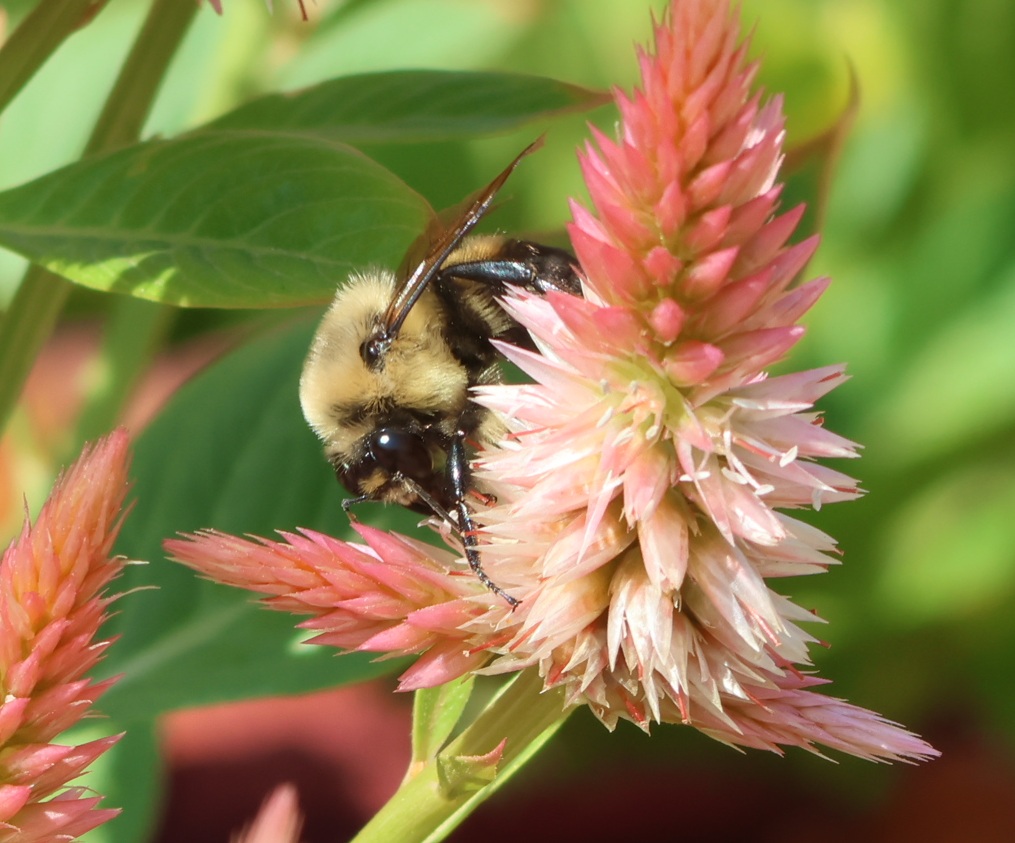
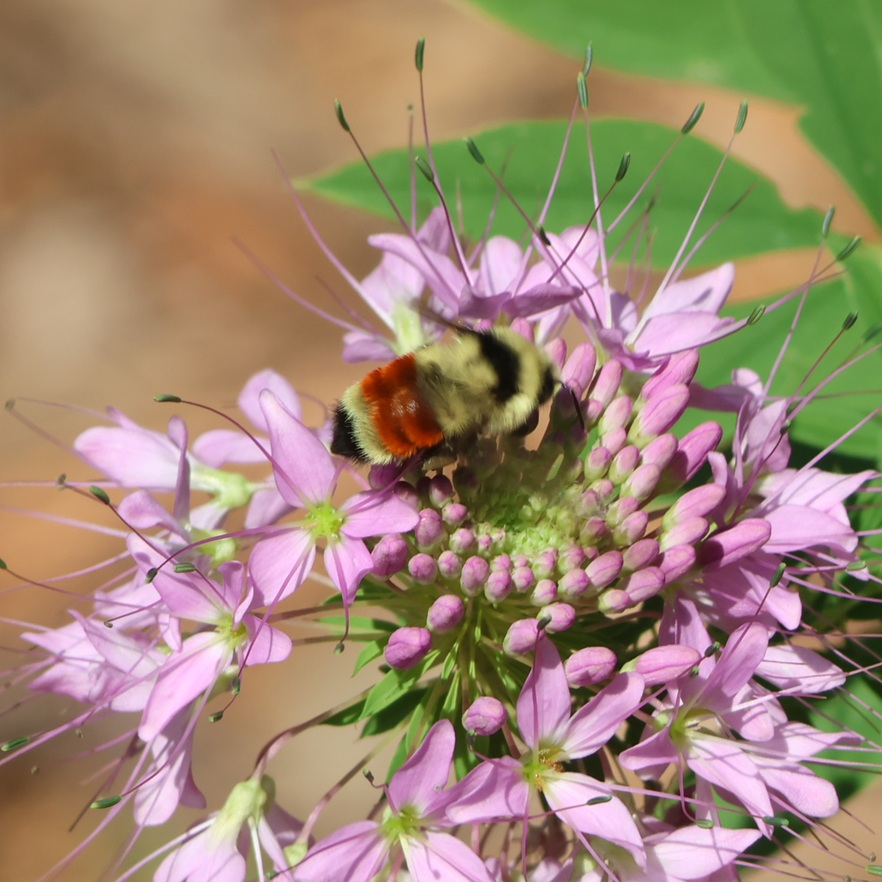
This is one of the first of about 150 photos I took during my 2 1/2-hour visit to the Gardens. It’s a western honey bee (Apis mellifera) on final approach to a bloom on a chocolate flower (Berlandiera lyrata). While researching this posting, I learned something pretty basic: the western honey bee, the most common of the honey bee species worldwide and found on every continent except Antarctica, is not native to the United States, or even the Americas. Colonists introduced honey bees to this country in the 17th century for the production of honey, which the bees make by collecting and processing flower nectar. Worker bees like the one pictured collect flower nectar and pollen (seen as the small orange clump on this bee’s left back leg) to bring back to their hive. The pollen and nectar both serve as food sources for the bees, and the nectar is also refined into honey. Rock art found in France and Spain indicates that humans have been collecting honey from bees since around 7,000 BCE. Pollination, the transfer of pollen from one plant to another either as bees and other animals visit different flowers or by the wind, allows the fertilization of plants. Whether it’s performed by animals or the wind, pollination is absolutely critical for plant reproduction: without pollinators, especially bees, we’d quickly run out of plants used for food and clothing. Chocolate flower, so named because of the fragrance it emits, is native to the southwestern United States and northern Mexico.Here’s another western honey bee, this one on a cultivated Tennessee purple coneflower (Echinacea tennesseensis). I inset a closeup of the bee in the lower right corner to highlight the amount of pollen it’s collected. Comprising mostly simple sugars like fructose and glucose, as well as proteins, vitamins and minerals, and fatty acids, pollen is the main food source for the bees back at their hive. Honey is made by refining floral nectar, also collected by worker bees such as this one. Queen honey bees produce eggs for a colony numbering between 60,000 and 80,000 worker bees, all of which collect floral material for honey production; the workers also maintain the hive.I was surprised to learn that 46 species of bumble bees have been identified in the United States. This is a Sonoran bumble bee (Bombus pensylvanicussonorus), one of the 24 bumble bee species observed in Colorado. The scientists are still deciding whether the Sonoran bumble bee is a distinct species or a subspecies of the American bumble bee (Bombus pensylvanicus). This one was collecting material from a giant hyssop, a genus of agastache that includes more than 20 species and is very popular among pollinators.Bees and butterflies are the most prolific pollinators in the animal kingdom, but other insects like moths, wasps, flies, ants, and other six-legged creatures are important as well. This unimaginatively-but-accurately-named great black wasp (Sphex pensylvanicus) was easy to spot on the Gardens’ plumed cockscomb (Celosia argentea) blossoms. This wasp, the wings of which display a beautiful blue iridescence in the right light, grows to a length of 0.8-1.4 inches (20-35 mm); the top edge of your cell phone measures about 3 inches, so these are indeed big bugs . In addition to plumed cockscomb, which originated in tropical Africa, great black wasps are important pollinators of milkweed plants.A group of three people was standing on the walk in front of me, and one of them was using their phone to film something. I started to pass the group, and then noticed that they were observing this American goldfinch (Spinus tristis). These beautiful birds are widespread throughout the United States (they’re the state bird of New Jersey, Iowa, and Washington), and can be seen seasonally in southern Canada and the eastern coast of Mexico. In one respect, American goldfinches are rare in the bird world: they’re strictly vegetarians, and eat insects only incidentally. This goldfinch was sampling seeds from a cutleaf coneflower (Rudbeckia laciniata), which grows to a height of 6 1/2 feet (2m). Many birds rely on coneflower seeds as a major source of food in the late summer and fall.Beyond bees, butterflies are probably the next-most-familiar pollinating insects and this is perhaps the most famous butterfly of all: the monarch (Danaus plexippus). It is pollinating a bloom of a Rocky Mountain blazing star (Liatris ligulistylis), a plant native to the Central Plains of the United States and Canada that grows to a height of 39 inches (100 cm). This guy is one of the reasons I took 150 photographs at the Gardens; this is the best (and it’s not great) of about a dozen that I took of it – the bug just wouldn’t stay still.Among non-insect pollinators, hummingbirds might be the most familiar to us but bats, monkeys, lizards, and a few other vertebrate animals do their part to spread pollen around. I first saw this broad-tailed hummingbird (Selasphorus platycercus) hovering in the shade but it quickly moved into the sun so I could get a better picture as it collected nectar from an orange hummingbird mint (Agastache aurantiaca) – you can even make out its super-slender tongue. I heard a lot more hummingbirds than I saw and certainly photographed at the Gardens; male broad-tailed hummingbirds make a trilling sound with their wings as they fly. Broad-tailed hummingbirds are only in the United States from late May through early August; this guy was probably on his way back to Mexico shortly after I took this photo. Hummingbirds, especially Anna’s hummingbirds, are very common in Las Vegas, Nevada, when we winter there, and it was great to be around them again.This is not a bee, nor a butterfly, nor a bird, but rather a bunny that I photographed munching on some salad alongside one of the Gardens’ trails. This is most likely a mountain cottontail rabbit (Sylvilagus nuttallii), but another thing I learned while writing this blog posting is that Colorado is home to three (desert and eastern being the others) of the 13 species of cottontails – I previously thought there was just one species.Great black wasps weren’t the only insects enjoying plumed cockscomb at the Gardens – here’s a brown-belted bumble bee (Bombus griseocollis) collecting floral material. These bumble bees live in a remarkably wide variety of habitats and thrive in urban environments – they’ve even been observed at the top of the Empire State Building, 1,250 feet (380 m) above the streets of New York City.I was taking pictures of house finches (Haemorhous mexicanus) at our front-yard birdfeeders for a couple of years before we became full-time RVers; I’ve since taken several hundred more pictures of them around the country, but this is one of my favorites. She is perched at the top of some species of arborvitae. As the species name suggests, house finches are natives of Mexico and the southwestern United States, but populations were (illegally) taken to the eastern United States in the 1940s and now they’re found in southern Canada, all of the contiguous United States and most of the islands of Hawaii, and most of Mexico. The songs of these pretty little birds are always pleasant to listen to.Hunt’s bumble bees (Bombus huntii) are commonly found in the western United States and as far east as Minnesota, as well as regions of Canada and Mexico. Easily identified by the red-orange band on its abdomen, this one is collecting material from a spider flower (Cleome houtteana), which is native to countries in South America. The genus name of bumble bees, Bombus, is Latin for “buzzing” or “booming.”Apologies if this image destroyed your retinas, but here’s one more western honey bee; it’s on a sneezeweed (Helenium autumnale) blossom. These plants are often used to restore pollinator habitats, encouraging the growth of bee and butterfly populations. The plants are pollinated only by insects, not by the wind, so despite their name they don’t actually contribute to seasonal allergies.
While I departed Denver Botanic Gardens with fewer photographs of birds than I’d planned (I also tried to take pictures of many of the barn swallows swooping above the Gardens’ water features while collecting flying insects, but was thwarted by the swallows’ aeronautics), I came away with a greater appreciation of the diversity of wildlife supported by the Gardens’ native and cultivated plants. I had no idea that honey bees are not native to this country, for example, or how many bumble bee species there were, or that there’s a wasp measuring nearly 1 1/2 inches in length that lives among us. It was a beautiful morning for looking at beautiful plants and wildlife.
Works Consulted
Interpretive signage at the Denver Botanic Gardens
National Audubon Society Field Guide to North American WIldflowers, Western Region, seventeenth printing
National Audubon Society Field Guide to Insects & Spiders, thirty-second printing
Wikipedia, accessed August 2026. If you use Wikipedia, please support it





Leave a Reply