Located just seven miles south of Albuquerque, Valle de Oro National Wildlife Refuge (NWR) was established in 2014 as the first urban NWR in the American Southwest. One of nearly 600 national wildlife refuges in the United States, Valle de Oro is adjacent to Rio Grande Valley New Mexico State Park, which is next to the Rio Grande (there’s no “River” after the name because “rio grande” means “big river” in Spanish, so it’d be like writing “big river river”). Through the National Wildlife Refuge System, a number of different ecosystems, including wetlands, prairies, forests, and coastal areas, are protected from development in order to provide habitats in which wildlife and plants can thrive.
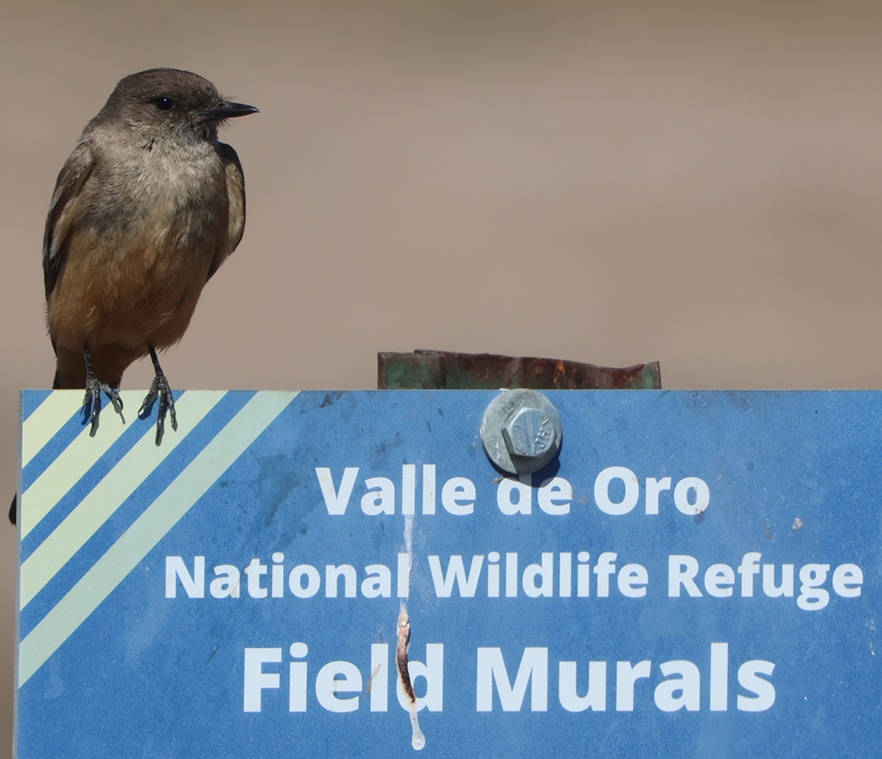
This Say’s phoebe welcomed us to the start of a hike at the refuge called the Valle de Oro Bosque Loop. “Bosque” (pr. boss-KAY) is Spanish for “forest,” and it refers to the many trees, mostly cottonwood, that line the banks of the Rio Grande just on the other side of the refuge’s western boundary.
In the case of Valle de Oro NWR, the refuge isn’t protecting undisturbed habitat that’s threatened by commercial development but rather restoring natural habitat from a formerly developed state.
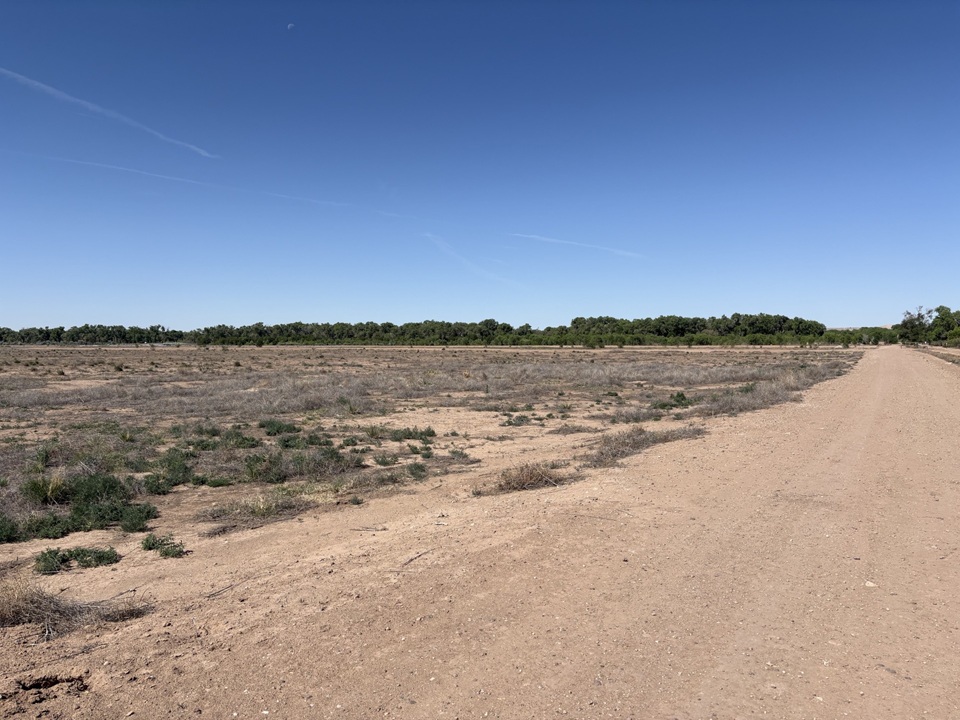
This is near the trailhead of the Valle de Oro Bosque Loop. The Rio Grande doesn’t pass through Valle de Oro NWR, but rather on the western side of the refuge. You can probably tell, from the cottonwoods on the horizon, where the water from the river regularly reaches.
Because of the ongoing drought in the American Southwest, the Rio Grande can’t even realistically be called “big”; while we were in Albuquerque in May, the river was barely a trickle as it ran through the city. When not impounded and when historically normal moisture is available, the Rio Grande flows 1,896 miles from its headwaters in southwestern Colorado, through New Mexico, forms the southern border of Texas, and empties into the Gulf of Mexico. The Rio Grande is the fourth-longest river in the United States.
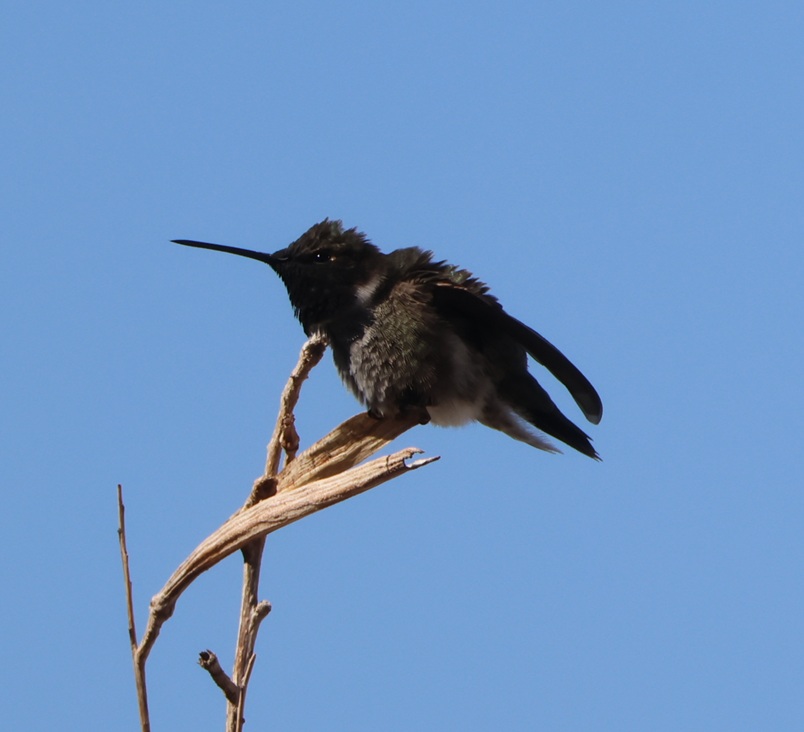
This black-chinned hummingbird (Archilochus alexandri) was making itself more comfortable on a perch just outside the front door of the refuge’s visitor center. The average heartrate of these little birds is 480 beats per minute, and in cold weather they may eat three times their body weight in flower nectar per day. They have body lengths of 3.5 inches (9 cm), weigh 0.1-0.2 ounces (2.3-4.6 g), and their wingspans measure 4.3 inches (11 cm). For comparison, a United States nickel minted in 1965 or later weighs 0.176 ounces (5 g). In good habitats, like along a river, a black-chinned hummingbird nest may be found every 100 yards (91 m) or so; their eggs are the size of coffee beans. Male black-chinned hummingbirds have a really vibrant swath of iridescent purple feathers on their chins, but those only appear when the sun hits them just right.
The 570-acre (just under one square mile) protected area now known as Valle de Oro NWR has a long and interesting history going back many centuries, and counts Pueblo Native Americans, Spanish conquistadors, and dairy and alfalfa farmers as those who have used its resources.
Valle de Oro NWR is among the ancestral and current lands of the Tiwa People, a Pueblo culture of Native Americans in what is now the Albuquerque area. Some of the Tiwa currently live in the Isleta and Sandia pueblos, two of New Mexico’s 19 Native American pueblos. The Pueblo culture initially developed between the years 700 and 1100, and particularly thrived between 1100 and 1300. Both Isleta and Sandia were established as pueblos in the 14th century; they were known by their Tiwa names until the Spanish arrived in the area in the late 15th century. “Isleta” and “sandia” are Spanish for “little island” and “watermelon,” respectively (more on “sandia” further down).
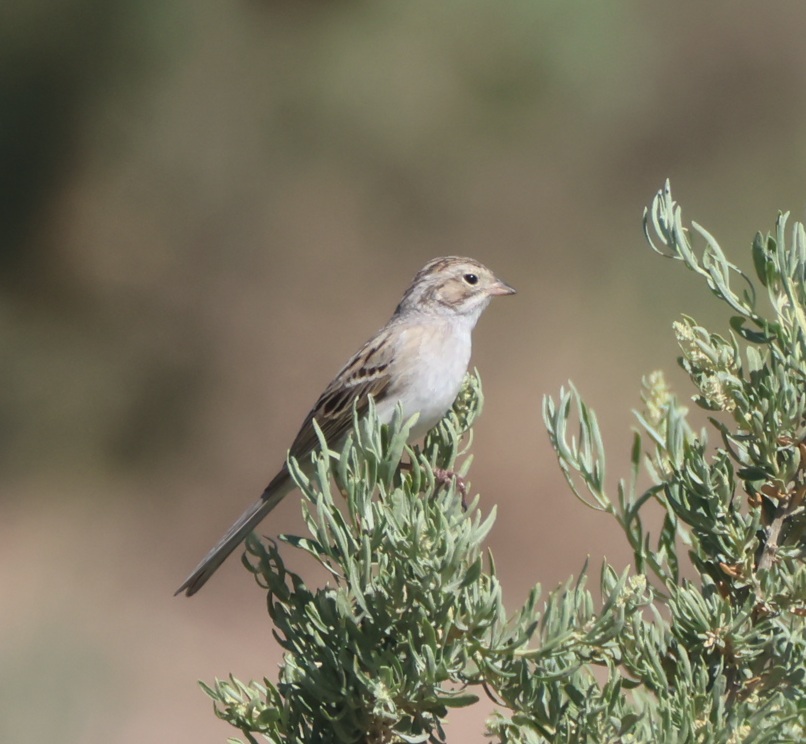
Nancy’s very good at spotting birds in the wild, and she pointed out a pair of these Brewer’s sparrows (Spizella breweri) that were perched at least 50 yards away on a sagebrush. Their size differs depending on their regional habitats, but in general Brewer’s sparrows are the smallest sparrows in North America with weights of 0.4-0.5 ounces (11-14 g). Because of a lack of defining coloration, markings, or other identification characteristics, these sparrows show why birding enthusiasts came up with the acronym of “LBB” for “little brown bird,” to serve as a temporary moniker of an individual bird until positive identification can be made.
The Spanish established a major road, El Camino Real de Tierra Adentro (“the royal road of the interior land”), that extended 1,590 miles (2,560 km) from Mexico City to just north of Santa Fe in present-day New Mexico. The road, one of four that connected Mexico City to the resources of the vast Spanish colony in America, was used from 1598 to 1882 to transport soldiers and trade goods. Much of El Camino Real still exists in the form of state highways and county roads (it passes right by one of our favorite restaurants in Las Cruces), and, back up near Albuquerque, it forms the eastern border of what is now Valle de Oro NWR.
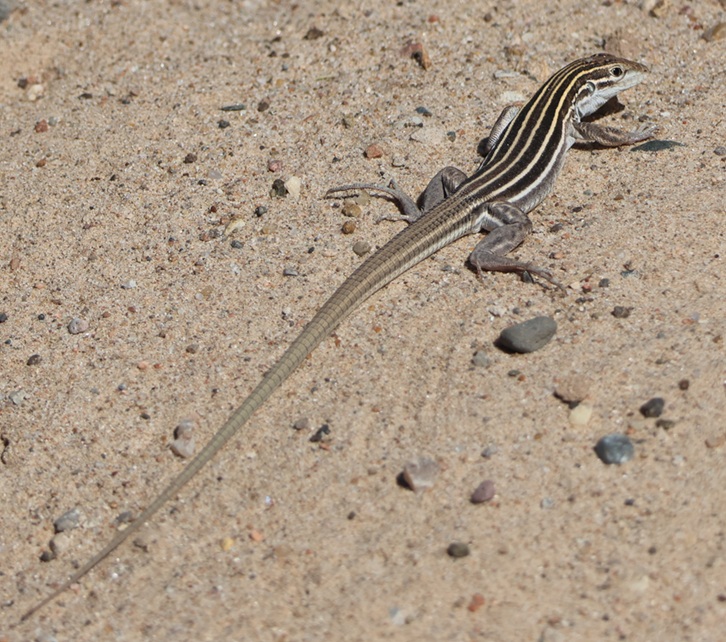
THIS IS A TALES OF THE GODDARD LIZARD ALERT. Desert grassland whiptail lizards (Aspidoscelis uniparens) live along the Rio Grande in New Mexico and in southern to central Arizona, as well as in northern Mexico. Their tails are longer than their bodies, which measure 2 3/4 to 5 1/4 inches (7.0-13.3 cm) long. They are easily identified by the six yellow stripes extending from the head and along the body. Desert grassland whiptails eat a variety of insects and other invertebrates, including ants, termites, beetles, butterflies, and grasshoppers.
Time passed, and, when Mexico gained its independence from Spain in 1821, Albuquerque changed from a New Spain outpost into a Mexican city. Albuquerque and the rest of the American Southwest became part of the United States in the mid-19th century and, in the 1930s, a family with a dairy in El Paso, Texas, expanded their operations to include a tract of land near Albuquerque. The family named the dairy “Valley Gold,” which you might, and correctly, infer (roughly) translates in Spanish to “valle de oro.” Following an increased demand for milk in the southwest after World War II, Valley Gold expanded its herd to 1,600 cows, making it one of the largest privately owned dairies in the country. The U.S. Department of Agriculture records that an average dairy cow in 1950 produced 5,300 pounds of milk each year (in 2025, an average dairy cow produced 24,400 pounds of milk annually; the industry has certainly gained some efficiencies). Anyway, dairies use a lot of water, so the Valley Gold operation developed substantial irrigation infrastructure using water from the nearby Rio Grande.
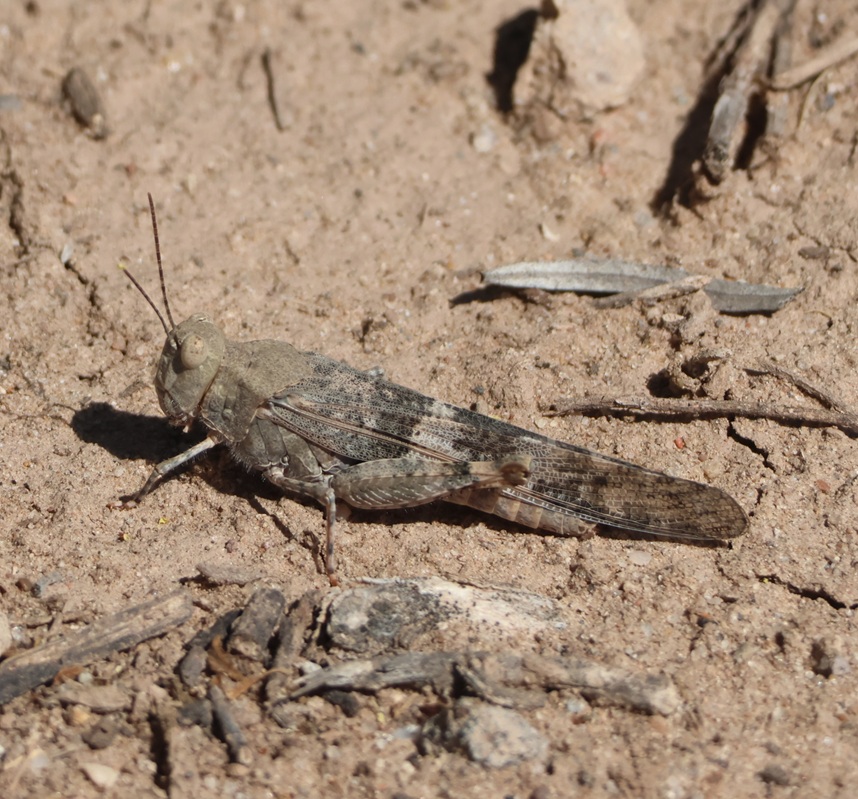
There were quite a few grasshoppers jumping about the trail as we walked. This is a pallid-winged grasshopper (Trimerotropis pallidipennis), a species common in the American Southwest. They grow to a length of 1 1/2 inches (37 mm), and their pale coloration makes for good camouflage in the dry riverbeds that they frequent.
Valley Gold ceased operations in the Albuquerque area in the late 1970s, and the property operated as an alfalfa farm (which also required a lot of water) for some time until the land was put up for sale and probable commercial development. A group of residents in the area formed Friends of Valle de Oro, a nonprofit organization that raised $9 million to buy the property and then partnered with the U.S. Fish & Wildlife Service to create the southwest’s first urban national wildlife refuge. What had been home to Pima People, part of the route from Mexico City to Santa Fe, then a dairy and alfalfa farm, was now ready to welcome back dozens of species of birds, mammals, and other wildlife to an area protected from commercial development.
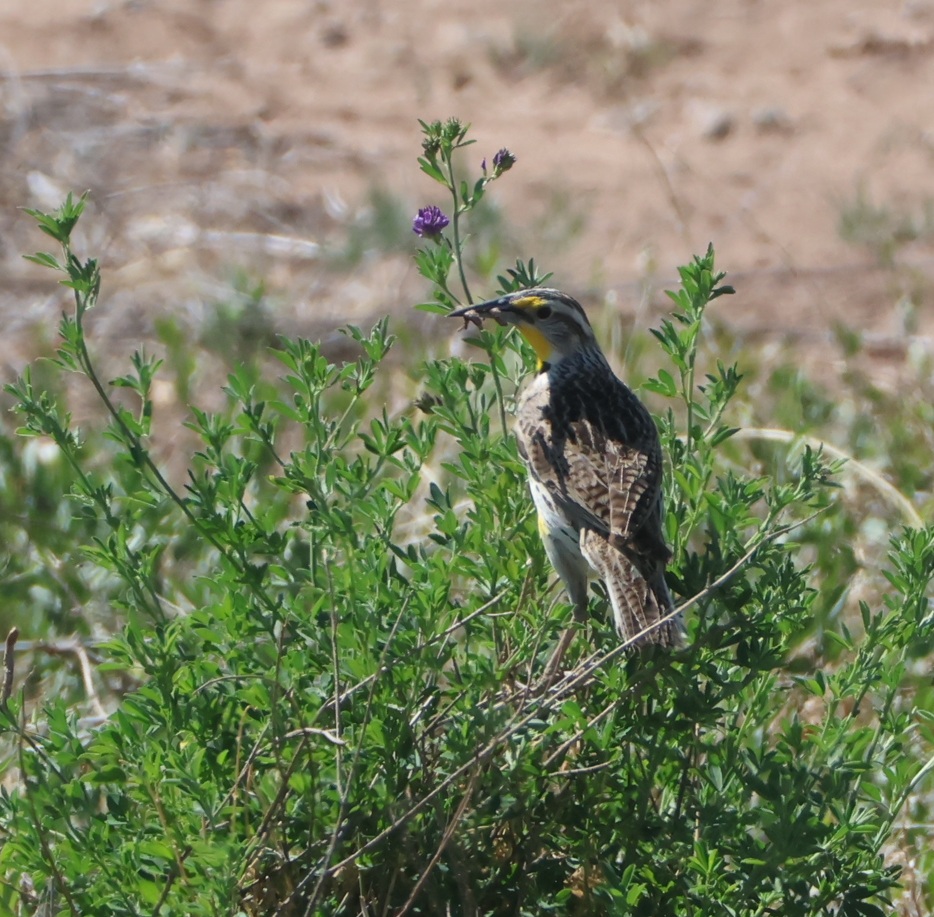
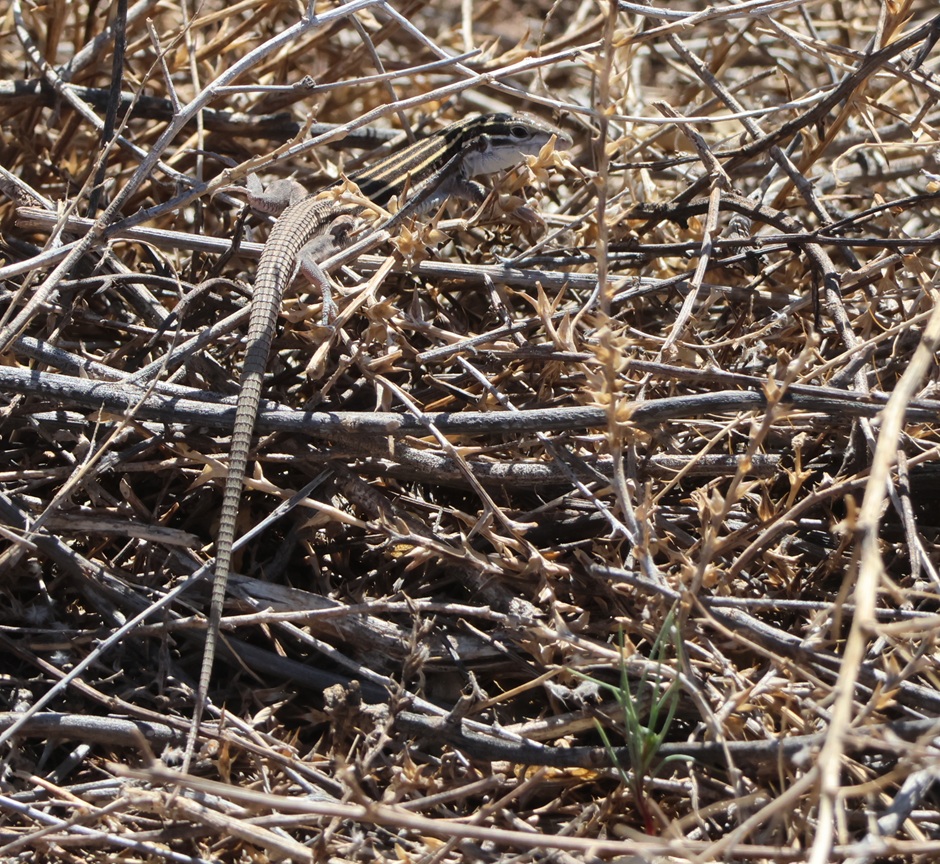
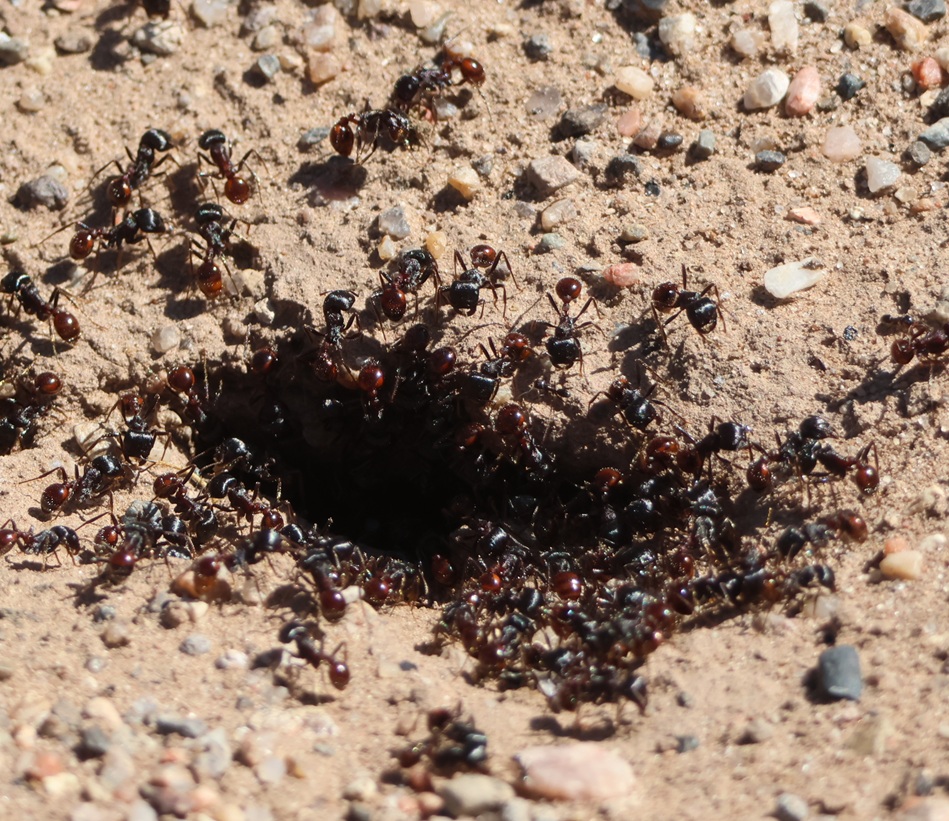
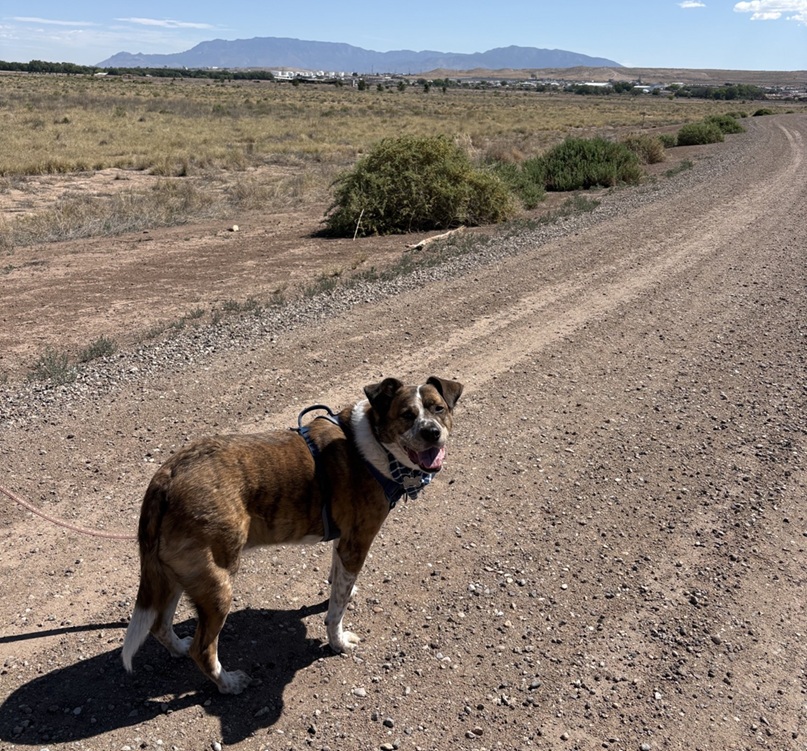
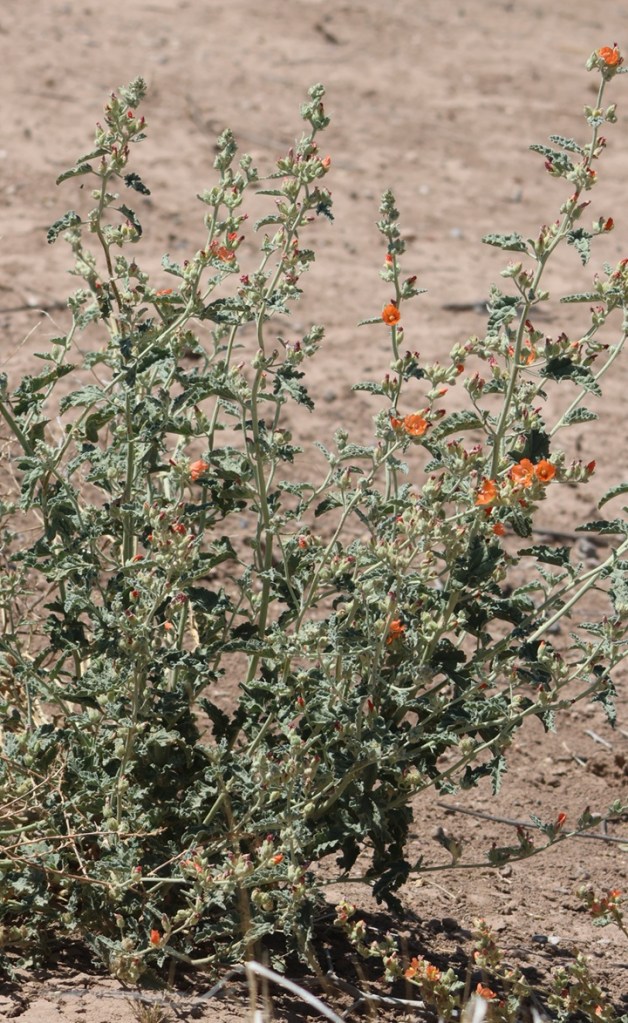
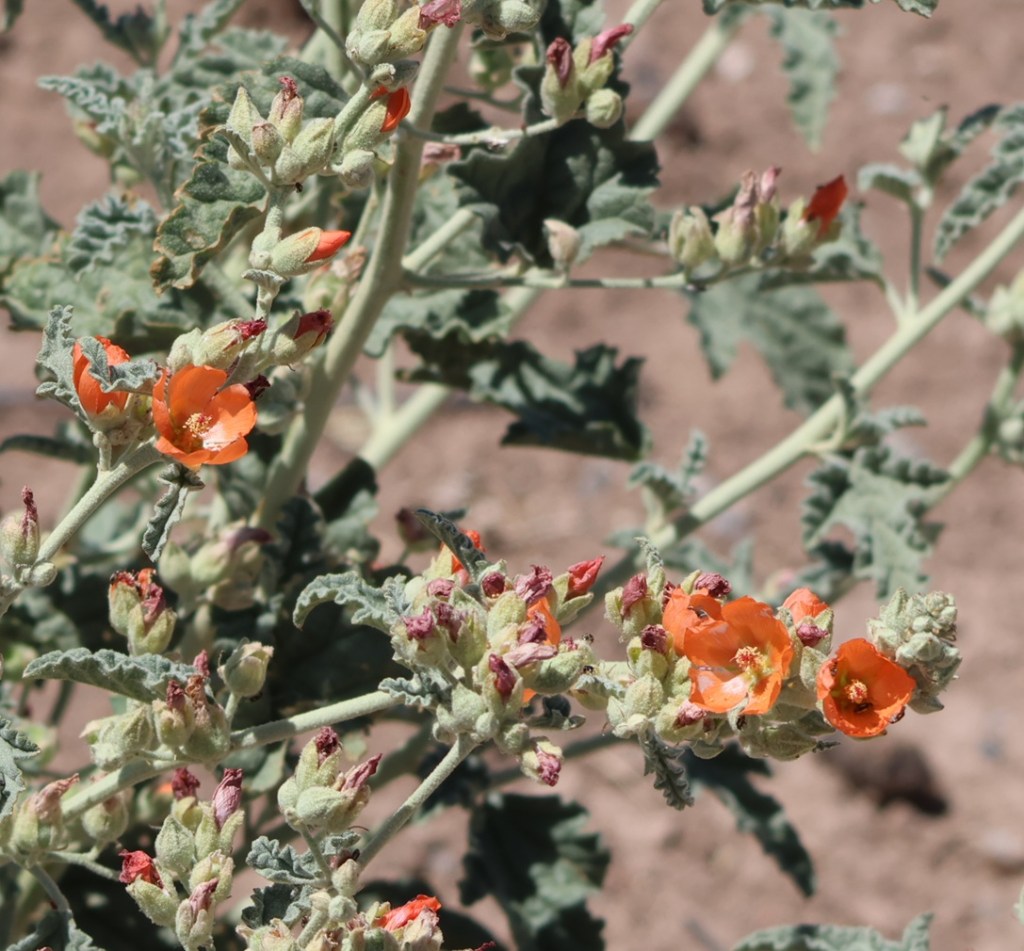
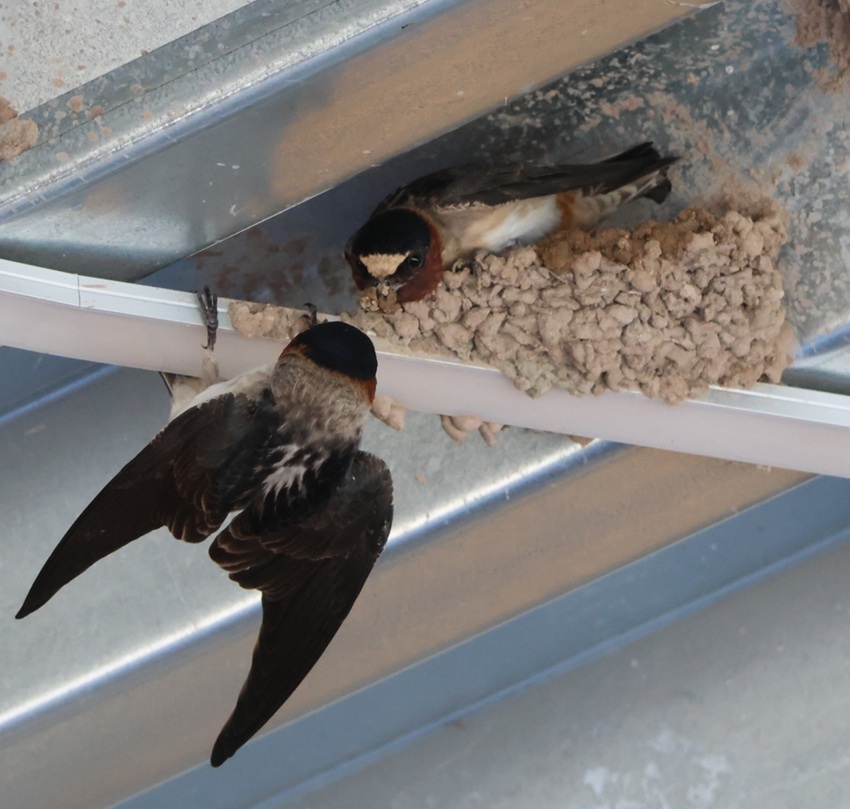
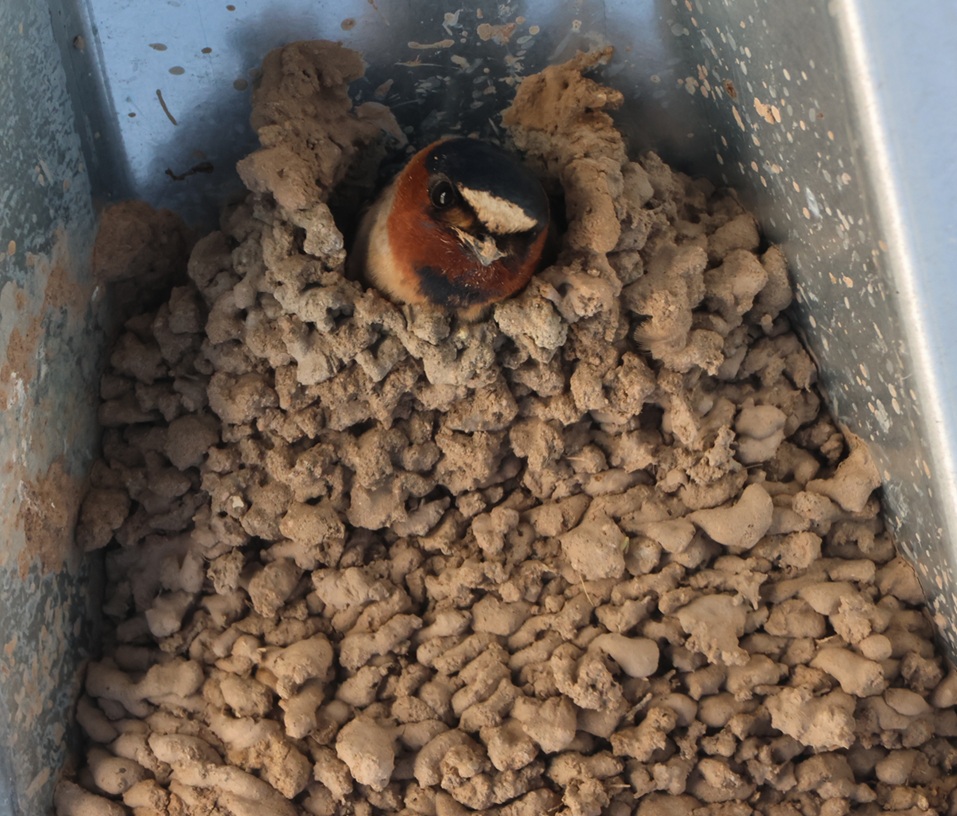
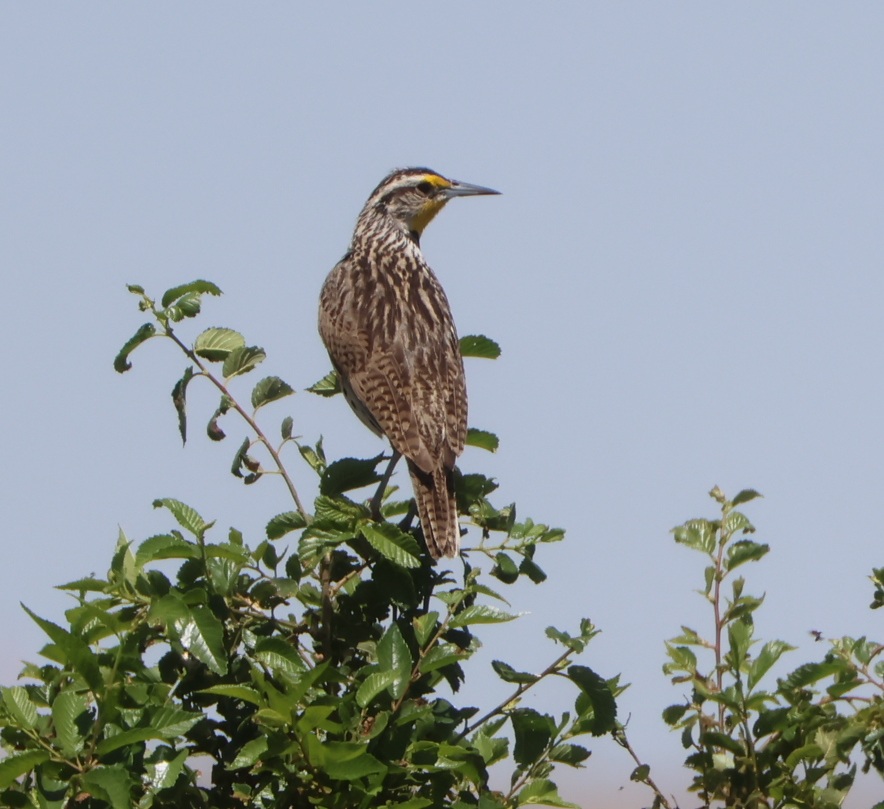
Here’s a photo of another grasshopper; this one finds itself in the unfortunate position of being in the beak of a western meadowlark (Sturnella neglecta). No less a naturalist than John James Audubon gave this bird its scientific name: “sturnella” means “starling-like,” and “neglecta” refers to Audubon’s belief that this species was overlooked by 19th-century ornitholgists. The plant on which the meadowlark is perched points to the refuge’s past: it’s alfalfa, which, due to its high protein content, comprises up to 50 percent of a dairy cow’s diet. Although the irrigation systems that served the dairy and alfalfa farms that once occupied this land are long out of use (the canals are filled with blown dirt and sand), some alfalfa plants still found enough water to thrive and bloom.THIS IS ANOTHER TALES OF THE GODDARD LIZARD ALERT and it’s another desert grassland whiptail. They’re well-camouflaged in dry desert brush like this. Albuquerque is at the northern edge of the Chihuahuan Desert, and here was a reminder that deserts have lots of sharp things like cactus thorns and ant mandibles. At one point on the trail, we stopped because Nancy had seen a bird drop from a low branch onto the ground and was attempting to spot it. I told her not to back up. lest she step into this. It’s a colony of desert harvester ants (Pogonomyrmex rugosus), which have powerful jaws and very painful venomous bites. These ants use pheromones to create invisible trails that enable other ants to follow to the colony, bringing with them plant seeds and dead insects. A few minutes before, I noticed a couple of small leaves moving on the trail in the same direction we were walking even though there wasn’t a breeze. The leaves were being carried by two harvester ants, presumably from this colony. We left the colony and continued on the trail without incident.Here’s Gunther, who enjoyed the walk with us, and here’s what much of the terrain of the Valley de Oro Bosque Loop looks like, at least away from the parts connected to the Rio Grande. Because it was used for so many decades as a dairy and later an alfalfa farm, there aren’t as many native plants as there are in other parts of the desert around Albuquerque – when water stopped being diverted from the Rio Grande, the land essentially dried up. Volunteers and NWR staff are hard at work changing that, with plantings of trees and other native plants. The buildings just this side of the mountains are in Albuquerque, and the mountains themselves are the Sandias. They rise to a top elevation of 10,678 feet (3,255 m) and are New Mexico’s most-visited mountain range. Spanish explorers gave the mountain range the name “sandia” because they seem to glow pinkish-red, like a watermelon, during Albuquerque sunsets.The mission of the National Wildlife Refuge System is “To administer a national network of lands and waters for the conservation, management, and where appropriate, restoration of fish, wildlife, and plant resources and their habitats within the United States for the benefit of the present and future generations of Americans.” Here’s an example of the plant resources: desert globemallow. Its coral-colored flowers are an extremely familiar sight to anyone in the desert southwest. I remember on a drive to the north rim of the Grand Canyon in north-central Arizona a couple of years ago, we saw millions (maybe an exaggeration, maybe not).Even though it’s very, very common, I always like seeing desert globemallow (Sphaeralcea ambigua) while we’re in the southwestern United States. Its blooms are just gorgeous, and they support the larval stages of at least five different pollinating buttterflies. The plants grow to a height of 3 feet (just under a meter), with a spread of 2-3 feet (0.6-0.9 meters). I’m writing this blog posting from our campsite in Santa Fe, New Mexico, a few days after our visit to Valle de Oro National Wildlife Refuge, and there are (very short) desert globemallow plants growing outside the Goddard.These are cliff swallows (Petrochelidon pyrrhonota) working together to build their mud nest under the roof of the refuge’s visitor center. Nancy and I estimated that there were several hundred of these swallows flitting about the visitor center and constructing their nests for the spring. These birds eat all kinds of flying insects and they are themselves incredibly skilled aerialists; I took about 50 pictures of swallows in flight at Valle de Oro and none of them turned out well because the birds were flying and turning so quickly. A staff person told Nancy that swallows lived in the huge dairy barn that used to be at the refuge, and they’ve adapted to using the new visitor center for nesting.This nest appears to be nearly complete. Each nest is built from 900 to 1,200 mud pellets, with walls that are about 1/2-inch thick. A cliff swallow clutch can include between one and six eggs, and a female swallow may lay one or two clutches during the breeding season. Cliff swallows nest near bodies of water, which provide mud for nests as well as insect habitat. Most cliff swallow colonies contain between 200 and 1,000 nests, although there’s a colony in Nebraska with 3,700 nests. It strains the mind to think about how many flying insects are needed to feed all of those birds every day. Here’s another western meadowlark that was perched about 50 yards from the refuge’s parking lot, with a link to an audio file of a western meadowlark’s call:
Whenever I hear that wonderful call, I’m reminded of meadowlarks that I used to listen to at the Denver-area office of one of my previous jobs. The parcel adjacent to the office was less than an acre but still unbroken prairieland, and it attracted quite a lot of wildlife including western meadowlarks. I enjoyed listening to them in the spring and summer months from the parking lot of my office, until construction began on that lot and it became another parking lot and commercial building. I remember being frustrated at the meadowlarks losing their habitat, and I also remember later realizing that the parking lot and building of my office was once wildlife habitat as well.
That’s the primary reason that the National Wildlife Refuge System exists: to protect wildlife habitats from development, or, in the case of Valle de Oro National Wildlife Refuge, to return commercially developed properties back into their native habitats. The Tiwa culture, the original inhabitants of this area in what is now central New Mexico, continue to play a major role in how Valle de Oro National Wildlife Refuge is managed and protected. I’m happy that’s the case.



Fantastic captures. 😊
LikeLike